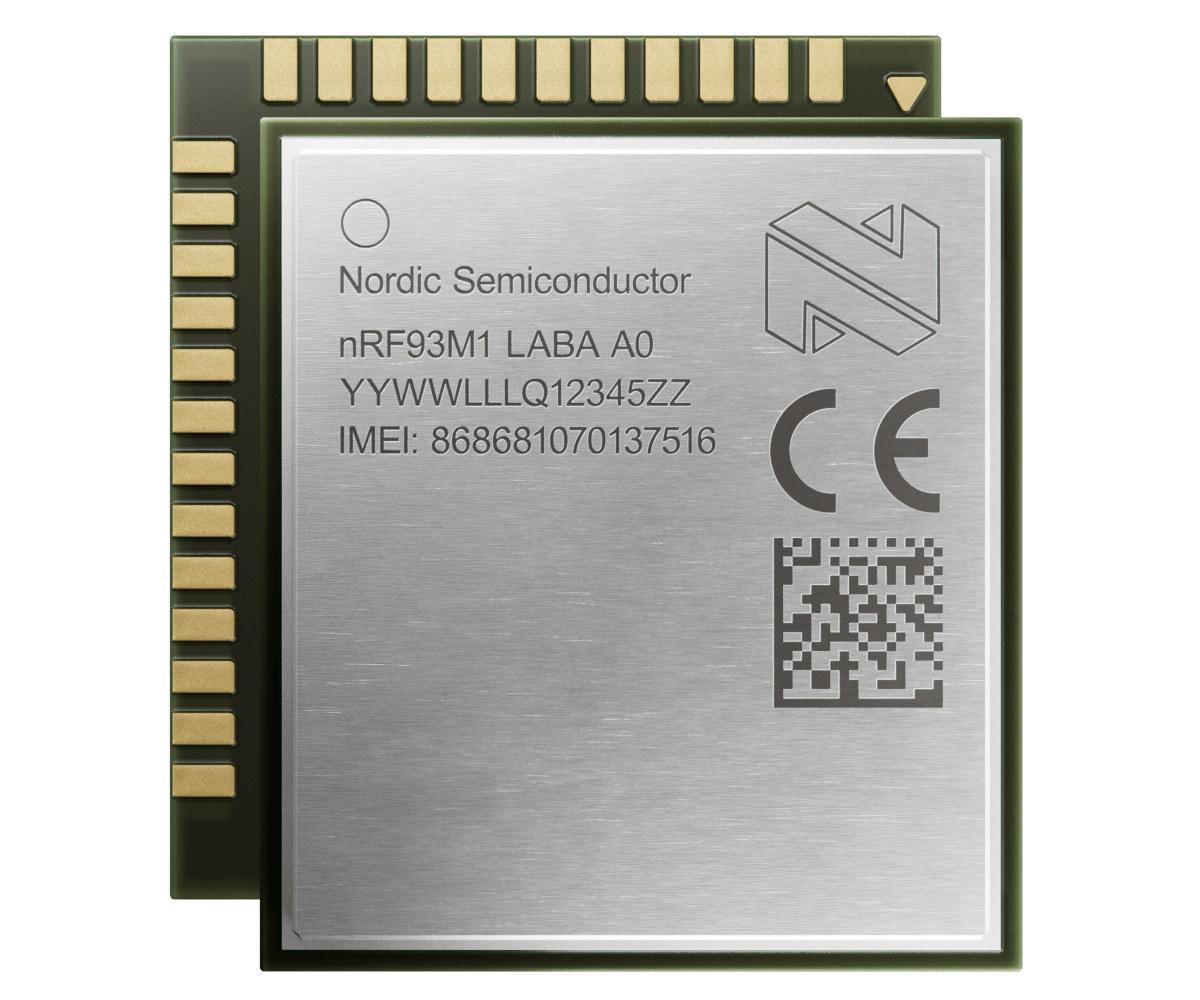
Nordic Semi nRF93M1 IoT Modules Offer LTE Cat 1bis Cellular Connectivity, Wi-Fi Location Capabilities
•March 3, 2026
0
Key Takeaways
- •LTE Cat 1bis delivers 10 Mbps downlink, 5 Mbps uplink
- •Integrated Wi‑Fi scanning enables low‑power location services
- •Two variants cover regional and worldwide LTE band certifications
- •Supports eSIM, SoftSIM, OTA updates via nRF Cloud
- •Development kit uses nRF54L15 MCU for rapid prototyping
Summary
Nordic Semiconductors unveiled the nRF93M1 LTE Cat 1bis IoT module at Mobile World Congress 2026, offering up to 10 Mbps downlink and 5 Mbps uplink speeds. The family includes two variants—LABA for Europe, Asia, Middle East and Africa, and LACA for global deployments—both supporting a broad LTE band range and eSIM/SoftSIM capabilities. Integrated Wi‑Fi scanning adds low‑power location services, while secure OTA updates are managed through nRF Cloud. General availability is slated for mid‑2026, accompanied by a development kit built around the nRF54L15 MCU.
Pulse Analysis
The introduction of LTE Cat 1bis marks a subtle yet significant shift in the IoT connectivity landscape. While traditional Cat 1 modules cap at 5 Mbps, the nRF93M1 doubles downlink capacity, enabling richer data streams for applications such as video‑enabled wearables and real‑time asset monitoring. By adhering to 3GPP Release 14 and covering 617‑2690 MHz bands, the module balances coverage breadth with the modest power envelope required for battery‑operated devices, positioning it as a versatile bridge between low‑power LPWAN and higher‑throughput cellular solutions.
Beyond raw speed, Nordic’s integration of Wi‑Fi scanning for location services reduces reliance on GNSS, cutting power consumption and cost for indoor tracking scenarios. The module’s support for eSIM, SoftSIM, and the proprietary SoftSIM framework simplifies provisioning across diverse markets, while power‑saving features like eDRX and PSM extend battery life to multi‑year horizons. Developers can leverage the nRF93M1 Development Kit, which pairs the module with the nRF54L15 Cortex‑M33 MCU, offering a familiar SDK environment and seamless OTA firmware management through nRF Cloud, thereby shortening development cycles.
Strategically, the nRF93M1 complements Nordic’s broader roadmap that includes the upcoming nRF91 and nRF92 series and exploratory 5G eRedCap work. By delivering a globally certified, mid‑range LTE solution now, Nordic fills a market gap for manufacturers needing higher bandwidth without the cost and complexity of LTE‑M or NB‑IoT. As lead customers begin integrating the module and general availability approaches mid‑2026, the ecosystem is likely to see a surge in connected products that combine cellular resilience with precise indoor positioning, reinforcing Nordic’s position as a key enabler of the next wave of edge IoT deployments.
Comments
Want to join the conversation?