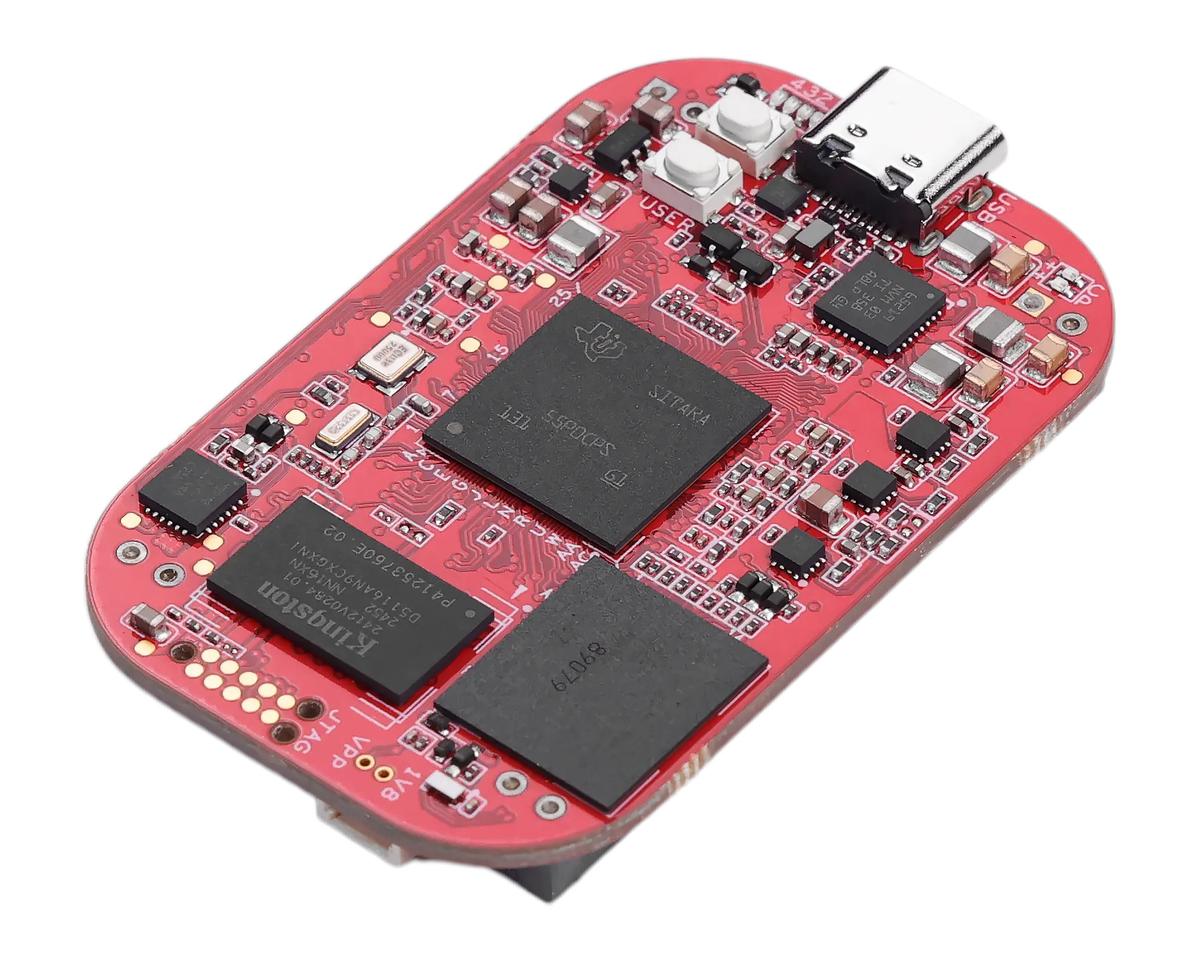
PocketBeagle 2 SBC Gets Industrial Version with 1GB RAM, 64GB eMMC Flash
•February 24, 2026
0
Why It Matters
The upgrade makes a sub‑$50 SBC viable for rugged edge and industrial IoT deployments, expanding the low‑cost compute segment into harsher environments. It also signals growing demand for on‑board storage and higher memory in compact devices.
Key Takeaways
- •1 GB DDR4 replaces 512 MB, boosting performance
- •64 GB eMMC provides onboard storage, no SD needed
- •Operates from –40 °C to +85 °C for industrial use
- •Same AM6254 SoC, retains low power footprint
- •Priced $50, still affordable for edge devices
Pulse Analysis
The single‑board computer market has long been dominated by high‑performance, high‑price offerings, leaving a gap for ultra‑low‑cost devices that can survive harsh conditions. PocketBeagle 2 Industrial directly addresses this niche, delivering a rugged form factor at a price point that undercuts many competitors. By extending the temperature envelope to –40 °C … +85 °C, the board becomes suitable for factory floors, outdoor sensors, and transportation systems where commercial‑grade SBCs would fail.
Technically, the board leverages the TI AM6254 SoC, a quad‑core Cortex‑A53 running at 1.4 GHz, paired with a dedicated Cortex‑M4F real‑time core. The jump to 1 GB DDR4 at 3200 MHz and the inclusion of 64 GB eMMC flash dramatically improve both volatile and non‑volatile performance, eliminating the need for external microSD cards in many deployments. The retained USB‑C power, JTAG, and UART interfaces, along with 52 digital I/Os and eight analog inputs, keep the development experience familiar for existing PocketBeagle users while adding industrial‑grade reliability.
From a business perspective, the $50 price tag positions the PocketBeagle 2 Industrial as one of the most cost‑effective rugged SBCs available, encouraging wider adoption in edge‑computing projects that require on‑board storage and higher memory without breaking budgets. With a healthy stock of 5,800 units on Digi‑Key, supply constraints are minimal, allowing OEMs and hobbyists alike to prototype and scale quickly. The continuity of software support—Debian 13 IoT images and Linux kernels 6.12‑6.19—ensures a smooth transition for developers, reinforcing BeagleBoard’s reputation for open‑source friendliness and long‑term ecosystem stability.
PocketBeagle 2 SBC gets industrial version with 1GB RAM, 64GB eMMC flash
0
Comments
Want to join the conversation?
Loading comments...