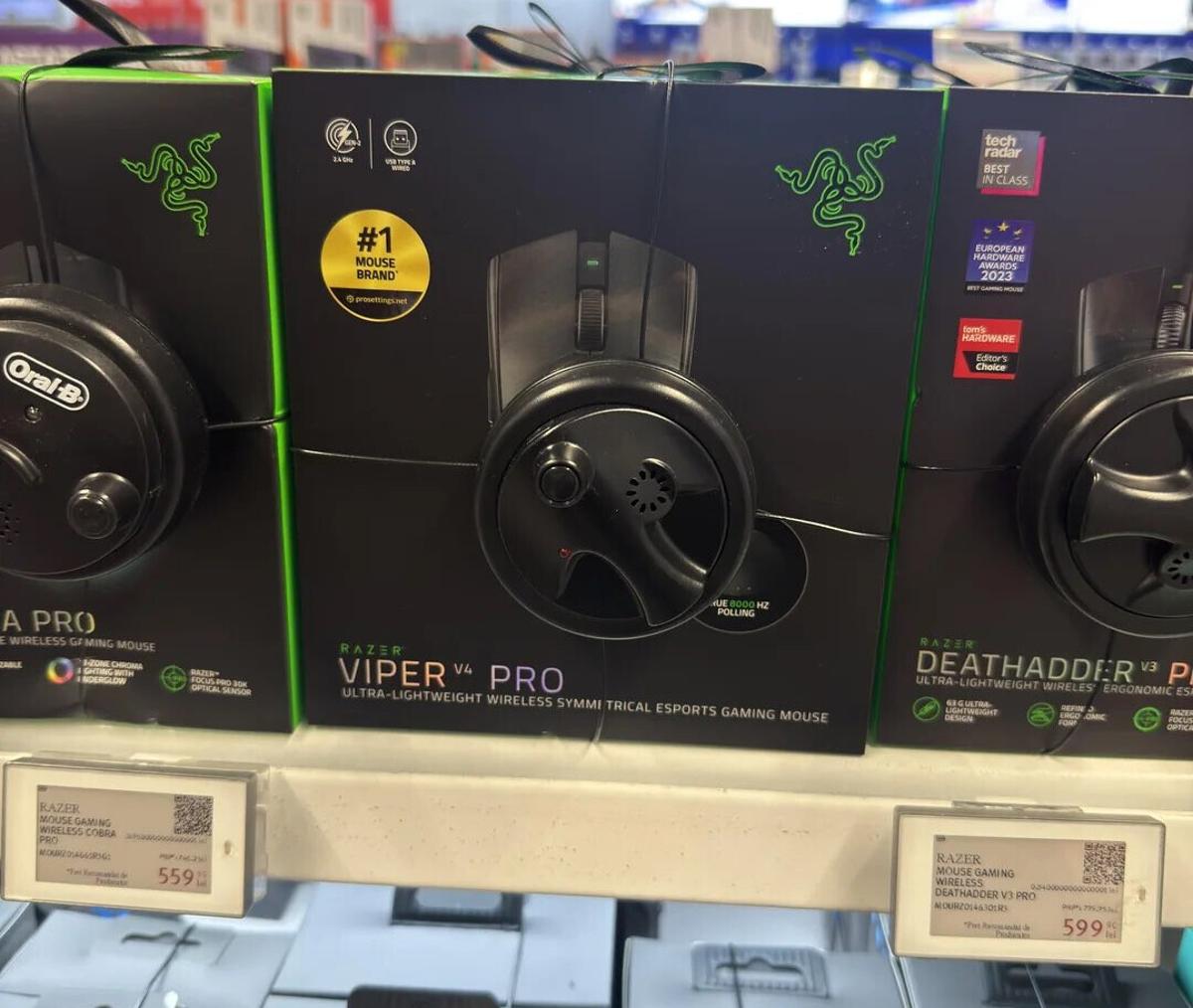
Razer Viper V4 Pro Gaming Mouse Leaks in Physical and Online Stores
•March 7, 2026
0
Key Takeaways
- •Retail boxes confirm Viper V4 Pro specs.
- •Focus Pro 50K sensor slightly outperforms DeathAdder V4.
- •8K polling wireless, 180‑hour battery life.
- •Launch price $199, higher than V3 Pro.
- •Faces competition from Logitech and cheap Chinese mice.
Summary
Razer’s upcoming Viper V4 Pro gaming mouse has been inadvertently exposed in retail stores, confirming leaked specifications. The mouse upgrades to a Focus Pro 50K sensor, adds Razer Optical Gen 4 switches, an optical scroll wheel, and retains a lightweight 49 g design. It uses the same low‑latency dome‑shaped 8K‑polling wireless receiver as the DeathAdder V4 Pro, promising up to 180 hours of battery life, and is slated to launch at $199, including a white colorway. The release arrives as competition intensifies from Logitech’s G Pro X2 Superstrike and lower‑priced Chinese alternatives.
Pulse Analysis
The unexpected retail appearance of the Razer Viper V4 Pro offers a rare glimpse into the company’s next‑generation wireless mouse strategy. By pairing a modestly upgraded Focus Pro 50K sensor with Razer’s Optical Gen 4 switches and an optical scroll wheel, the V4 Pro aims to deliver marginal performance gains while preserving the ultra‑light 49‑gram chassis that esports athletes favor. The inclusion of an 8K‑polling, dome‑shaped receiver mirrors the architecture of the DeathAdder V4 Pro, promising sub‑millisecond latency and an impressive 180‑hour battery life that could reduce the need for frequent recharging during marathon sessions.
Pricing the V4 Pro at $199 signals Razer’s intent to target premium gamers willing to pay for incremental improvements and brand prestige. However, this price point sits above the current Viper V3 Pro and even the DeathAdder V4 Pro, raising questions about market elasticity. The white colorway may hint at a limited‑edition launch, potentially justifying the premium for collectors. Meanwhile, rivals such as Logitech’s G Pro X2 Superstrike are introducing comparable latency‑focused features, and a wave of Chinese manufacturers is delivering similar hardware at a fraction of the cost, intensifying price pressure.
For the broader gaming peripheral landscape, the Viper V4 Pro underscores a shift toward refining existing platforms rather than radical redesigns. As wireless technology matures, manufacturers are focusing on sensor fidelity, power efficiency, and ergonomic tweaks to differentiate products. Razer’s gamble will hinge on whether the esports community values the nuanced sensor upgrade and extended battery life enough to offset the higher price, or if budget‑conscious players gravitate toward more affordable alternatives that offer comparable performance.
Comments
Want to join the conversation?