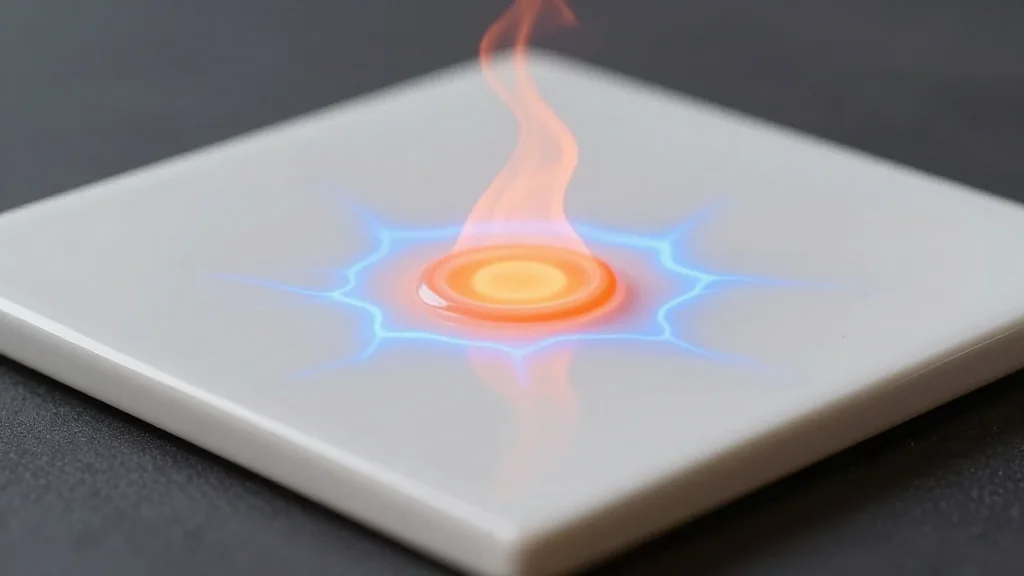
Smart Ceramics Reveal a New Way to Control Heat Transfer, Boosting Thermal Conductivity Nearly Threefold
Key Takeaways
- •Electric field aligns dipoles, extending phonon lifetimes.
- •Thermal conductivity increases up to 300% along field direction.
- •Neutron scattering directly links phonon dynamics to heat flow.
- •Enables solid-state devices without moving parts for thermal management.
- •Previous ferroelectric studies showed only 5‑10% conductivity gains.
Pulse Analysis
The breakthrough hinges on manipulating phonons—the quantum packets that transport thermal energy—by reorienting internal dipoles with an external electric field. In relaxor‑based ferroelectric ceramics, the field reduces lattice disorder, allowing vibrational modes to travel farther before scattering. Neutron‑scattering measurements captured this effect in real time, revealing a threefold rise in conductivity along the poling axis while perpendicular directions remain unchanged. This level of anisotropic control was previously thought unattainable in bulk solids, marking a paradigm shift in materials science.
From an industry perspective, the ability to toggle thermal pathways electrically could replace traditional heat‑sink fans, liquid coolers, and thermoelectric modules that rely on static material properties. Data centers, electric‑vehicle power electronics, and aerospace systems stand to gain by dynamically matching heat removal to load conditions, cutting energy waste and extending component lifespans. Moreover, the approach dovetails with existing ferroelectric manufacturing processes, offering a low‑cost route to integrate smart ceramics into printed circuit boards or power‑module substrates.
Looking ahead, scaling the technology will involve optimizing ceramic composition, field strength, and device architecture to balance conductivity gains against dielectric breakdown risks. Collaboration between national labs, universities, and manufacturers like Amphenol will be crucial to translate laboratory insights into commercial products. If successful, electrically programmable thermal conductors could become a cornerstone of next‑generation solid‑state thermal‑management platforms, driving efficiency gains across the broader clean‑energy and electronics ecosystems.
Smart ceramics reveal a new way to control heat transfer, boosting thermal conductivity nearly threefold
Comments
Want to join the conversation?