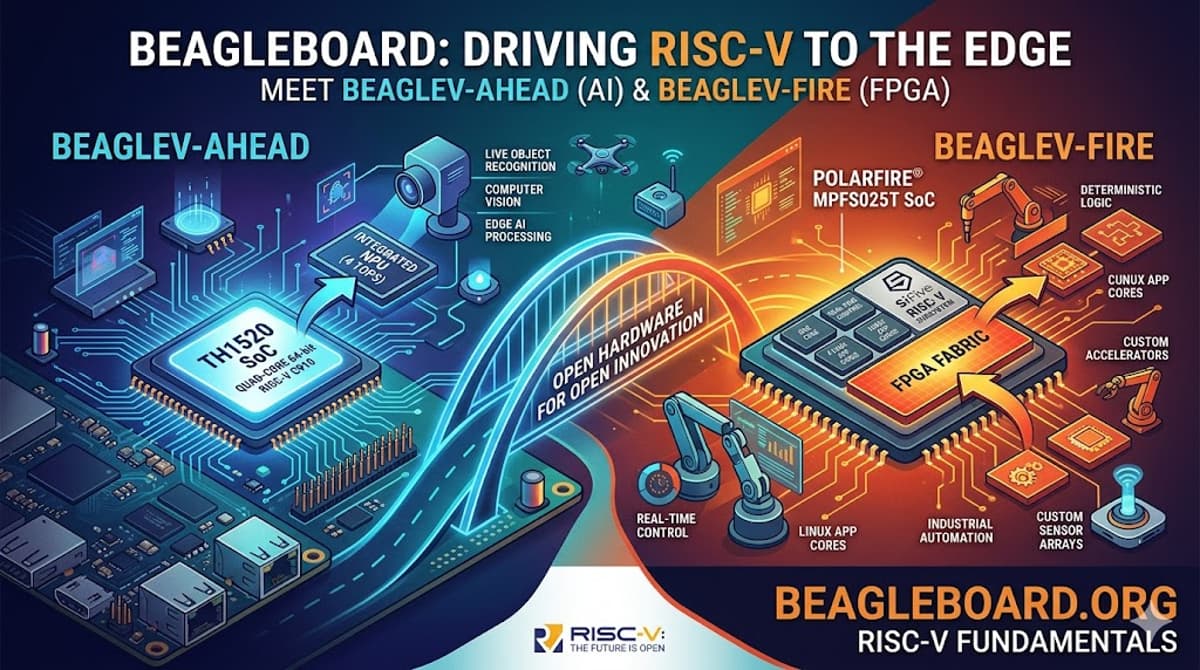
Understand How RISC-V Fuels “AI-Native” Architecture at the Edge
Key Takeaways
- •RISC‑V’s modular ISA enables custom AI instructions on edge chips
- •Unified compute reduces data shuttling, cutting latency and power use
- •Zero licensing fees democratize ultra‑low‑power TinyML microcontrollers
- •Open toolchains let designers quickly adapt hardware to new AI models
Pulse Analysis
The rise of edge AI hinges on hardware that can keep pace with rapidly evolving neural network architectures. Traditional silicon—locked into ARM or x86 instruction sets—forces engineers to shoe‑horn new models onto fixed pipelines, inflating power draw and silicon waste. RISC‑V flips this paradigm by offering a lean base ISA that developers can extend with bespoke matrix, vector, or activation‑function instructions. This openness not only trims the data‑movement bottleneck but also aligns silicon design with the specific computational patterns of modern AI workloads, delivering the low‑latency, low‑energy performance essential for physical autonomy.
Custom extensions and unified compute are already powering a new generation of consumer and industrial devices. Smartwatches such as the Amazfit T‑Rex 3 Pro leverage Andes Technology’s RISC‑V cores to achieve multi‑week battery life while running on‑device biometric analytics. Edge security cameras embed SiFive’s RISC‑V cores to perform real‑time object detection without streaming video to the cloud, slashing bandwidth costs. In automotive, joint ventures like Quintauris are standardizing RISC‑V microcontrollers for braking and ADAS functions, ensuring deterministic response times and reducing reliance on proprietary supply chains. The zero‑royalty model further lowers entry barriers, enabling startups to produce TinyML‑optimized chips for niche applications ranging from environmental sensor meshes to robotic vacuums.
Looking ahead, the ecosystem’s momentum is reinforced by open‑source compiler frameworks such as MLIR and TVM, which translate high‑level PyTorch or TensorFlow models into RISC‑V‑specific instructions on the fly. This software‑centric approach shortens the hardware development cycle from years to months, allowing manufacturers to respond to weekly AI breakthroughs. As more OEMs adopt RISC‑V for edge AI, the market is set to see a surge in differentiated, power‑efficient products that operate independently of cloud infrastructure, reshaping everything from consumer wearables to autonomous vehicles. The convergence of open hardware, flexible toolchains, and royalty‑free licensing positions RISC‑V as the foundational architecture for the next wave of AI‑native edge innovation.
Understand how RISC-V fuels “AI-native” architecture at the edge
Comments
Want to join the conversation?