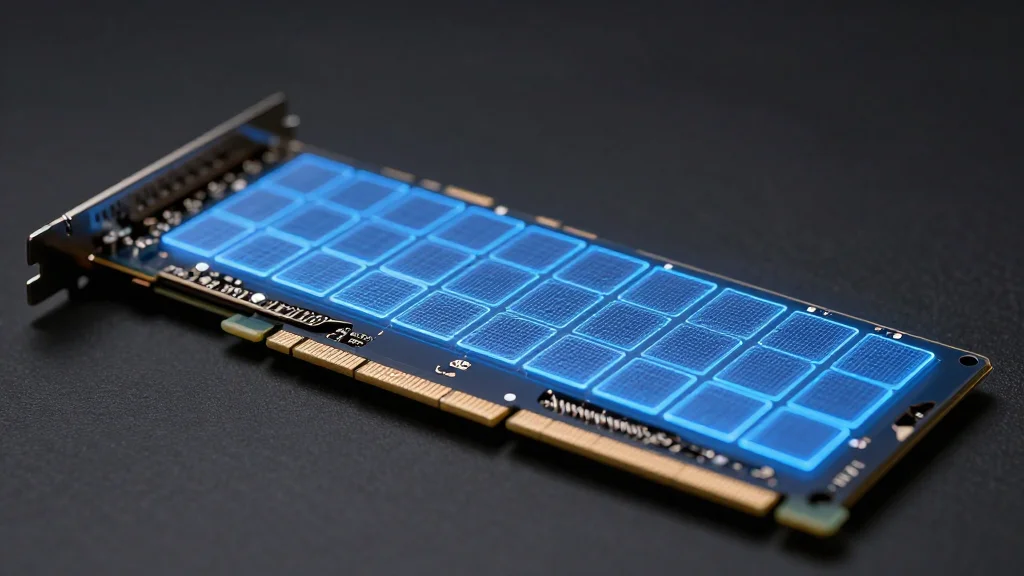
Your GPUs Aren’t Slow, They Just Have a Short Memory
Key Takeaways
- •KV cache overflow can raise latency 18× and cut throughput 10×
- •Graid's KV Cache Server aggregates 32 NVMe drives for 280 GB/s bandwidth
- •Read latency drops from 100 ms to 1.3 ms, a 77× improvement
- •Solution reduces GPU waste, lowering total cost of ownership
- •Native Nvidia STX integration enables rack‑scale agentic AI deployment
Pulse Analysis
The KV cache functions as a model's short‑term memory, storing key‑value pairs for every token processed. In traditional setups, once the cache outgrows the high‑bandwidth memory (HBM) on GPUs, it is forced onto slower tiers such as DRAM or NVMe. This overflow not only inflates time‑to‑first‑token latency—often by an order of magnitude—but also erodes the model's contextual continuity, leading to hallucinations and inconsistent outputs in multi‑hour autonomous agents. As AI workloads shift from single‑shot inference to persistent, multi‑agent workflows, the storage hierarchy becomes a critical performance frontier.
Graid Technology’s portfolio directly addresses this gap by positioning ultra‑fast NVMe storage adjacent to the GPU via GPU Direct Storage. Their KV Cache Server consolidates up to 32 NVMe drives into a 280 GB/s pool, slashing cache read latency from roughly 100 ms to just 1.3 ms. This 77× acceleration eliminates the need for costly DRAM expansion and prevents GPU cycles from being wasted on recomputation. The Rack and Platform offerings extend the architecture across full server farms and align with Nvidia’s STX reference design, ensuring seamless integration with existing data‑center ecosystems and DPU‑native execution in future releases.
For enterprises, the impact is twofold: performance gains translate into higher agent throughput and more reliable outcomes, while the economics of leveraging commodity NVMe instead of premium DRAM lower the total cost of ownership. As the industry standardizes on long‑context models for tasks like autonomous planning, customer support, and real‑time analytics, solutions that resolve the KV‑cache bottleneck will become a decisive competitive advantage, shaping the next wave of scalable, agentic AI deployments.
Your GPUs Aren’t Slow, They Just Have a Short Memory
Comments
Want to join the conversation?