Participants
Why It Matters
By cutting power and latency at the board level, LightSpeed’s solution could lower operating costs and accelerate AI workload scaling, challenging incumbent co‑packaged optics approaches.
Key Takeaways
- •LightSpeed's 400‑Gbps transceiver is 20× smaller than typical pluggables
- •Consumes ~2 W, offering up to 4× lower latency and 5× lower power
- •PCB‑level “light engine” avoids copper loss, cutting data‑center power by 50‑75%
- •Company targets $3 M revenue 2027‑28, seeking $15 M for R&D expansion
Pulse Analysis
The surge in AI workloads has exposed the limits of traditional copper‑based board traces and pluggable optical modules. As data rates climb toward terabit‑per‑second levels, signal attenuation, heat dissipation, and the need for additional retimers inflate both power budgets and rack density. Co‑packaged optics (CPO) attempts to bring photonics inside the ASIC package, but thermal management and yield concerns have slowed widespread adoption. LightSpeed Photonics sidesteps these hurdles by positioning a compact “light engine” at the PCB level, preserving the benefits of optics while avoiding the complexities of full chip‑level integration.
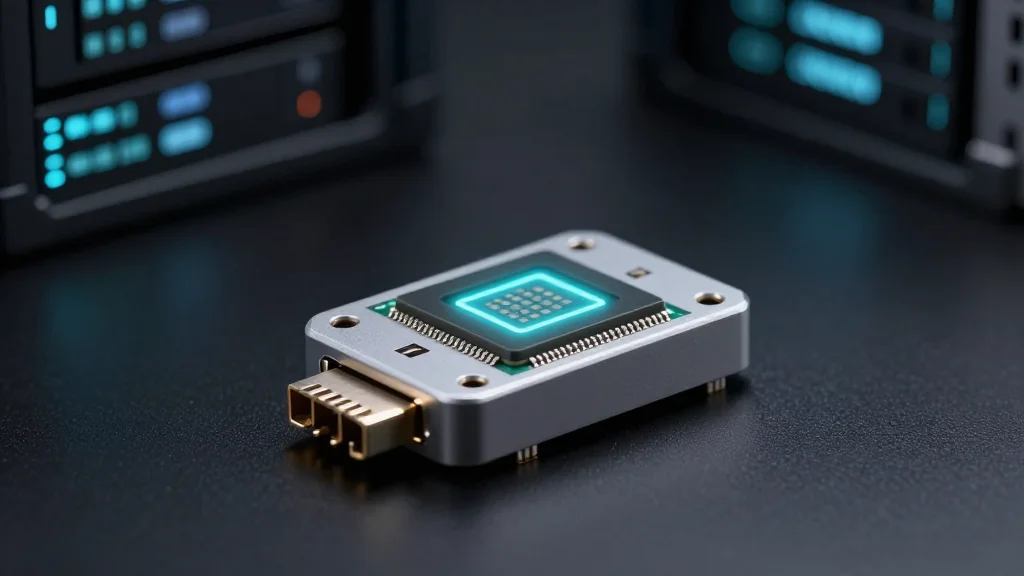
The company’s 400‑Gbps solderable transceiver packs lasers, detectors, and driver ICs into a system‑in‑package that draws roughly 2 watts—about five times less power than conventional pluggables. By eliminating long copper runs and the associated digital signal processors, latency drops up to fourfold, a critical factor for distributed training and inference clusters. The design supports PAM4 signaling today and a roadmap to 800 Gbps with PAM6, making it future‑proof for the next generation of AI accelerators. Its protocol‑agnostic interface, compatible with Ethernet, PCIe and CXL, enables seamless compute‑memory disaggregation.
LightSpeed’s business model leverages OSAT partners in Singapore and an emerging R&D hub in Hyderabad, positioning it to scale production by 2027 while targeting $3 million in revenue. With $8.5 million raised to date and a fresh $15 million ask for a photonics‑packaging line, the startup is poised to compete with incumbents like Broadcom, Nvidia and Intel, which are already shipping CPO switches. If the company can deliver the promised 50‑75 % power savings, data‑center operators will have a compelling alternative that reduces OPEX and accelerates AI deployment across edge and cloud environments.
Deal Summary
Singapore-based LightSpeed Photonics announced the closing of a $6.5 million pre‑Series A funding round, bringing its total raised capital to $8.5 million. The round will support scaling production, expanding R&D, and establishing new facilities in India and the U.S. The company aims to target AI data centers with its 400‑Gbps near‑packaged optical interconnects.
Comments
Want to join the conversation?
Loading comments...