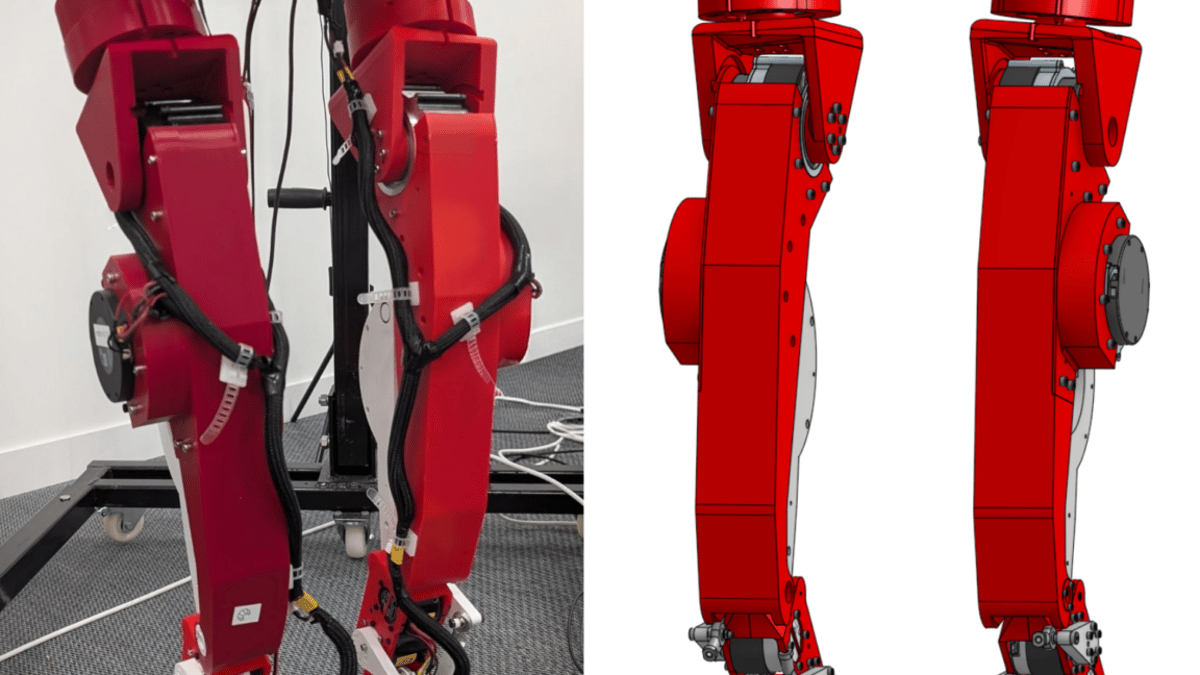
3D-Printable Humanoid Legs Let Robotics Experiments Run Wild
Companies Mentioned



Why It Matters
Affordable, open‑source robot platforms lower the barrier to entry for AI‑driven robotics research, accelerating innovation and expanding the talent pool beyond well‑funded incumbents.
Key Takeaways
- •Hugging Face released $2,500 3D‑printable bipedal leg kit.
- •Open‑source design enables rapid prototyping and simulation‑to‑real testing.
- •Affordable robotics market expanding as VC funding tops $40 billion.
- •Traditional humanoid robots still cost $30k‑$150k per unit.
- •Hyundai plans to mass‑produce Atlas at its Georgia EV plant.
Pulse Analysis
The LeRobot Humanoid represents a shift from proprietary, high‑cost robot platforms toward democratized hardware that can be assembled in a university lab or a maker space. By providing a complete bill of materials, 3D‑printable CAD files, and a software stack that mirrors the simulated environment, Hugging Face lets engineers close the gap between digital twins and physical prototypes. This hands‑on accessibility encourages experimentation with reinforcement learning, perception algorithms, and control strategies that were previously confined to well‑funded corporate labs.
Industry analysts note that the price differential is stark: commercial humanoids such as Boston Dynamics' Atlas still retail for $30,000 to $150,000 per unit, while the LeRobot legs cost a fraction of that. The broader market is feeling the pressure, with Chinese firms like Unitree offering sub‑$20,000 models and venture capital flowing to over $40 billion in robotics startups between 2023 and 2025. This influx of capital fuels a competitive race to lower manufacturing costs, prompting giants like Hyundai to explore mass production of advanced humanoids in existing EV facilities.
The strategic impact extends beyond cost. An open‑source, reproducible robot design creates a feedback loop where data collected from real‑world trials refines simulation models, which in turn generate better control policies for the physical robot. As Hugging Face expands the platform with upper‑body modules and more sophisticated behaviors, the ecosystem could become a de‑facto testbed for next‑generation AI‑driven robotics, accelerating adoption across sectors ranging from logistics to healthcare. The convergence of affordable hardware, open software, and abundant funding positions the LeRobot Humanoid as a catalyst for a more inclusive robotics innovation landscape.
3D-printable humanoid legs let robotics experiments run wild
Comments
Want to join the conversation?
Loading comments...