
Why It Matters
The ARF1221Q2 consolidates several frequency‑specific LNAs into one high‑performance part, cutting BOM complexity and accelerating time‑to‑market for 6‑18 GHz receiver designs across aerospace, telecom and defense sectors.
Key Takeaways
- •ARF1221Q2 covers 6‑18 GHz with 1 dB noise figure
- •24 dB gain, up to 12 dBm P1dB at 5 V
- •Power draw 12 mA (3.3 V) to 44 mA (8 V)
- •Integrated bias and AC‑coupled I/O remove external caps
- •Rugged design tolerates 18 dBm overdrive, >10⁷ h MTBF
Pulse Analysis
The front‑end of any microwave receiver relies on a low‑noise amplifier to lift weak signals above the system’s thermal floor. With spectrum use expanding into C, X and Ku bands, designers often need multiple discrete LNAs, inflating bill‑of‑materials and extending time‑to‑market. MMIC technology consolidates matching networks, bias circuits and protection into a single die, delivering a plug‑and‑play part that occupies minimal board space while offering high yield. This integration has accelerated adoption in satellite communications, test equipment and defense radar.
Altum RF’s ARF1221Q2 showcases the latest in broadband MMIC LNAs. Built on a GaAs process, it covers 6 GHz to 18 GHz with a noise figure as low as 1 dB across the band—a rarity at this span. Gain stays near 24 dB, while linearity reaches 12 dBm P1dB and 30 dBm IP3 at a 5 V supply, allowing it to handle high‑power radar pulses. Power draw ranges from 12 mA at 3.3 V to 44 mA at 8 V, keeping heat and MTBF well within acceptable limits.
The ARF1221Q2’s ultra‑low NF, solid output power and integrated bias let OEMs replace three or four separate LNAs with a single part, slashing inventory and simplifying board layout. This consolidation shortens design cycles and reduces assembly cost—key advantages for cost‑sensitive aerospace, telecom and defense markets. Built‑in ESD protection and unconditional stability further lower engineering overhead. As 5G, satellite broadband and electronic‑warfare systems push deeper into the 6‑18 GHz range, such versatile MMIC LNAs are poised to become standard front‑end building blocks.
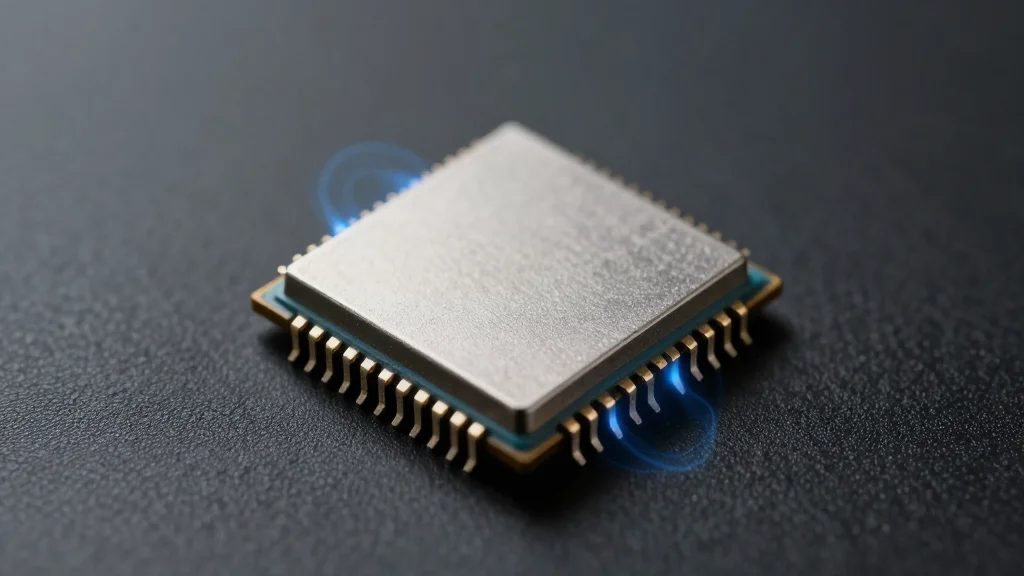
6 to 18 GHz MMIC Low Noise Amplifier
Comments
Want to join the conversation?
Loading comments...