
Why It Matters
The demo shatters the myth that state‑of‑the‑art LLM inference requires datacenter‑grade GPUs, lowering the entry barrier for developers and homelab enthusiasts. It highlights software optimization as the primary lever for democratizing AI deployment.
Key Takeaways
- •Speculative decoding with a tiny drafter bypasses memory wall on CPUs
- •CPU‑MoE routing flags keep expert weights in cache, reducing thrashing
- •Memory pinning and runtime repack cut swap latency for 27 GB model
- •Flash Attention and MLA compress KV cache, enabling 82 GB footprint on DDR3
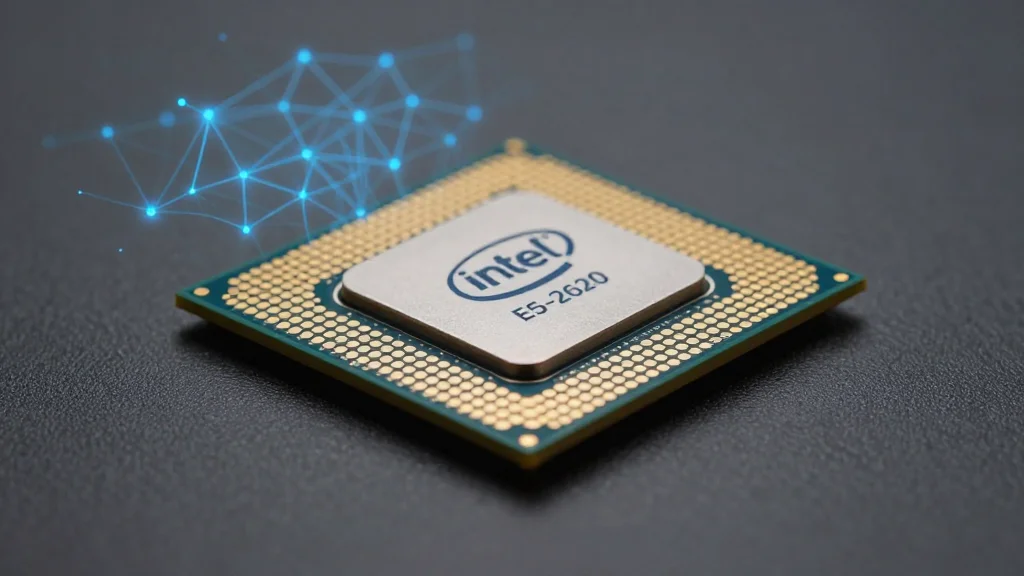
- •2016 Xeon server runs 26B Gemma‑4 at reading speed without GPU
Pulse Analysis
Running large language models on legacy hardware has long been dismissed as impractical, but the memory‑bandwidth bottleneck—often called the "memory wall"—is the true limiting factor, not raw compute. Modern CPUs, even older Xeon chips, can execute matrix multiplications in nanoseconds; the real delay comes from shuttling gigabytes of model weights from DDR3 RAM into the cache. When a model’s active layers fit within the L3 cache, the processor spends most of its time idle, waiting for data. This insight reframes the hardware debate: a server with ample RAM and a modest core count can become a viable inference engine if the software can keep the data close to the cores.
The breakthrough comes from a suite of low‑level optimizations exposed by the ik_llama.cpp fork. Speculative decoding pairs a lightweight drafter that lives entirely in cache with a full‑size verifier, allowing the CPU to generate multiple tokens per draft without incurring additional memory traffic. CPU‑MoE routing intelligently selects expert weights to stay resident in cache, while the "merge‑up‑gate" flag fuses operations to slash bus usage. Memory‑pinning (mlock) prevents the OS from swapping the 27 GB weight buffer, and runtime repack reshapes tensors to match cache line boundaries. Flash Attention and Multi‑Head Latent Attention (MLA) further compress the KV cache, shrinking the overall footprint to roughly 82 GB—still large for DDR3 but manageable with careful allocation. Together, these flags transform a memory‑starved environment into a performant inference pipeline.
The broader implication is a democratization of AI infrastructure. By exposing and documenting these knobs, the community can repurpose inexpensive, refurbished servers for cutting‑edge workloads, reducing reliance on costly GPU clusters and proprietary APIs. This lowers operational expenses for startups, research labs, and hobbyists, and accelerates experimentation with open‑weight models. As more developers adopt such techniques, the usability moat around large‑scale LLMs erodes, paving the way for a more open and competitive AI ecosystem.
A 10 year old Xeon is all you need
Comments
Want to join the conversation?
Loading comments...