A $7,000 DIY Radar Project Is Taking on Hardware that Usually Costs over $100,000
Companies Mentioned
Why It Matters
By lowering the price floor for high‑performance radar, the Aeris‑10 opens advanced sensing to universities, startups, and niche defense firms that previously could not afford such technology. This democratization could accelerate innovation in autonomous navigation, remote sensing, and low‑cost security applications.
Key Takeaways
- •Aeris‑10 10E version reaches 20 km range with 32×16 array
- •Bill of materials under $7,200, far below commercial phased‑array prices
- •Full open‑source stack includes FPGA, STM32 firmware, and GUI
- •Crowd Supply campaign slated for Q3 2026 validates production readiness
- •Uses CERN‑OHL‑PT license to address hardware‑specific legal issues
Pulse Analysis
Open‑source hardware has traditionally focused on hobbyist‑grade projects, but the Aeris‑10 pushes the envelope into the realm of defense‑grade phased‑array radars. By publishing schematics, PCB layouts, firmware, and a control interface, Motii provides a turnkey solution that rivals commercial systems priced in the six‑figure range. This shift reflects a broader trend where collaborative development models are being applied to high‑frequency RF engineering, reducing the R&D spend required to field sophisticated sensing platforms.
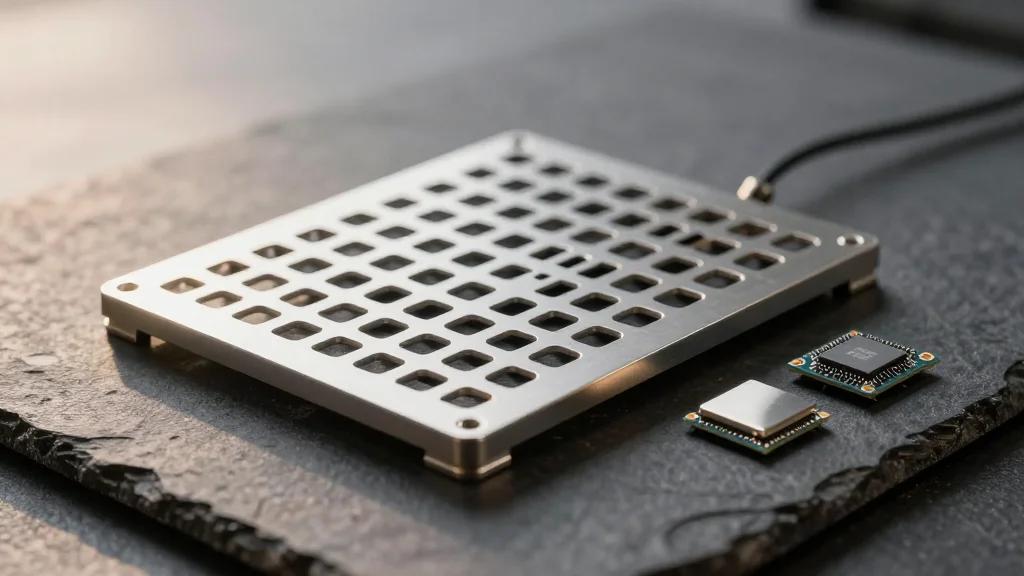
Technically, the Aeris‑10 leverages an Xilinx XCA7A50T FPGA for real‑time signal processing, handling FFTs, moving‑target indication, Doppler velocity estimation, and CFAR detection—functions usually reserved for proprietary defense hardware. Complemented by an STM32F746xx microcontroller, the system orchestrates frequency synthesis, ADC/DAC conversion, GPS timing, and thermal management. The 10N variant uses an 8×16 patch antenna for up to 3 km range, while the 10E scales to a 32×16 slotted‑waveguide array, delivering up to 20 km detection. Such capabilities, combined with a sub‑$8,000 component cost, challenge the notion that high‑performance radar must be prohibitively expensive.
The market implications are significant. Academic labs, small aerospace startups, and security firms can now prototype radar‑based solutions without seeking costly surplus units or large defense contracts. The project's shift to the CERN‑OHL‑PT license acknowledges the unique legal landscape of open hardware, while the upcoming Crowd Supply campaign signals confidence in manufacturability. Regulatory compliance remains a hurdle, but the Aeris‑10 sets a precedent for accessible, high‑end RF systems that could spur a new wave of innovation across autonomous vehicles, border monitoring, and environmental sensing.
A $7,000 DIY radar project is taking on hardware that usually costs over $100,000
Comments
Want to join the conversation?
Loading comments...