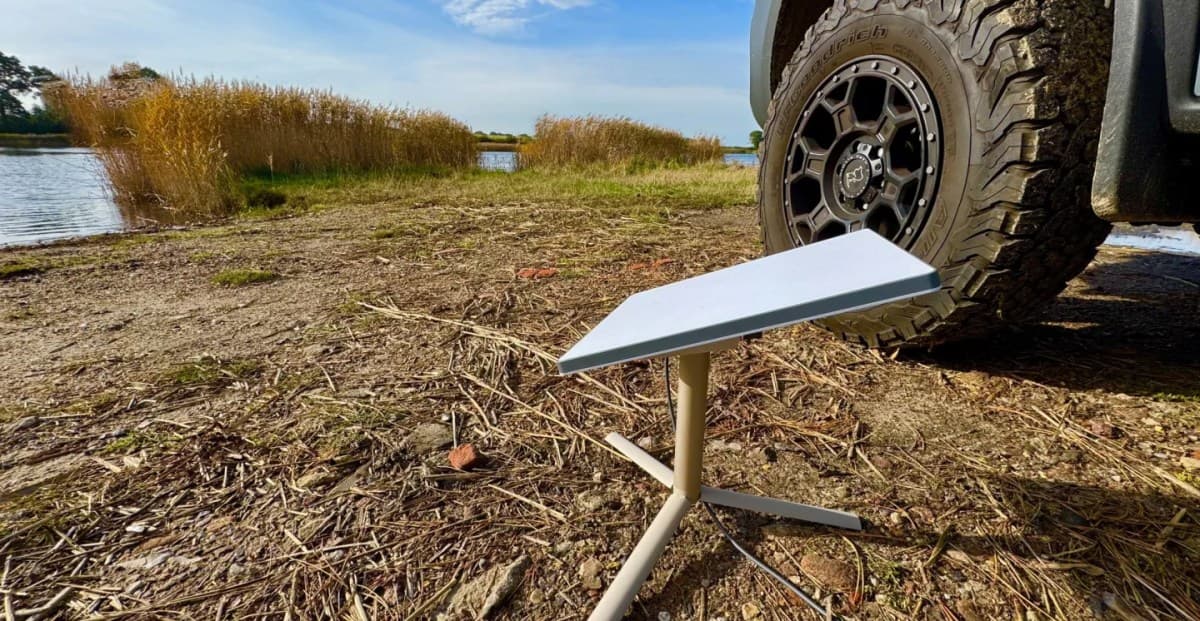
A Battery-Powered Starlink Mini Is Likely on the Way
Companies Mentioned
Why It Matters
A built‑in battery transforms the Mini into a truly mobile satellite terminal, expanding Starlink’s reach into on‑the‑go and disaster‑response markets. It also simplifies warranty coverage and reduces the cost barrier of third‑party power solutions.
Key Takeaways
- •Firmware shows “DishBatteryStats” indicating built‑in battery monitoring.
- •Integrated battery would support USB‑C, internal, or hybrid power modes.
- •Expected 99 Wh cell could give roughly five hours of untethered use.
- •Eliminates need for third‑party batteries, simplifying warranty and support.
- •Benefits van‑lifers, emergency responders, and remote workers needing portable broadband.
Pulse Analysis
Starlink’s Mini dish has already disrupted the satellite‑internet niche by offering a compact, low‑latency gateway for consumers and small businesses. Until now, users needed to tether the unit to an AC outlet or attach a third‑party battery pack, a setup that added bulk, cost, and potential warranty complications. The recent firmware leak, however, points to an internal power management system that could change that paradigm, aligning the Mini with the growing demand for truly plug‑and‑play connectivity in mobile environments.
The code snippet labeled “DishBatteryStats” reveals that the dish can report its state of charge, charging status, and power source directly to the Starlink app. Coupled with three distinct power‑state definitions—USB‑C, internal battery, and hybrid—the firmware suggests a seamless handoff between power inputs, preserving battery health and extending usable life. Analysts estimate the integrated pack will be around 99 Wh, enough for five hours of continuous operation based on field tests. This capacity mirrors airline‑friendly battery limits, meaning the Mini could travel as luggage without regulatory hurdles.
If SpaceX rolls out the battery‑powered Mini, it would open new revenue streams in sectors that value rapid deployment, such as disaster relief, remote construction, and the burgeoning van‑life community. Competitors like OneWeb and Telesat will face pressure to match the convenience factor, while third‑party battery manufacturers may see a shift toward licensed accessories. Ultimately, an all‑in‑one Starlink Mini could accelerate satellite broadband adoption by removing a key friction point—power logistics—thereby cementing SpaceX’s foothold in the portable internet market.
A battery-powered Starlink Mini is likely on the way
Comments
Want to join the conversation?
Loading comments...