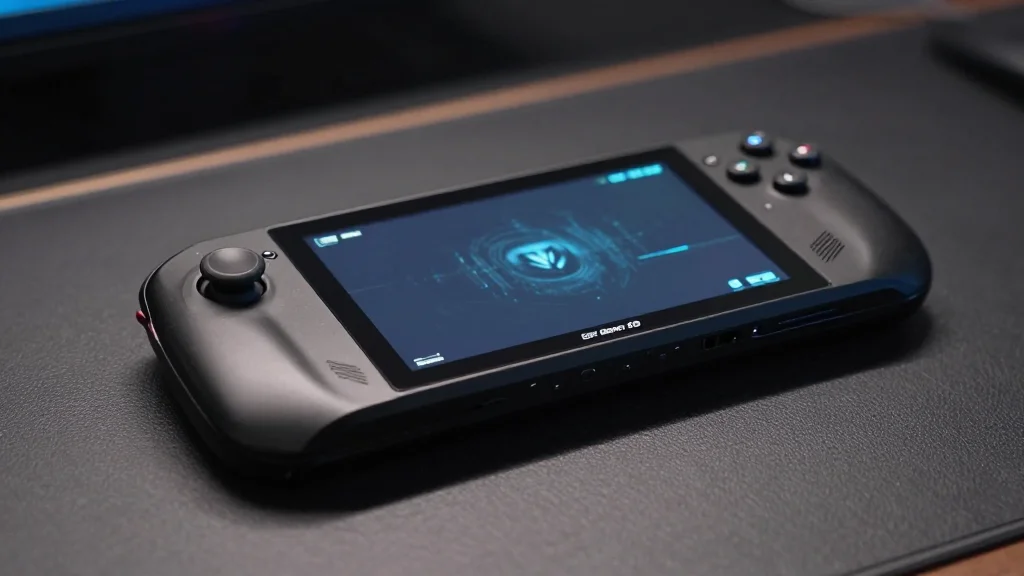
Acer Unveils Predator Atlas 8 Handheld Powered by Intel’s New Arc G3 Chips

Why It Matters
The Predator Atlas 8 represents the first serious Intel‑backed challenge to AMD’s monopoly in the Windows handheld gaming market. By leveraging the Arc G3 family’s AI‑driven upscaling and power‑efficient cores, Acer aims to deliver PC‑class performance in a portable form factor, potentially reshaping consumer expectations for handhelds. If successful, the device could spur a new wave of Intel‑centric hardware, diversify the ecosystem, and intensify competition that may drive down prices and accelerate feature innovation. Moreover, the launch arrives at a time when component shortages and rising memory costs—spurred by AI workloads—are inflating device prices. Acer’s decision to price the Atlas 8 near $900 signals confidence that performance gains and battery life will outweigh cost concerns, setting a benchmark for future premium handhelds and influencing how manufacturers balance specs against supply‑chain volatility.
Key Takeaways
- •Acer Predator Atlas 8 announced at Computex 2026, featuring Intel Arc G3 or G3 Extreme SoCs
- •8‑inch 1920 × 1200 WUXGA display with 120 Hz variable refresh and Corning Gorilla Glass Victus
- •Up to 80 Wh battery paired with Intel Endurance Gaming for extended playtime
- •First handheld to use a metal Predator AeroBlade fan (89 blades, 0.1 mm) promising 10 % more airflow
- •Estimated launch price around $900, positioning it above AMD‑based rivals
Pulse Analysis
Intel’s entry into the handheld arena with the Arc G3 family is more than a technical footnote; it’s a strategic push to break AMD’s de‑facto monopoly on portable Windows gaming. Historically, AMD’s integrated graphics have been sufficient for low‑to‑mid‑range titles but struggled with AAA workloads, leaving a performance gap that Intel hopes to close with XeSS 3 and pre‑compiled shaders. If the Atlas 8 can deliver the promised 80 fps in demanding titles while maintaining respectable battery life, it will validate Intel’s claim that integrated GPUs can finally compete with discrete mobile GPUs in a power‑constrained chassis.
The competitive dynamics also extend to ecosystem lock‑in. AMD’s handhelds benefit from a mature driver stack and broad developer support, whereas Intel must convince both game studios and the modding community to adopt its XeSS pipeline. Early driver maturity will be critical; Intel’s promise of day‑0 updates and cloud‑based shader pre‑compilation could reduce stutter, but any lag in support could erode the performance advantage. Additionally, Acer’s premium pricing may limit adoption to enthusiasts, leaving the mass market to cheaper AMD devices unless Intel can quickly drive down costs through economies of scale.
Looking ahead, the Atlas 8 could catalyze a broader shift toward more powerful, Windows‑based handhelds that double as portable workstations. The inclusion of Thunderbolt 4, Wi‑Fi 7, and a 1 TB SSD hints at a convergence of gaming and productivity use cases, potentially expanding the target audience beyond gamers to creators who need on‑the‑go PC performance. However, the success of this convergence will hinge on how well Intel can balance raw performance with power efficiency—a balance that has historically favored AMD in the handheld segment. If Acer and Intel manage to deliver on their performance and battery promises, the Atlas 8 could usher in a new generation of high‑end handhelds and force AMD to accelerate its own roadmap, ultimately benefiting consumers with more choices and faster innovation.
Acer Unveils Predator Atlas 8 Handheld Powered by Intel’s New Arc G3 Chips
Comments
Want to join the conversation?
Loading comments...