Why It Matters
The high‑speed, multi‑channel architecture accelerates scan cycles while cutting component count, allowing OEMs to deliver more compact, energy‑efficient imaging solutions for logistics, quality control and automation.
Key Takeaways
- •CS82L4x series supports 1, 4, or 6 channels
- •24 Msps per channel with 16‑bit resolution
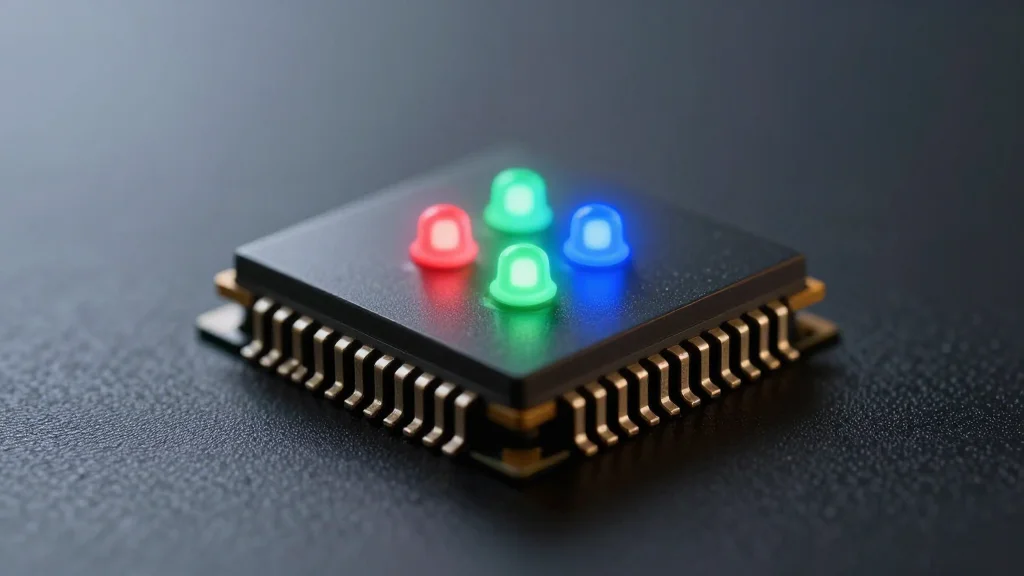
- •Integrated RGB LED driver cuts board‑level parts
- •SPI, I²C, CMOS or LVDS interfaces selectable
- •Operates from –40 °C to +85 °C in 3.3 V
Pulse Analysis
Industrial imaging is becoming a backbone of modern manufacturing, from high‑throughput barcode scanners to precision quality‑inspection cameras. As production lines push for faster cycle times, the demand for sensor front‑ends that can digitize optical data at higher rates while maintaining accuracy has surged. Cirrus Logic’s CS82L4x series arrives at this inflection point, offering a scalable solution that can be tailored to single‑lens or multi‑lens configurations, thereby addressing the diverse needs of today’s automation equipment.
At the heart of the CS82L4x family is a redesigned successive‑approximation register (SAR) ADC capable of 24 million samples per second per channel and delivering 16‑bit resolution. This combination yields crisp digital representations of LED‑reflected light, essential for fine‑detail scanning. The inclusion of an integrated RGB LED driver eliminates the need for external driver circuitry, simplifying board layouts and reducing power consumption. Flexible interfacing options—SPI, I²C, CMOS, or LVDS—allow designers to match the IC to existing system architectures, while the wide operating temperature range (‑40 °C to +85 °C) ensures reliability in harsh factory environments.
For OEMs, the CS82L4x series translates into shorter development cycles and lower bill‑of‑materials, as fewer components are required to achieve high‑speed, high‑resolution imaging. This efficiency can be a decisive factor in competitive markets such as logistics automation, where faster scan times directly impact throughput and labor costs. Looking ahead, the modular nature of the series positions it well for emerging applications like AI‑enabled visual inspection and smart sensor networks, where multi‑channel data acquisition and on‑board processing will be increasingly valuable.
AFE ICs accelerate industrial image scanning
Comments
Want to join the conversation?
Loading comments...