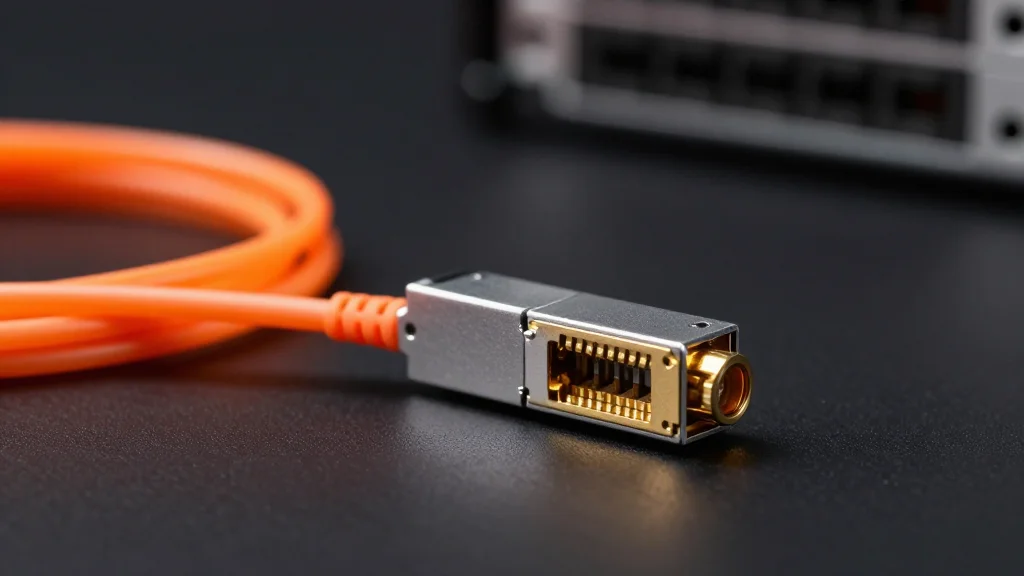
AI Optical Transceiver Market to Grow 57% to US$26bn in 2026
Why It Matters
The rapid market expansion reshapes the optical‑communications supply chain, creating strategic opportunities for component makers and regional players to capture high‑value AI data‑center contracts.
Key Takeaways
- •AI optical transceiver market to hit $26 bn in 2026
- •Growth driven by 800 G+ transceivers for AI server clusters
- •Supply bottlenecks include EML and CW‑LD chip shortages
- •Vendors adopt long‑term agreements to secure component supply
- •Taiwan firms expanding capacity to capture 1.6 T market share
Pulse Analysis
The AI boom is redefining data‑center architecture, pushing operators to adopt ultra‑high‑speed interconnects that can handle the massive bandwidth of modern GPU clusters. As hyperscale providers like Google, Microsoft and Meta double down on AI workloads, the demand for 800 G and higher optical transceivers has outpaced traditional telecom upgrades, turning optical modules into a critical performance lever rather than a peripheral component.
At the same time, the supply side is feeling the strain. Critical optoelectronic chips—particularly electro‑absorption modulated lasers and continuous‑wave laser diodes—are in short supply due to limited fab capacity and the precision required for optical alignment. Manufacturers are countering these constraints with strategic long‑term agreements, stockpiling key parts, and accelerating the shift toward low‑power linear pluggable optics and silicon‑photonic integration, which promise to ease thermal and power challenges while simplifying production.
For regional players, especially Taiwan’s well‑established optical‑communications firms, the forecasted surge represents a watershed moment. Their expertise in foundry services, passive components, and module packaging positions them to capture a sizable slice of the emerging 1.6 T coherent module market. Success will hinge on securing design‑in wins with tier‑one cloud providers and scaling silicon‑photonic solutions before competitors solidify their footholds, making 2026‑2027 a decisive period for market leadership.
AI optical transceiver market to grow 57% to US$26bn in 2026
Comments
Want to join the conversation?
Loading comments...