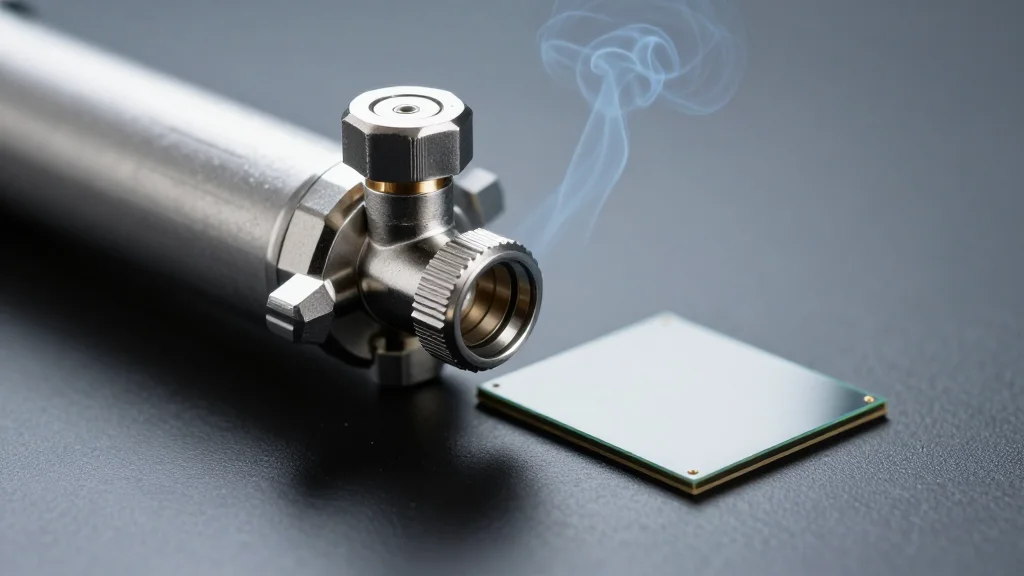
Air Liquide Commits $236 Million to Japan for AI Chip Gas Supply

Companies Mentioned
Why It Matters
The investment directly addresses a bottleneck in AI chip manufacturing: the availability of ultra‑high‑purity gases. As AI workloads proliferate, chip makers need tighter process controls, and any shortfall in gas supply can translate into lower yields and delayed product launches. By securing a dedicated gas source, the unnamed semiconductor partner can accelerate its AI‑chip roadmap, strengthening Japan’s position in a market dominated by Taiwan and South Korea. Beyond the immediate supply benefits, the deal illustrates a strategic realignment where upstream material providers are becoming co‑investors in fab capacity. This partnership model could reduce supply‑chain volatility, lower total‑cost‑of‑ownership for chipmakers, and encourage other gas and chemical firms to pursue similar long‑term agreements, reshaping the economics of semiconductor manufacturing.
Key Takeaways
- •Air Liquide invests €200 million ($236 million) in two Hiroshima gas plants.
- •Plants will supply ultra‑high‑purity nitrogen, oxygen and argon for AI chips.
- •Facilities slated for startup by end‑2028, supporting a global semiconductor leader.
- •Investment reinforces Japan’s AI‑chip supply chain amid global capacity race.
- •Long‑term gas‑supply contracts may become a new norm in semiconductor financing.
Pulse Analysis
Air Liquide’s $236 million injection is more than a capital outlay; it’s a strategic hedge against the material scarcity that has plagued the semiconductor sector since the pandemic‑induced shortages. By embedding itself as a long‑term supplier, Air Liquide reduces the risk of price spikes and supply disruptions that can erode fab margins. This mirrors a broader industry shift where ancillary players—gas, chemicals, equipment—are moving from transactional relationships to equity‑style partnerships.
Historically, semiconductor fabs have treated gas supply as a commodity, negotiating spot contracts that left them vulnerable to market fluctuations. The Hiroshima agreement flips that script, locking in both volume and price for a decade‑plus horizon. For the unnamed chipmaker, the benefit is twofold: operational certainty and a competitive edge in AI chip performance, where even minor impurity variations can affect power efficiency and transistor density.
Regionally, the move bolsters Japan’s ambition to reclaim a larger share of the AI‑chip market. While Taiwan’s TSMC and South Korea’s Samsung dominate capacity, Japan’s strength lies in materials and precision engineering. Air Liquide’s presence could attract further foreign direct investment, encouraging a cluster effect that revitalises local supply chains. If the Hiroshima plants meet their projected output, other gas firms may follow suit, potentially leading to a wave of similar investments across Asia and the United States, fundamentally altering how the semiconductor ecosystem funds and secures its most critical inputs.
Air Liquide commits $236 million to Japan for AI chip gas supply
Comments
Want to join the conversation?
Loading comments...