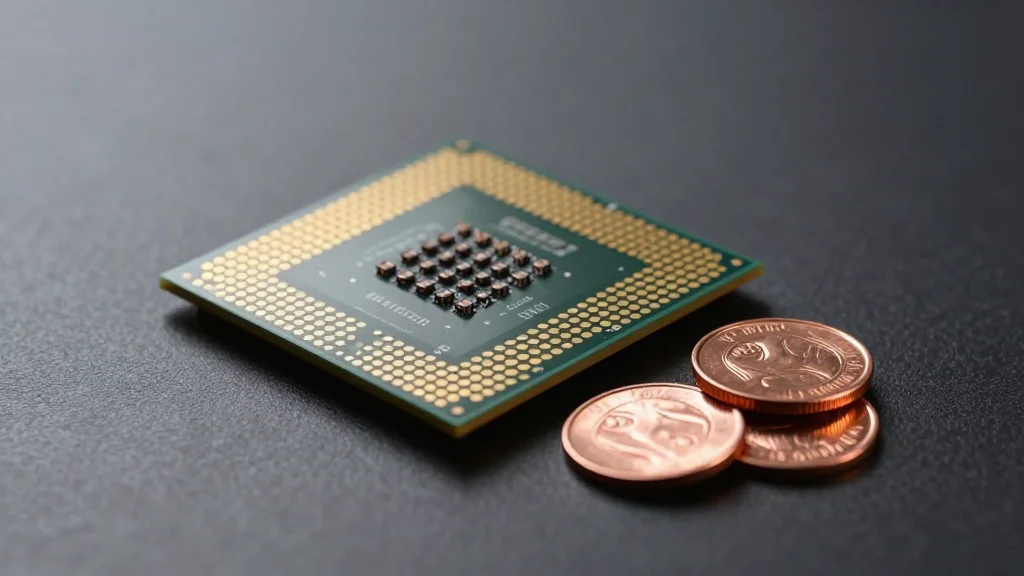
AMD and Intel Consumer CPU Prices Surge 10% as AI‑Driven Shortages Grip Market

Companies Mentioned
Why It Matters
The 10% jump in consumer CPU prices signals a structural shift in semiconductor demand, where AI workloads are pulling CPUs back into the spotlight. Higher CPU costs will cascade through the PC ecosystem, inflating retail prices for desktops, laptops and gaming rigs, and squeezing margins for OEMs. For enterprises, rising server‑CPU prices could accelerate the adoption of alternative compute solutions, such as specialized AI accelerators or cloud‑based services, reshaping data‑center investment strategies. Long‑term, sustained price pressure may incentivize manufacturers to accelerate capacity expansion, but also to explore pricing models that lock in customers through multi‑year contracts. The trend also highlights the growing interdependence of CPU and AI markets, suggesting that future supply‑chain disruptions in one segment will reverberate across the broader hardware landscape.
Key Takeaways
- •AMD and Intel raised consumer CPU list prices by ~10% in the past month.
- •Server‑grade CPUs have climbed 10‑20% since March 2024.
- •AI‑driven workloads are shifting demand from GPUs back to CPUs.
- •Further hikes of 8‑10% are expected in the second half of 2026.
- •AMD may see a cumulative 16‑17% price increase across two rounds as it moves to 2 nm production.
Pulse Analysis
The current price surge reflects a convergence of demand‑side and supply‑side dynamics that is unlikely to be short‑lived. On the demand side, the rise of agentic AI—applications that require massive parallel CPU processing for vector and database searches—has broadened the AI market beyond the GPU‑centric narrative that dominated the previous two years. This diversification means that CPU manufacturers now sit at the core of AI infrastructure, granting them pricing power previously reserved for GPU makers.
Supply constraints compound the effect. Advanced‑node fabs are operating near full capacity, and the rollout of 2 nm silicon is still months away. AMD’s dual‑track pricing—raising both consumer and server CPUs twice in 2024—suggests a strategic move to capture higher margins while funding its next‑generation silicon roadmap. Intel, meanwhile, can leverage higher CPU prices to offset the massive capital outlay required for its foundry expansion, positioning its CPU business as a cash‑flow engine.
For the broader market, the implications are twofold. First, end‑users will face higher upfront costs, potentially slowing the refresh cycle for PCs and laptops. Second, enterprises may accelerate the shift toward cloud‑based compute or explore heterogeneous architectures that blend CPUs with AI‑specific accelerators to mitigate cost spikes. In the longer view, sustained price pressure could spur policy discussions around semiconductor supply resilience, prompting governments to incentivize fab capacity expansion. The next six months will be a litmus test: if supply eases, price hikes may plateau; if AI demand continues its upward trajectory, we could see a new pricing baseline for CPUs that reshapes the hardware economics for years to come.
AMD and Intel Consumer CPU Prices Surge 10% as AI‑Driven Shortages Grip Market
Comments
Want to join the conversation?
Loading comments...