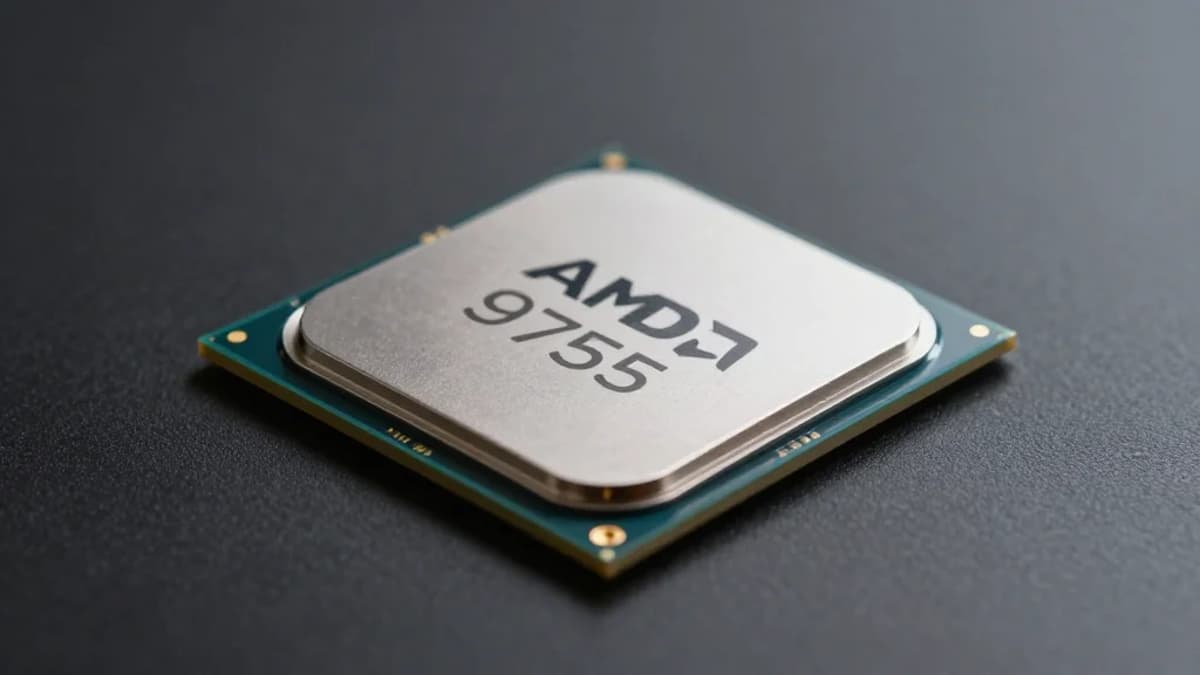
AMD EPYC Turin 128 Core Comparison: EPYC 9745 "Zen 5C" Vs. EPYC 9755 "Zen 5"
•March 2, 2026
0

Why It Matters
The 9745 offers a lower‑power alternative without sacrificing core count, enabling cost‑effective scaling in thermally limited racks, while the 9755 delivers peak performance for workloads demanding raw speed.
Key Takeaways
- •EPYC 9755 offers 500W TDP, higher boost clocks
- •EPYC 9745 runs 400W (320W cTDP) with 2.4GHz base
- •Both priced around $7,200, targeting 128-core servers
- •9745 provides better power efficiency for thermal‑constrained builds
- •L3 cache halves on 9745 versus 9755, affecting latency
Pulse Analysis
AMD’s Turin family expands the server‑grade EPYC lineup with two distinct 128‑core options. The EPYC 9755, built on the traditional Zen 5 architecture, maximizes raw compute power with a 500 W thermal envelope, higher boost frequencies and a massive 512 MB L3 cache. In contrast, the EPYC 9745 leverages the denser Zen 5C design, delivering the same core count at 400 W (or as low as 320 W via cTDP) and a higher base clock. This architectural divergence gives data‑center operators a clear choice between peak performance and energy efficiency, a decision increasingly critical as power budgets tighten.
Performance testing by Phoronix reveals that the 9745’s efficiency gains translate into competitive throughput per watt, especially in workloads that scale across many cores but are not bound by single‑thread frequency. While the 9755 still leads in absolute speed due to its higher boost and larger cache, the 9745 narrows the gap sufficiently to make it viable for hyperscale environments where rack power density is a limiting factor. Comparisons with the competing AmpereOne A128‑34X show the 9745’s 3.7 GHz boost at 320 W is comparable to the ARM‑based chip’s 3.4 GHz at 275 W, underscoring AMD’s ability to match alternative architectures on the efficiency frontier.
Pricing parity—both models listed near $7,200—means the selection hinges on infrastructure constraints rather than cost. For operators with 400 W‑rated motherboards or strict thermal envelopes, the 9745 offers a plug‑and‑play upgrade path without redesigning power delivery. Conversely, enterprises prioritizing maximum single‑thread performance for latency‑sensitive applications may opt for the 9755 despite its higher power draw. As data‑center operators balance performance, power, and cooling, AMD’s dual‑track Turin strategy provides the flexibility needed to optimize total cost of ownership across diverse workloads.
AMD EPYC Turin 128 Core Comparison: EPYC 9745 "Zen 5C" vs. EPYC 9755 "Zen 5"
0
Comments
Want to join the conversation?
Loading comments...