AMD Launches Zen 5 Ryzen Pro 9000 Series with 3D V‑Cache, Up to 128 MB L3 and 170 W TDP

Companies Mentioned
Why It Matters
The introduction of 3D V‑Cache to professional CPUs blurs the line between consumer‑grade gaming performance and enterprise‑grade workstation capability. Larger cache directly benefits workloads that are memory‑bandwidth bound, such as video transcoding, 3D rendering, and on‑device AI inference, potentially reducing time‑to‑completion and operational costs for enterprises. By breaking the 65 W power ceiling, AMD also signals a willingness to prioritize raw performance over strict power efficiency, a trade‑off that could reshape thermal design standards in high‑end workstations. For the broader hardware ecosystem, AMD’s move pressures Intel and other rivals to innovate on cache architecture or risk losing market share in segments that value low latency and high throughput. OEMs like Lenovo will need to adapt chassis and cooling solutions, creating a ripple effect across component suppliers, from motherboard manufacturers to cooling system vendors.
Key Takeaways
- •AMD launches six Ryzen Pro 9000 Series CPUs built on Zen 5 architecture.
- •Ryzen 9 Pro 9965X3D features 16 cores, 5.5 GHz boost, 128 MB L3 cache, 170 W TDP.
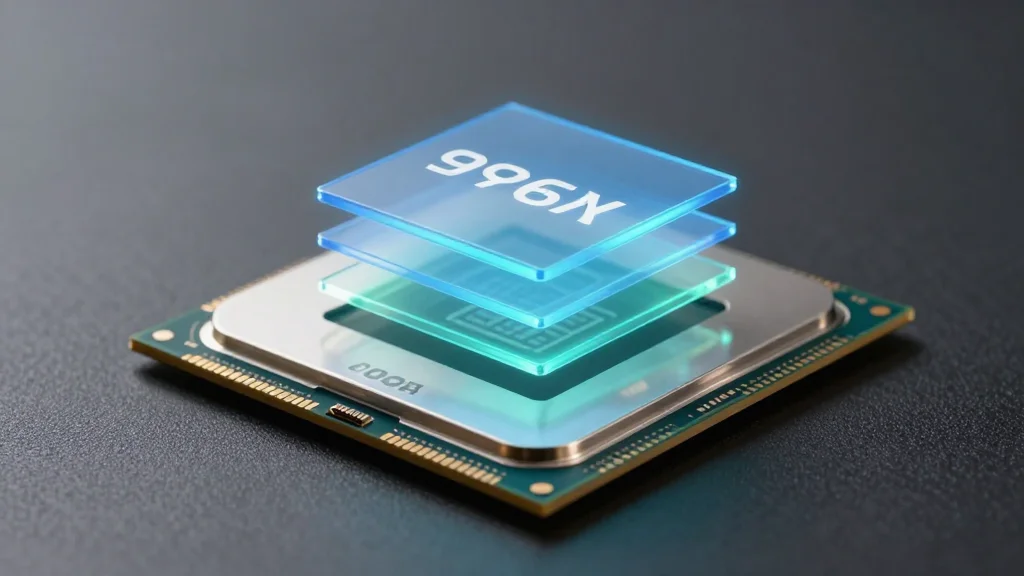
- •3D V‑Cache technology adds 64 MB of stacked cache, first time in a workstation CPU.
- •All models support up to 256 GB ECC DDR5 RAM and PCIe 5.0.
- •Lenovo confirmed a system using the new chips, slated for H2 2026 release.
Pulse Analysis
AMD’s decision to bring 3D V‑Cache to the Ryzen Pro line reflects a strategic pivot from a gamer‑centric narrative to a broader performance‑first proposition for professional users. Historically, AMD’s cache‑stacking was marketed as a gaming advantage, but the underlying latency reduction benefits any workload that repeatedly accesses large data sets. By quantifying the cache increase—doubling from 64 MB to 128 MB on the flagship model—AMD provides a clear, measurable performance lever that can be benchmarked against Intel’s Xeon offerings, which traditionally rely on higher core counts and larger memory bandwidth.
The higher TDP figures, while raising thermal concerns, also indicate AMD’s confidence that the market will accommodate more robust cooling solutions in exchange for raw speed. This mirrors trends seen in high‑end laptops and workstations where performance throttling is less acceptable than power draw. OEMs like Lenovo will likely differentiate their products with advanced liquid cooling or vapor‑chamber designs, creating a new sub‑segment of premium workstations.
Looking forward, the success of the Ryzen Pro 9000 series could dictate AMD’s roadmap for Zen 6 and beyond. If the cache‑centric approach gains traction, we may see a cascade of software optimizations—especially in video editing suites and CAD tools—that explicitly target larger L3 caches. Conversely, Intel may accelerate its own cache‑stacking research or double down on heterogeneous architectures that combine CPUs with dedicated AI accelerators. In either case, the introduction of 3D V‑Cache to the workstation arena is poised to reshape performance benchmarks and influence procurement strategies across media, engineering, and AI‑driven enterprises.
AMD Launches Zen 5 Ryzen Pro 9000 Series with 3D V‑Cache, Up to 128 MB L3 and 170 W TDP
Comments
Want to join the conversation?
Loading comments...