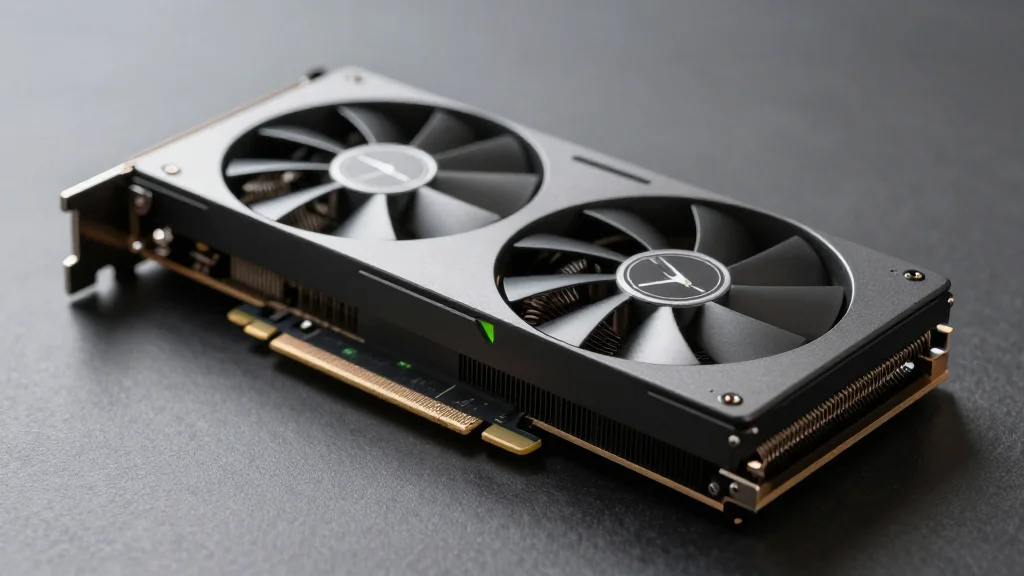
AMD Leaks Budget Radeon RX 9050 with 2,048 Cores, Targeting Strained Mid‑Range Market

Companies Mentioned

Why It Matters
The RX 9050 could provide a rare influx of affordable graphics performance at a time when RAM and VRAM shortages have pushed many consumers out of the market for new PCs. By leveraging surplus Navi 44 dies, AMD may improve fab utilization and offer a product that bridges the gap between legacy budget GPUs and the premium segment, potentially stabilizing demand for mid‑range gaming rigs. Moreover, the card’s launch would test AMD’s ability to respond quickly to supply‑chain shocks, a capability that could become a competitive differentiator as AI workloads continue to dominate silicon allocation. For the broader hardware ecosystem, a new budget GPU could stimulate motherboard and memory sales by giving builders a reason to upgrade despite elevated component prices. It also adds pressure on Nvidia to defend its low‑end dominance, potentially leading to more aggressive pricing or faster rollout of next‑gen architectures, which would benefit end users across the PC gaming market.
Key Takeaways
- •RX 9050 rumored to use Navi 44 GPU with full 2,048 stream processors
- •Clock speeds expected to be a few hundred MHz lower than RX 9060/XT
- •Equipped with 8 GB GDDR6 on a 128‑bit bus, 288 GB/s bandwidth, 18 Gbps memory speed
- •AMD may be repurposing surplus Navi 44 dies that miss higher‑tier clock‑speed yields
- •Launch could reshape budget GPU segment amid AI‑driven RAM shortages
Pulse Analysis
AMD’s tentative foray into the budget GPU space with the RX 9050 reflects a strategic pivot born out of necessity rather than pure market ambition. The AI boom has forced silicon fabs to prioritize high‑margin data‑center chips, leaving consumer graphics with a chronic supply deficit. By tapping into a pool of Navi 44 dies that meet core‑count criteria but fall short on clock‑speed targets, AMD can extract value from otherwise discarded silicon, improving fab economics and cushioning its revenue stream against the volatility of premium GPU cycles.
Historically, AMD’s low‑end offerings have lagged behind Nvidia’s in both performance and market perception. The RX 9050’s unusual blend of high core count and reduced clocks could deliver a sweet spot: enough raw compute to handle modern titles at 1080p while staying within a power envelope that keeps system costs down. If priced competitively—potentially under $200—the card could revive demand among budget‑conscious gamers who have been sidelined by soaring memory prices. This would also give AMD leverage in negotiations with OEMs, who are eager for any product that can differentiate their builds in a crowded market.
Looking ahead, the success of the RX 9050 will hinge on AMD’s ability to manage the trade‑off between performance and yield. Should the chip prove stable at its lower clocks, it could set a precedent for future “surplus‑chip” products, allowing AMD to quickly respond to market gaps without the long lead times of new architecture development. Conversely, if the performance delta is too narrow, the card may struggle to justify its price against entrenched Nvidia alternatives, limiting its impact. Either scenario will shape AMD’s roadmap and the competitive dynamics of the mid‑range GPU arena for years to come.
AMD Leaks Budget Radeon RX 9050 with 2,048 Cores, Targeting Strained Mid‑Range Market
Comments
Want to join the conversation?
Loading comments...