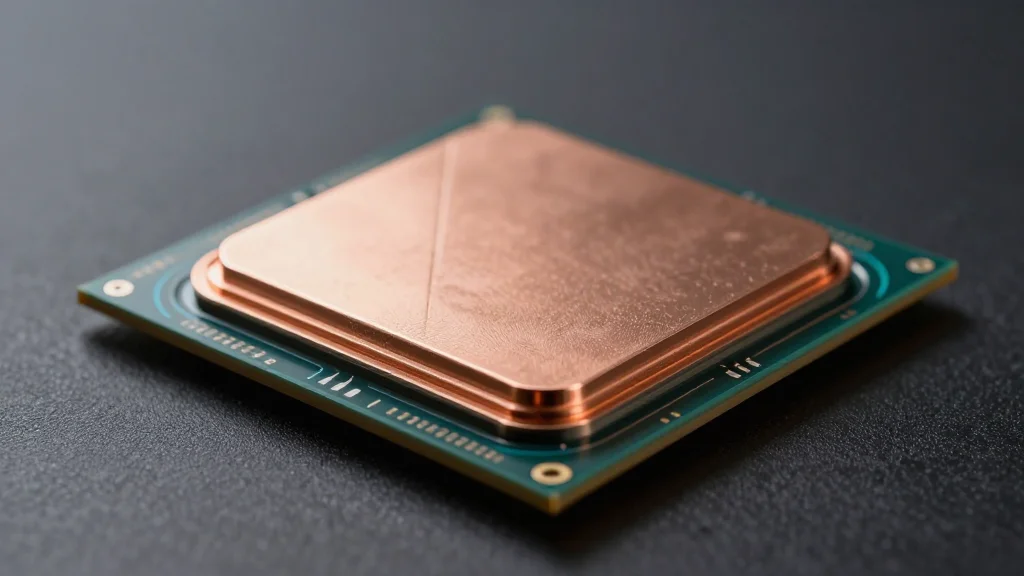
AMD Leaks First 16‑Core Ryzen 9 PRO 9965X3D with 3D V‑Cache

Why It Matters
The Ryzen 9 PRO 9965X3D could redefine the performance envelope for professional workstations by marrying high core counts with 3D V‑Cache while maintaining a low power draw. Enterprises that run AI inference, video rendering or scientific simulations stand to benefit from higher throughput per watt, potentially lowering total cost of ownership. Moreover, the chip signals AMD’s intent to challenge Intel’s dominance in the high‑end workstation market, forcing a competitive shift that may accelerate innovation across the entire hardware ecosystem. If AMD confirms a 65‑watt TDP, the 9965X3D would also broaden the appeal of high‑core‑count CPUs to edge‑computing scenarios where thermal constraints are strict. This could spur a wave of new server and embedded designs that leverage the PRO platform’s security and manageability features, expanding AMD’s footprint beyond traditional data‑center deployments.
Key Takeaways
- •AMD leaked its first 16‑core Ryzen 9 PRO 9965X3D, based on Zen 5 architecture
- •The chip adds 3D V‑Cache (128 MB L3 + 16 MB L2) to the PRO line
- •Performance is 7.3 % slower multi‑thread and 2.7 % slower single‑thread than the consumer 9950X3D
- •Potential TDP could be 65 W, far lower than the 170 W of the consumer counterpart
- •Pricing has not been disclosed, but analysts expect $700‑$900 range
Pulse Analysis
AMD’s decision to introduce 3D V‑Cache into the Ryzen PRO family reflects a strategic pivot toward power‑efficient, high‑core‑count solutions for enterprise workloads. Historically, the PRO line has prioritized security and manageability over raw performance, but the addition of stacked cache brings a new performance lever that can accelerate memory‑bound tasks such as AI inference and large‑scale simulations. By potentially offering a 65‑watt TDP, AMD is addressing a long‑standing pain point for data‑center operators: the trade‑off between core density and cooling overhead. This could make the 9965X3D an attractive drop‑in upgrade for existing workstation platforms that cannot accommodate the higher power draw of consumer‑grade 3D V‑Cache CPUs.
From a competitive standpoint, Intel’s Xeon W series currently leads in the high‑core‑count workstation segment, but its offerings often come with higher power envelopes and premium pricing. AMD’s lower‑power, cache‑rich alternative could force Intel to revisit its own roadmap, perhaps accelerating its own stacked‑cache or hybrid‑core initiatives. The leak also hints at a broader AMD roadmap that may see additional PRO models with 3D V‑Cache, suggesting the company is betting on cache depth as a differentiator rather than solely on clock speed or core count.
Looking ahead, the market’s reaction will hinge on three variables: confirmation of the TDP, the final price point, and the availability of compatible motherboards that support the PRO security suite alongside the new cache architecture. If AMD can deliver a compelling price‑to‑performance ratio, the 9965X3D could catalyze a shift toward more energy‑efficient, high‑throughput workstations, influencing procurement decisions across cloud providers, AI research labs, and media production houses. The upcoming launch will therefore be a litmus test for whether AMD’s cache‑centric, low‑power strategy can gain traction in a segment traditionally dominated by raw power and established ecosystem support.
AMD Leaks First 16‑Core Ryzen 9 PRO 9965X3D with 3D V‑Cache
Comments
Want to join the conversation?
Loading comments...