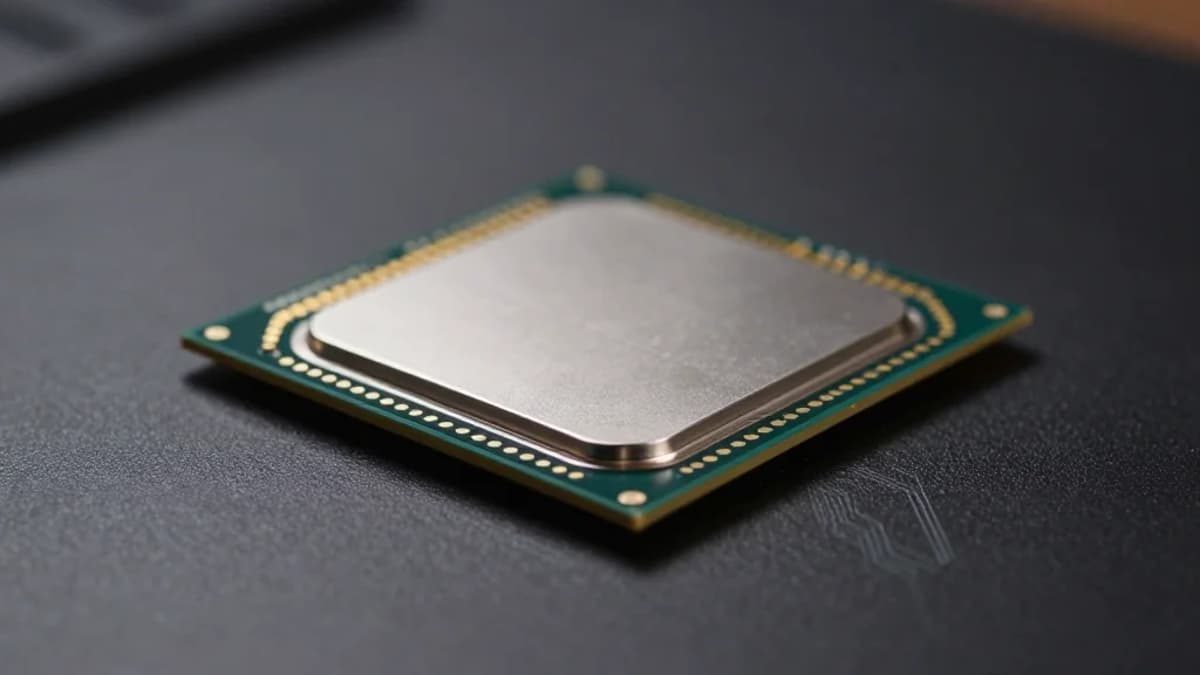
AMD Rembrandt/Zen 3+ APU Speculation and Discussion
•February 24, 2026
0
Companies Mentioned


Why It Matters
If Rembrandt delivers the speculated memory and cache upgrades, AMD could solidify its lead in power‑efficient mobile performance and pressure Intel’s 13th‑gen laptop chips. The timing and production volume will directly affect OEM adoption and market share in the fast‑growing ultrathin notebook segment.
Key Takeaways
- •Rembrandt likely uses 6nm N6 process, RDNA2 graphics
- •Expected DDR5/LPDDR5 support boosts memory bandwidth
- •Shared L3/infinity cache speculation could improve GPU performance
- •Launch timing uncertain; may appear 2021‑2022, possibly early 2022
- •Wafer capacity may limit production of high‑cache APUs
Pulse Analysis
AMD’s APU roadmap has accelerated in recent years, with Rembrandt positioned as the next step after Cezanne. Leveraging TSMC’s 6nm N6 node, the chip promises higher transistor density, enabling a 12‑CU RDNA 2 graphics block and native DDR5/LPDDR5 interfaces. These upgrades address the long‑standing bandwidth bottleneck of integrated graphics, while PCIe 4.0 and USB 4 readiness future‑proof the platform for emerging peripherals. By aligning the mobile APU with the upcoming AM5 desktop socket, AMD also signals a convergence of its laptop and desktop strategies, simplifying software optimization across product lines.
A key technical rumor centers on a shared L3 or infinity cache that would be accessible to both CPU cores and GPU compute units. Such a unified cache could dramatically reduce memory latency for graphics workloads, narrowing the performance gap with discrete GPUs in thin‑and‑light laptops. While Cezanne already features 16 MB of L3 cache, analysts speculate Rembrandt might double that figure without inflating die size, thanks to the efficiency gains of the N6 process. If realized, this architecture would enhance multi‑threaded compute and gaming performance, especially when paired with DDR5’s higher bandwidth and lower power draw.
From a market perspective, the timing of Rembrandt’s launch is critical. OEMs have been eager to replace aging Renoir‑based models, and a 2021‑early‑2022 release would align with the CES cycle, offering a fresh product slate before Intel’s 13th‑gen mobile chips dominate the season. However, wafer capacity constraints could throttle the availability of high‑cache variants, potentially limiting supply to premium configurations. Nonetheless, even a baseline Rembrandt should reinforce AMD’s strong position in the 15‑W laptop segment, where its multi‑core efficiency already outperforms many higher‑TDP Intel offerings, setting the stage for broader adoption of DDR5‑enabled mobile platforms.
AMD Rembrandt/Zen 3+ APU Speculation and Discussion
0
Comments
Want to join the conversation?
Loading comments...