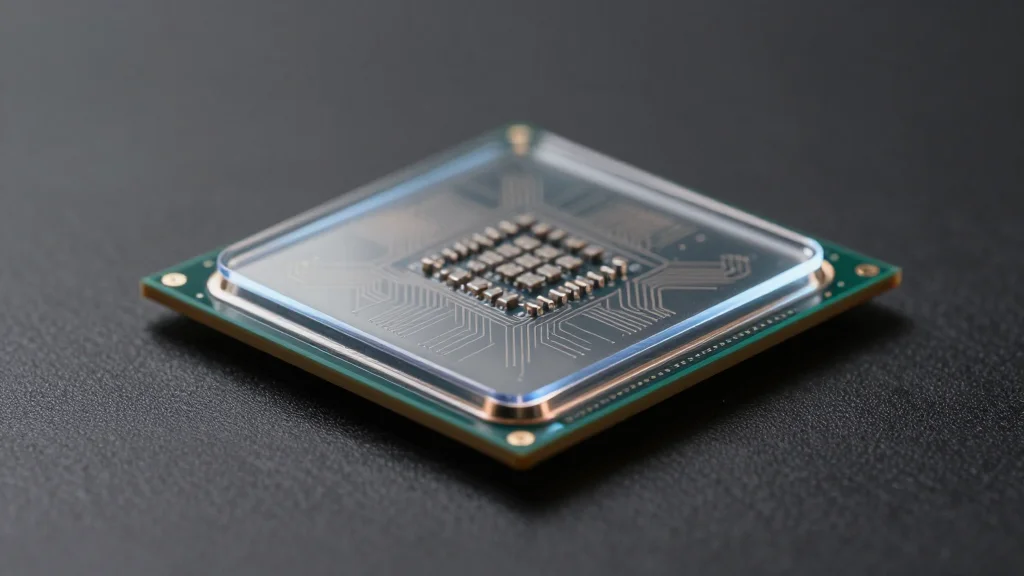
AMD Ships Second-Gen Versal Prime Accelerators
Why It Matters
The upgraded Versal Prime chips give OEMs a high‑performance, low‑size compute platform, strengthening AMD’s position in edge and embedded markets while enabling faster product cycles for latency‑critical workloads.
Key Takeaways
- •AMD adds three Gen2 Versal Prime chips for space-constrained markets.
- •New SoCs combine quad‑core Cortex‑A78AE, six‑core Cortex‑R52, Mali‑G78AE GPU.
- •Up to 5× scalar compute improvement over prior adaptive SoCs.
- •DDR5 6400 Mb/s, LPDDR5X 8533 Mb/s deliver 102 GB/s bandwidth.
- •Early‑access tools released; 2VM3654 sampling starts later 2026.
Pulse Analysis
AMD’s second‑generation Versal Prime accelerators mark a strategic push into the edge‑computing segment where power, performance, and footprint are tightly balanced. By marrying high‑end Arm cores with programmable logic and integrated video codecs, the new SoCs provide a single‑chip solution that rivals traditional FPGA and x86 platforms for tasks such as real‑time video processing, AI inference, and industrial control. The inclusion of DDR5 and LPDDR5X memory controllers, each supporting bandwidths exceeding 100 GB/s, ensures that data‑intensive workloads can be handled without external memory bottlenecks, a critical advantage for autonomous systems and high‑definition broadcast equipment.
From a developer perspective, AMD’s continuation of the Vivado and Vitis toolchains, coupled with the Embedded Development Framework based on Yocto, lowers the barrier to entry for engineers accustomed to software‑centric flows. Early‑access design tools for the 2VM3654 allow silicon partners to prototype and validate designs ahead of full production, accelerating time‑to‑revenue. The common 2‑inch footprint across the Versal Prime lineup further simplifies board design, enabling manufacturers to reuse a single hardware platform across multiple product tiers while scaling performance as needed.
The market impact extends beyond AMD’s immediate customer base. With up to five‑fold scalar compute gains, the Gen2 devices position AMD as a credible alternative to Nvidia’s edge GPUs and Xilinx’s adaptive SoCs, especially in applications where space and power budgets are non‑negotiable. This could reshape procurement strategies in sectors such as smart factories, 5G base stations, and professional AV, where integrated compute and I/O flexibility drive competitive advantage. As the ecosystem matures, the Versal Prime series may become a cornerstone for next‑generation edge AI and high‑throughput video pipelines.
AMD ships second-gen Versal Prime accelerators
Comments
Want to join the conversation?
Loading comments...