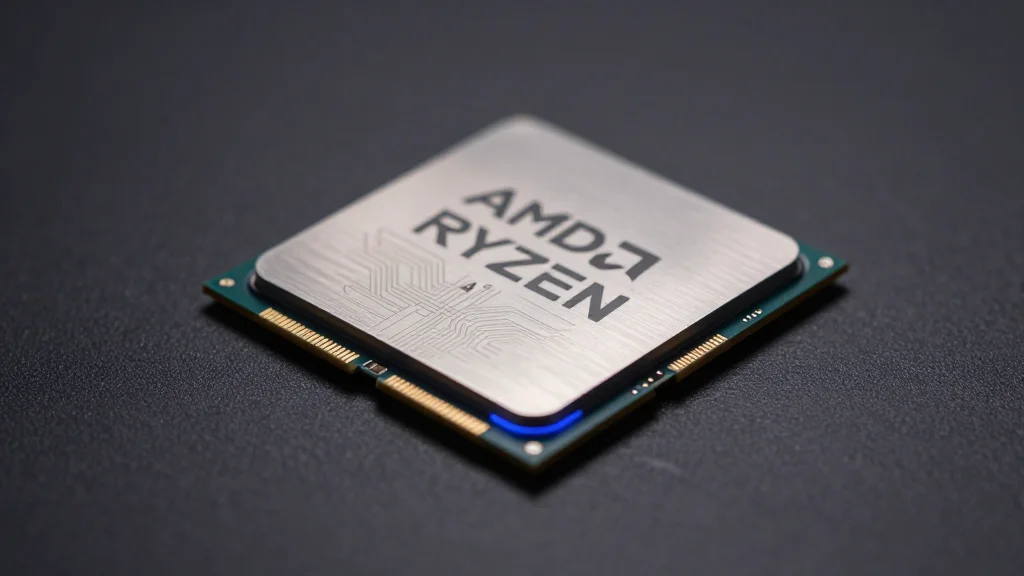
AMD Unveils Ryzen AI Max 400 ‘Gorgon Halo’ APU with 192 GB Unified Memory and 5.2 GHz Boost

Why It Matters
The Ryzen AI Max 400 ‘Gorgon Halo’ APU marks a significant shift in how consumer‑grade hardware can address AI workloads. By integrating a massive unified memory pool with high‑performance CPU, GPU and NPU blocks, AMD blurs the line between traditional desktops and specialized AI workstations. This could accelerate the adoption of AI tools among creators and small businesses that previously relied on cloud services or expensive server hardware. Moreover, the launch pressures competitors to rethink memory architectures and pricing, potentially reshaping the high‑end PC market. If AMD succeeds in delivering consistent 192 GB configurations, it may also influence DRAM supply chains, prompting manufacturers to prioritize higher‑capacity modules for the consumer segment. The move could catalyze a broader ecosystem of AI‑optimized software, from video editing suites to scientific simulation tools, that are designed to exploit the unified memory and on‑chip NPU capabilities.
Key Takeaways
- •AMD launches Ryzen AI Max 400 ‘Gorgon Halo’ APU with up to 192 GB unified memory
- •Chip uses Zen 5 CPU cores, RDNA 3.5 GPU cores and XDNA 2 NPU, boosting to 5.2 GHz
- •Pre‑orders for the Strix Halo platform start in June at $3,999
- •Memory capacity increase from 128 GB (Strix Halo) to 192 GB amid global DRAM shortages
- •Launch positions AMD against Intel’s upcoming AI‑focused Xeon chips and Apple’s M3 series
Pulse Analysis
AMD’s decision to double the unified memory ceiling on a single APU is a bold gamble that could redefine the performance envelope for AI‑centric desktops. Historically, consumer CPUs have been limited by separate memory channels for the CPU and GPU, forcing developers to manage data movement manually. By unifying up to 192 GB of memory, AMD eliminates that bottleneck, allowing AI models to reside entirely in fast, shared memory and reducing latency.
From a competitive standpoint, Intel’s roadmap emphasizes discrete AI accelerators that sit alongside traditional cores, while Apple’s silicon relies on tightly integrated memory but caps at lower capacities for its consumer line. AMD’s approach may attract a segment of power users who need the flexibility of a desktop form factor without sacrificing the massive memory bandwidth typically reserved for servers. However, the success of this strategy hinges on AMD’s ability to secure sufficient DRAM supply; any shortfall could erode confidence and give rivals an opening to capture market share.
Looking forward, the Gorgon Halo could serve as a reference design for future AMD SoCs, especially as the industry moves toward heterogeneous computing. If the platform delivers on its performance promises, we may see a cascade of software developers optimizing for unified memory and on‑chip NPUs, accelerating the shift from cloud‑only AI workloads to edge‑centric solutions. The $3,999 price tag suggests AMD is targeting a premium niche, but economies of scale and subsequent price drops could eventually democratize this capability, reshaping the hardware landscape for AI across the entire PC ecosystem.
AMD Unveils Ryzen AI Max 400 ‘Gorgon Halo’ APU with 192 GB Unified Memory and 5.2 GHz Boost
Comments
Want to join the conversation?
Loading comments...