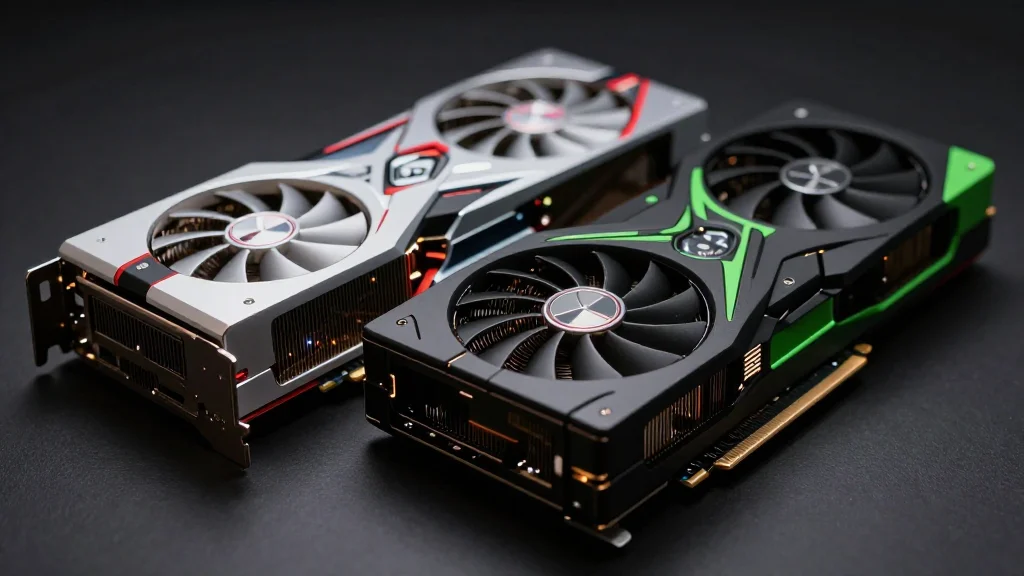
AMD Welcomes Nvidia to the Local AI PC Race, Points to Gorgon Halo's 192GB Memory Advantage
Companies Mentioned
Why It Matters
The competition forces faster innovation in high‑end AI‑focused laptops, shaping how developers deploy large models on the edge. It also pressures software ecosystems to become more open, influencing developer adoption and pricing dynamics.
Key Takeaways
- •Nvidia's RTX Spark offers up to 128 GB unified memory
- •AMD's upcoming Gorgon Halo will support 192 GB unified memory
- •Both firms target AI‑focused PCs for local large‑model workloads
- •AMD claims ROCm now rivals CUDA for developer ease
- •High‑end niche pricing runs into several‑thousand‑dollar range
Pulse Analysis
The race to embed powerful AI capabilities directly into client devices has accelerated as chipmakers recognize the value of local inference. Nvidia’s RTX Spark, unveiled at Computex 2026, pairs Arm‑based CPUs with its Blackwell GPUs and a unified memory pool of up to 128 GB. AMD’s response, the Strix Halo series, already matches that figure, while the forthcoming Gorgon Halo promises a staggering 192 GB, leveraging Zen 5 cores and RDNA 3.5 graphics. This memory expansion is crucial for developers who need to run large language models or agentic AI workloads without relying on cloud latency.
Beyond raw specifications, the battle hinges on software ecosystems. Nvidia has long dominated with CUDA, a mature toolkit that entrenches developers in its platform. AMD counters by highlighting ROCm’s recent strides in ease‑of‑use and cross‑compatibility, arguing that the gap has narrowed and that migration costs are now lower. For AI engineers, the choice of hardware increasingly depends on whether the accompanying SDKs and driver support can deliver comparable performance and stability for their specific models.
Market impact remains limited to a premium niche, with RTX Spark and Gorgon Halo systems priced in the several‑thousand‑dollar range. However, the presence of two heavyweight contenders could expand the overall addressable market, encouraging OEMs to integrate AI‑ready PCs into professional workflows. As both firms aim for fall launches, the real test will be how effectively they translate hardware horsepower into developer‑friendly platforms, potentially setting the standard for on‑device AI in the years to come.
AMD welcomes Nvidia to the local AI PC race, points to Gorgon Halo's 192GB memory advantage
Comments
Want to join the conversation?
Loading comments...