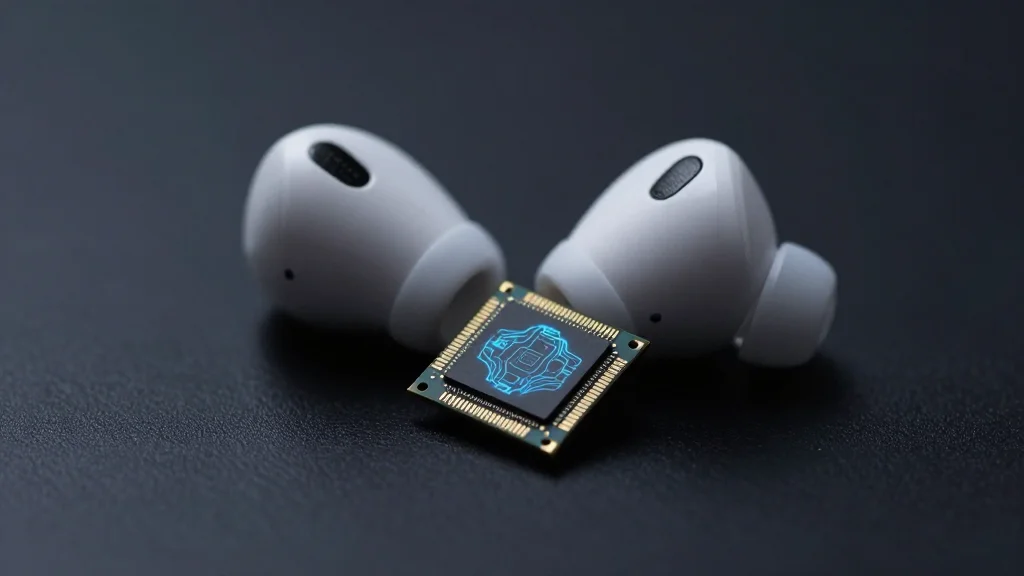
Anker Launches THUS Compute‑in‑memory Chip to Power AI in Low‑power Wearables

Companies Mentioned
Why It Matters
THUS represents a potential shift in edge AI architecture by collapsing the memory‑compute boundary, a change that could unlock more capable AI features on devices limited by battery capacity. If successful, the approach may accelerate the migration of sophisticated models from the cloud to the edge, improving latency, privacy, and reliability for wearables and IoT devices. Beyond wearables, the CIM concept could influence broader silicon roadmaps, prompting major foundries and design houses to reconsider memory‑centric designs. This could lead to a new class of energy‑efficient AI chips that address the growing demand for on‑device intelligence across consumer electronics, automotive, and industrial applications.
Key Takeaways
- •Anker introduced the THUS compute‑in‑memory chip, fabricated in Germany.
- •THUS integrates neural‑network compute directly into NOR flash memory cells.
- •First product: Bluetooth earbuds with "Clear Calls" noise‑cancellation, to be unveiled May 21, 2026.
- •CIM architecture aims to lower power consumption and enable larger AI models on tiny batteries.
- •If adopted widely, the design could pressure major chipmakers to explore memory‑centric AI solutions.
Pulse Analysis
Anker’s entry into silicon with a CIM chip is a bold deviation from the conventional path taken by most consumer electronics firms, which typically outsource processor design to established vendors. By developing its own compute‑in‑memory solution, Anker is attempting to control a critical bottleneck—energy‑intensive data movement—that has long limited on‑device AI. The decision to fabricate in Germany suggests a strategic partnership with European foundries, potentially leveraging advanced EU process nodes that prioritize power efficiency.
Historically, memory‑centric computing has lingered on the research fringe, with few commercial products. Anker’s move could serve as a proof‑point that CIM is viable at scale, especially for ultra‑low‑power segments where every milliwatt counts. Success would likely trigger a wave of interest from other OEMs, prompting them to either adopt Anker’s design under license or develop competing architectures. This could fragment the edge AI market, creating a niche where memory‑compute chips coexist with traditional DSPs and neural‑processing units.
Looking ahead, the key risk lies in the real‑world performance of THUS. The claim that larger models can run on earbuds hinges on achieving meaningful power savings without sacrificing inference speed. If the chip falls short, it may reinforce the status quo of cloud‑offloaded AI for wearables. Conversely, a strong showing at the May 21 launch could accelerate a broader industry shift toward on‑device intelligence, reshaping product roadmaps for everything from smart watches to autonomous sensors. Investors and analysts will be watching Anker’s silicon venture closely, as it could redefine the economics of edge AI and open new revenue streams beyond the company’s traditional accessories business.
Anker launches THUS compute‑in‑memory chip to power AI in low‑power wearables
Comments
Want to join the conversation?
Loading comments...