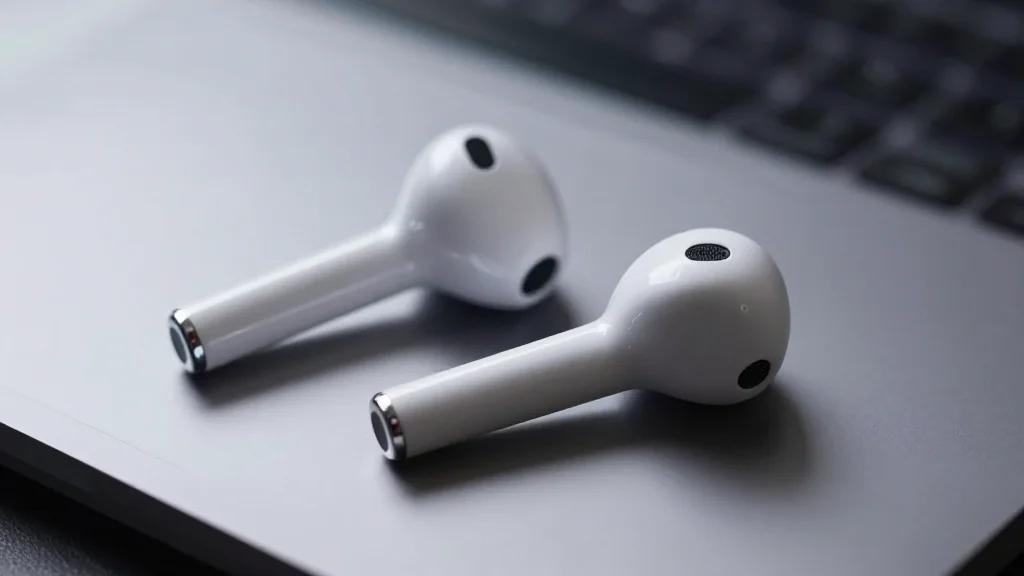
Apple Tests Camera‑Equipped AirPods, Targeting September 2026 Launch


Why It Matters
The integration of cameras into AirPods marks a decisive step toward truly multimodal wearables, blurring the line between audio accessories and visual AI assistants. By embedding a sensor that can interpret the surrounding environment, Apple could set a new standard for hands‑free interaction, compelling competitors to explore similar form factors. The move also intensifies the privacy debate surrounding ubiquitous sensing, forcing regulators and consumers to confront how much visual data a personal device should collect. If Apple succeeds, the camera‑enabled AirPods could accelerate adoption of AI‑driven context awareness across the consumer tech ecosystem, prompting developers to design apps that leverage real‑time visual cues. Conversely, a misstep could reinforce user wariness of surveillance‑laden gadgets, slowing the broader rollout of camera‑bearing wearables.
Key Takeaways
- •Apple’s camera‑enabled AirPods are in design validation testing (DVT) stage.
- •Low‑resolution cameras on the stems will feed visual data to an upgraded Siri.
- •Launch originally planned for early 2026, now targeted for September 2026 with foldable iPhone and iPhone 18.
- •Apple may add an indicator to show when cameras are active, addressing privacy concerns.
- •Rumors also suggest Apple is developing AI‑focused smart glasses, a pendant, and an AI pin.
Pulse Analysis
Apple’s decision to embed cameras in its flagship earbuds reflects a broader industry shift toward sensor‑rich wearables that can deliver context‑aware AI services without a phone. Historically, Apple has been cautious about adding cameras to non‑visual devices—its first foray into on‑body imaging was the iPhone, followed by the Apple Watch’s health sensors. By moving cameras onto AirPods, Apple is leveraging its massive user base to collect visual data at scale, a move that could give Siri a competitive edge against Google Assistant and Amazon Alexa, which already benefit from smartphone cameras.
The timing aligns with Apple’s anticipated rollout of a foldable iPhone, suggesting a coordinated hardware push to showcase AI capabilities across multiple product lines. This strategy could create a virtuous cycle: a more capable Siri drives demand for camera‑enabled wearables, which in turn generate richer data to further improve the assistant. However, the privacy implications are non‑trivial. Even a low‑resolution feed can be used to infer location, habits, and personal preferences. Apple’s potential inclusion of an activation indicator is a minimal concession; without robust on‑device processing and clear data‑handling policies, regulators may intervene, especially in Europe where GDPR imposes strict limits on biometric data.
Competitors are watching closely. Meta’s Ray‑Ban smart glasses have floundered partly due to privacy backlash, while Google’s Pixel Buds have remained audio‑only. If Apple can deliver a seamless, privacy‑respectful experience, it could set a new benchmark that forces rivals to either accelerate their own camera‑wearable programs or double down on alternative interaction models. The market’s response in the coming months—particularly at Apple’s developer conference—will reveal whether the camera‑enabled AirPods are a transformative product or a niche experiment that underscores the tension between convenience and surveillance.
Apple Tests Camera‑Equipped AirPods, Targeting September 2026 Launch
Comments
Want to join the conversation?
Loading comments...