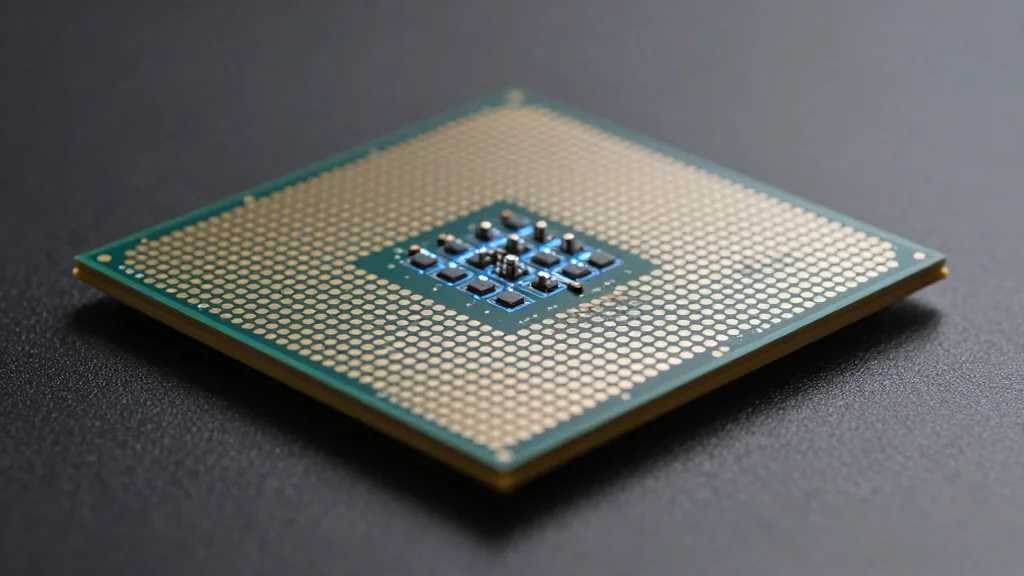
ARM CEO Predicts 512‑Core CPUs as Agentic AI Reduces GPU‑CPU Ratio Relevance

Companies Mentioned
Why It Matters
The projected shift to 512‑core CPUs could upend the current hardware economics of AI workloads. Data‑center operators may lower total cost of ownership by reducing the number of expensive GPUs needed, while power‑constrained edge deployments could benefit from dense, efficient ARM cores. For chipmakers, the race to higher core counts forces a reallocation of R&D dollars from expanding GPU die size to improving CPU interconnects, cache hierarchies, and power management. Beyond economics, the move reshapes the talent pipeline. Engineers will need expertise in massive‑core parallelism, new compiler technologies, and runtime systems capable of scheduling millions of lightweight tasks. The industry’s ability to deliver software that can exploit such hardware will determine whether the promised $100 billion market materializes or stalls due to programming bottlenecks.
Key Takeaways
- •ARM CEO Rene Haas predicts CPUs could reach 512 cores per chip as agentic AI scales.
- •Data‑center CPU demand may quadruple, creating a market opportunity exceeding US$100 bn by 2030.
- •Arm’s AGI CPU already ships with 136 cores; orders for FY27‑28 top US$2 bn, double initial forecasts.
- •AMD’s Zen 6 EPYC aims for 256 cores; Intel’s Xeon line targets up to 512 cores in the next generation.
- •Higher core counts could diminish the relevance of GPU‑to‑CPU ratios in AI system design.
Pulse Analysis
The core‑count escalation forecast by ARM signals a strategic inflection point for the semiconductor ecosystem. Historically, CPU scaling has been measured in clock speed and modest core increases; the jump to 512 cores mirrors the GPU’s evolution from a few dozen to thousands of cores. This convergence forces server architects to reconsider the balance of compute resources, especially as power budgets tighten and data‑center real‑estate becomes premium.
From a competitive standpoint, ARM’s early bet on high‑core, low‑power designs could give it a foothold in hyperscale clouds that prioritize density and energy efficiency. AMD and Intel are already moving in the same direction, but ARM’s licensing model allows a broader set of OEMs to adopt the architecture, potentially accelerating market penetration. However, the success of this shift hinges on software readiness. Existing AI frameworks are GPU‑centric; without robust support for massive‑core CPUs, the promised efficiency gains may remain theoretical.
Looking ahead, the next 12‑18 months will be a litmus test. If AMD, Intel, and ARM can deliver silicon that meets performance‑per‑watt targets while ecosystem partners roll out compatible toolchains, the $100 bn CPU market could become a reality. Conversely, if software lag and memory‑bandwidth constraints dominate, the industry may revert to a hybrid model where GPUs retain primacy for heavy‑weight matrix math, and CPUs serve as orchestration layers. Investors and OEMs should watch upcoming product roadmaps and benchmark releases closely, as they will reveal whether the high‑core vision translates into tangible competitive advantage.
ARM CEO Predicts 512‑Core CPUs as Agentic AI Reduces GPU‑CPU Ratio Relevance
Comments
Want to join the conversation?
Loading comments...