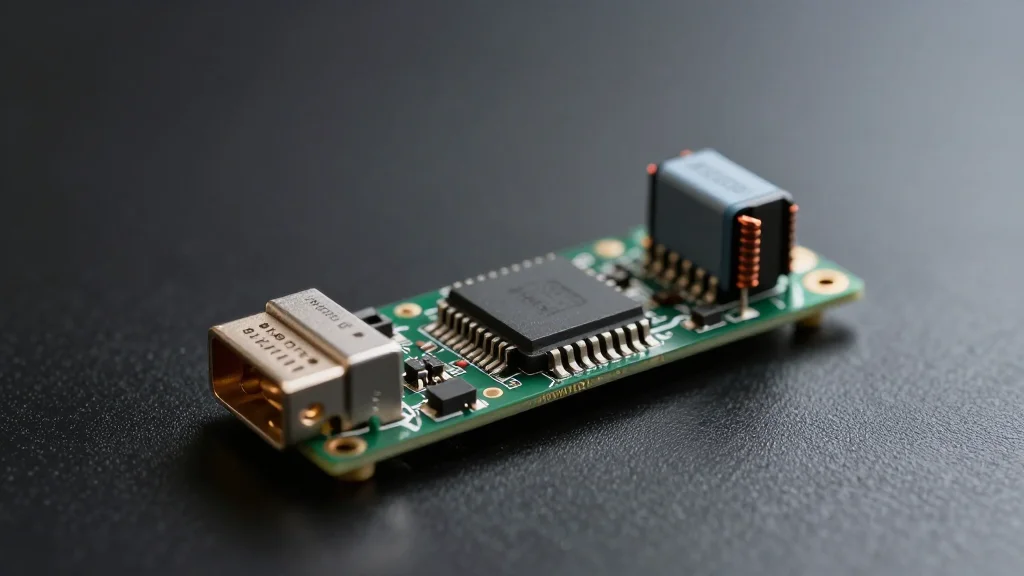
Arrow Electronics Reference Design Board Features Bourns, Microchip, Amphenol Technologies
Companies Mentioned

Why It Matters
SPE is becoming the preferred Ethernet solution for edge devices, replacing legacy CAN and RS‑485 networks; this reference board speeds development and compliance testing, lowering time‑to‑market for industrial IoT products.
Key Takeaways
- •Arrow’s board integrates Microchip LAN8670 10BASE‑T1S PHY
- •Bourns SM91081AL transformer and CMC improve low‑frequency noise rejection
- •Amphenol connector meets IEC 63171‑6 for reliable magnetic coupling
- •Enables engineers to evaluate SPE signal integrity in point‑to‑point and multidrop
- •Accelerates transition from CAN/RS‑485 to Ethernet at the industrial edge
Pulse Analysis
Single Pair Ethernet (SPE) is gaining traction as the connective tissue for sensors, actuators and control modules at the industrial edge. Compared with traditional multi‑pair Ethernet, SPE reduces cabling weight and cost while delivering the bandwidth needed for real‑time data. Arrow’s new reference design arrives at a pivotal moment, offering a turnkey evaluation platform that aggregates best‑in‑class components from Microchip, Bourns and Amphenol. By bundling a proven PHY, IEC‑standard connector and advanced magnetic isolation, the board lowers the barrier for OEMs to prototype SPE solutions without extensive custom hardware development.
The technical edge of this platform lies in its transformer‑based isolation rather than the more common capacitor‑only schemes. Bourns’ SM91081AL transformer and common‑mode choke dramatically improve low‑frequency noise rejection and galvanic isolation, critical for the electrically noisy environments of factory automation and HVAC systems. This results in clearer signal integrity, better EMC performance and easier compliance with emission regulations. Engineers can directly compare the magnetic approach against capacitor isolation on the same board, gaining actionable data on noise suppression, channel stability and multidrop network behavior.
For the broader market, the reference board accelerates the shift from legacy fieldbuses like CAN and RS‑485 to Ethernet‑based architectures. Faster design cycles and validated performance data translate into reduced development costs and quicker product launches for industrial IoT vendors. Arrow’s accompanying engineering support and customization services further extend the platform’s value, positioning it as a catalyst for widespread SPE adoption across smart factories, building‑automation projects and edge‑computing deployments.
Arrow Electronics Reference Design Board Features Bourns, Microchip, Amphenol Technologies
Comments
Want to join the conversation?
Loading comments...