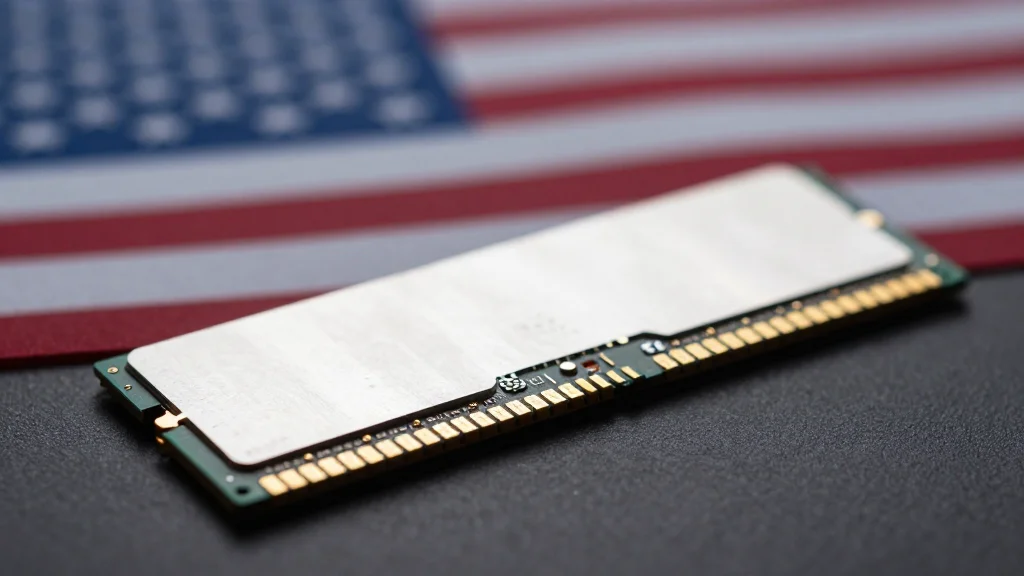
As Micron Heeds Trump’s Call for Domestic DRAM Manufacturing, MU Stock Is Still Undervalued
Companies Mentioned
Why It Matters
Domestic production reduces supply‑chain risk and may boost U.S. AI hardware resilience, while 1‑alpha’s efficiency gains could improve Micron’s margins as it chases market share from SK Hynix and Samsung.
Key Takeaways
- •Micron will start 1‑alpha DRAM production in Manassas, Virginia
- •1‑alpha offers 40% higher density and up to 20% power savings
- •Micron avoids EUV, using ArF immersion lithography for 1‑alpha
- •SK Hynix leads DRAM market; Micron still trails in volume
Pulse Analysis
Micron’s decision to locate 1‑alpha DRAM fab in Manassas reflects a broader geopolitical shift toward on‑shore semiconductor manufacturing. By responding to the Trump administration’s call for domestic production, Micron not only mitigates geopolitical supply‑chain disruptions but also positions itself to benefit from potential U.S. incentives for advanced chip fabs. The move underscores the strategic importance of memory chips in AI workloads, where latency and bandwidth are critical, and signals confidence that the United States can host cutting‑edge DRAM processes traditionally dominated by Asian foundries.
The 1‑alpha node, Micron’s fourth generation of 10‑nanometer‑class DRAM, introduced a new lithography approach that sidestepped the costly extreme ultraviolet (EUV) tools favored by Samsung. Using ArF immersion lithography, Micron achieved a record‑breaking 0.315 Gb per square millimeter, translating into a 40% density boost and up to 20% power reduction for mobile devices. These gains are especially valuable for AI accelerators that demand high‑capacity, low‑power memory, and they give Micron a technical edge that could translate into higher average selling prices if yields improve.
Despite the technical merits, Micron still faces a steep climb against SK Hynix, which now commands 36% of the global DRAM market and leads in high‑bandwidth memory (HBM3E) for AI servers. Micron’s progress in supplying HBM3E to Nvidia shows promise, yet volume and yield gaps limit immediate revenue impact. Investors who recognize the long‑term strategic value of domestic DRAM production and the efficiency of 1‑alpha may view the current share price as a discount to the company’s future growth potential. The combination of policy support, technology differentiation, and a tightening AI hardware market could catalyze a re‑rating of Micron’s valuation.
As Micron Heeds Trump’s Call for Domestic DRAM Manufacturing, MU Stock Is Still Undervalued
Comments
Want to join the conversation?
Loading comments...