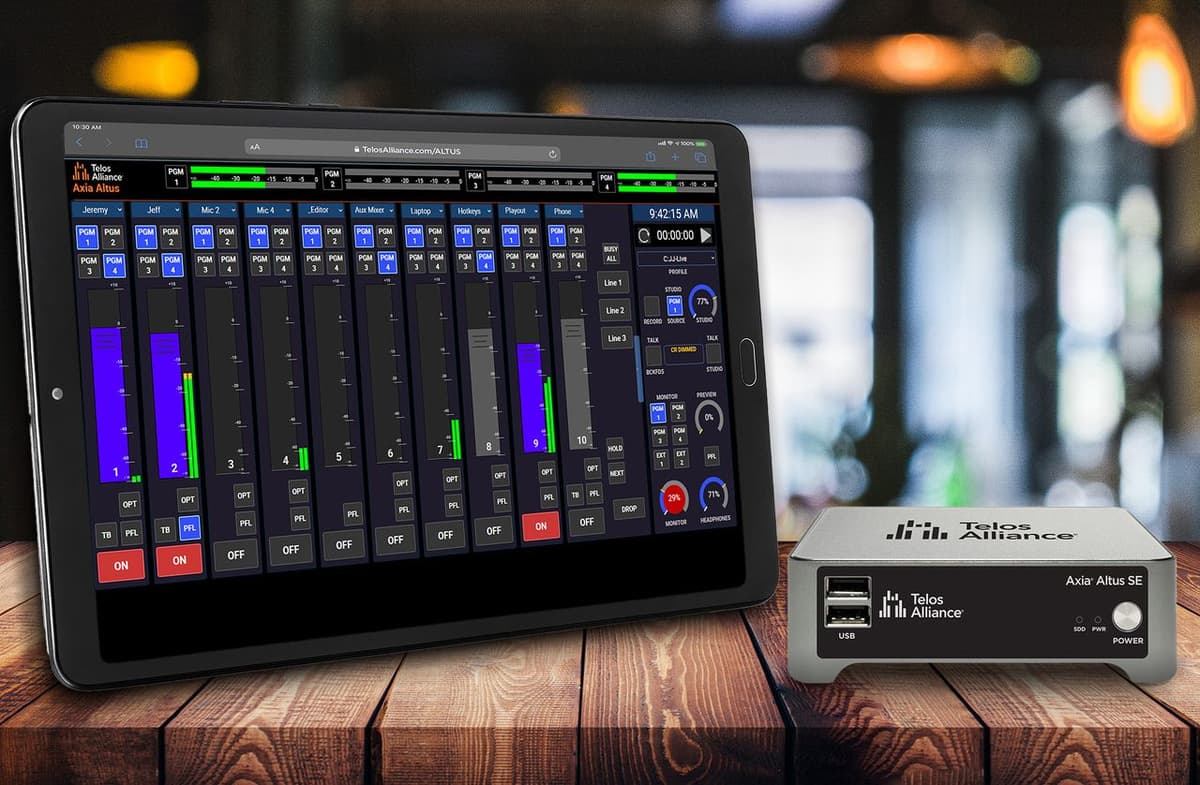
Audio Systems Get Boost From Cloud and AI
Why It Matters
The shift lets broadcasters lower infrastructure costs, scale globally, and improve audio consistency, enabling faster, more resilient content delivery.
Key Takeaways
- •Telos flexAI AI automixer reduces background noise, aids engineers
- •Wheatstone VML HTML5 console runs on browsers across devices
- •SSL Virtual Tempest Engine deploys mixing software to cloud or data center
- •Lawo HOME Apps uses containerized micro‑services to switch audio workflows
- •Hybrid broadcast setups retain tactile consoles while leveraging cloud processing
Pulse Analysis
The 2026 NAB Show highlighted a decisive move toward cloud‑based and virtual audio production. Vendors such as Telos Alliance, Wheatstone, SSL and Lawo demonstrated platforms that detach the mixing engine from the traditional rack. Wheatstone’s VML delivers an HTML5 console that runs in any web browser, while SSL’s Virtual Tempest Engine can be spun up in public clouds or private data centers. Lawo’s HOME Apps framework treats workflows as containerized micro‑services, allowing broadcasters to repurpose a single server for mixing, multiviewing or other tasks on demand.
AI is emerging as a ‘mixing assistant’ that handles routine level adjustments. Telos’s flexAI platform, powered by the Jünger Audio Intelligent Companion, automatically pushes background noise down while keeping dialogue consistent, freeing engineers to focus on creative decisions. SSL’s System T Dialogue Automix performs speaker‑tracking across dozens of inputs to suppress crosstalk. Lawo, wary of AI hallucinations in live sports, relies on deterministic algorithms in its KICK system, using camera‑tracking data to automate gain rides without compromising reliability. Together these tools illustrate how intelligent automation can improve efficiency without replacing human judgment.
The industry is adopting a hybrid model that keeps tactile consoles where tactile control is critical while moving compute‑heavy processing to the cloud. This approach reduces capital expenditures, expands geographic flexibility, and prepares broadcasters for disaster‑recovery scenarios or remote event coverage. As more vendors standardize APIs and cloud‑native workflows, integration costs will fall, accelerating the shift. Ultimately, the convergence of virtualization, AI assistance, and cloud scalability promises faster production cycles and higher audio quality, reshaping how stations and streaming services deliver content.
Audio Systems Get Boost From Cloud and AI
Comments
Want to join the conversation?
Loading comments...