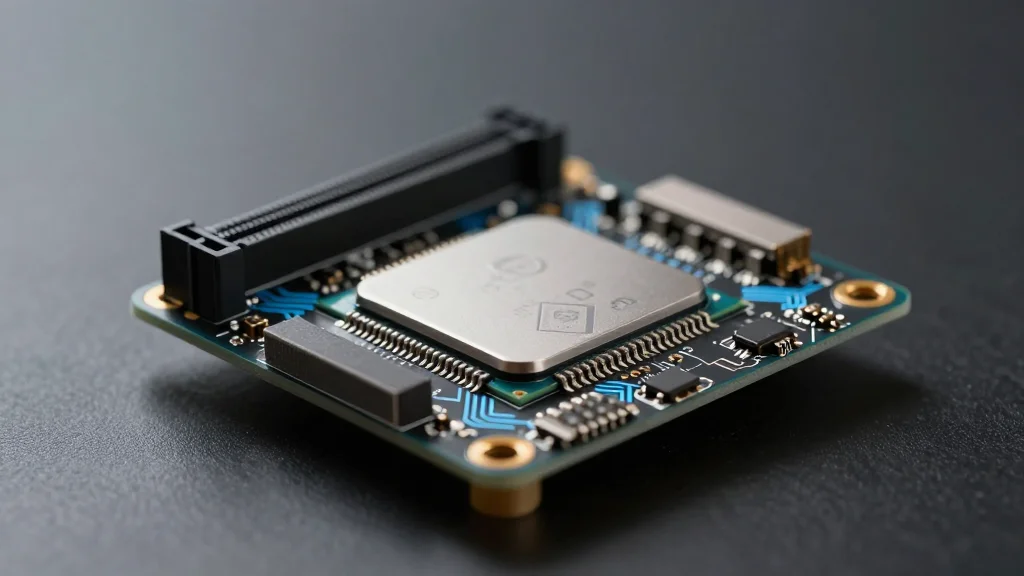
Banana Pi BPI-SM10 Brings RISC-V AI Platform With 60 TOPS Performance
Why It Matters
The BPI‑SM10 brings high‑throughput AI inference to the RISC‑V ecosystem, giving developers a cost‑effective, power‑efficient alternative to proprietary silicon for edge deployments.
Key Takeaways
- •BPI‑SM10 uses SpacemiT K3 8‑core 2.4 GHz RISC‑V processor.
- •Integrated AI accelerator delivers up to 60 TOPS for inference.
- •Supports up to 32 GB LPDDR5‑6400 memory, 18‑35 W power range.
- •Includes PCIe 4.0 x4/x2, USB 3.2 Gen 2, DisplayPort 1.2.
- •Targets edge AI workloads, handling models up to 30 billion parameters.
Pulse Analysis
RISC‑V’s open‑source architecture is gaining traction beyond traditional microcontrollers, and Banana Pi’s BPI‑SM10 exemplifies that shift toward AI‑centric workloads. By pairing the SpacemiT K3 8‑core 2.4 GHz CPU with a 60 TOPS AI accelerator, the board delivers data‑center‑class inference performance in a compact, power‑constrained form factor. The inclusion of 32 GB LPDDR5‑6400 memory and a broad I/O suite—PCIe 4.0 x4/x2, USB 3.2 Gen 2, DisplayPort 1.2, and dual MIPI‑CSI—makes it a versatile foundation for developers building edge devices, robotics, and smart‑camera systems.
Compared with competing development kits, the BPI‑SM10’s performance‑per‑watt stands out. Its 18‑35 W power envelope rivals many x86‑based AI accelerators while offering a fraction of the cost and licensing constraints associated with proprietary silicon. The ability to process models up to 30 billion parameters at roughly 10 tokens per second positions the board for sophisticated natural‑language and computer‑vision tasks that previously required larger, more expensive platforms. This balance of compute density and efficiency opens new possibilities for on‑device inference, reducing latency and data‑privacy concerns inherent in cloud‑reliant solutions.
The broader market implication is a democratization of AI hardware. As RISC‑V standards like the RVA23 profile mature, developers gain a unified, vendor‑agnostic ecosystem that encourages innovation and reduces fragmentation. Banana Pi’s entry reinforces the trend of open‑source hardware driving competitive alternatives to ARM and x86, potentially reshaping supply chains for edge AI. Companies looking to scale AI deployments at the edge can now consider the BPI‑SM10 as a scalable, future‑proof platform that aligns with emerging open‑hardware strategies.
Banana Pi BPI-SM10 Brings RISC-V AI Platform With 60 TOPS Performance
Comments
Want to join the conversation?
Loading comments...