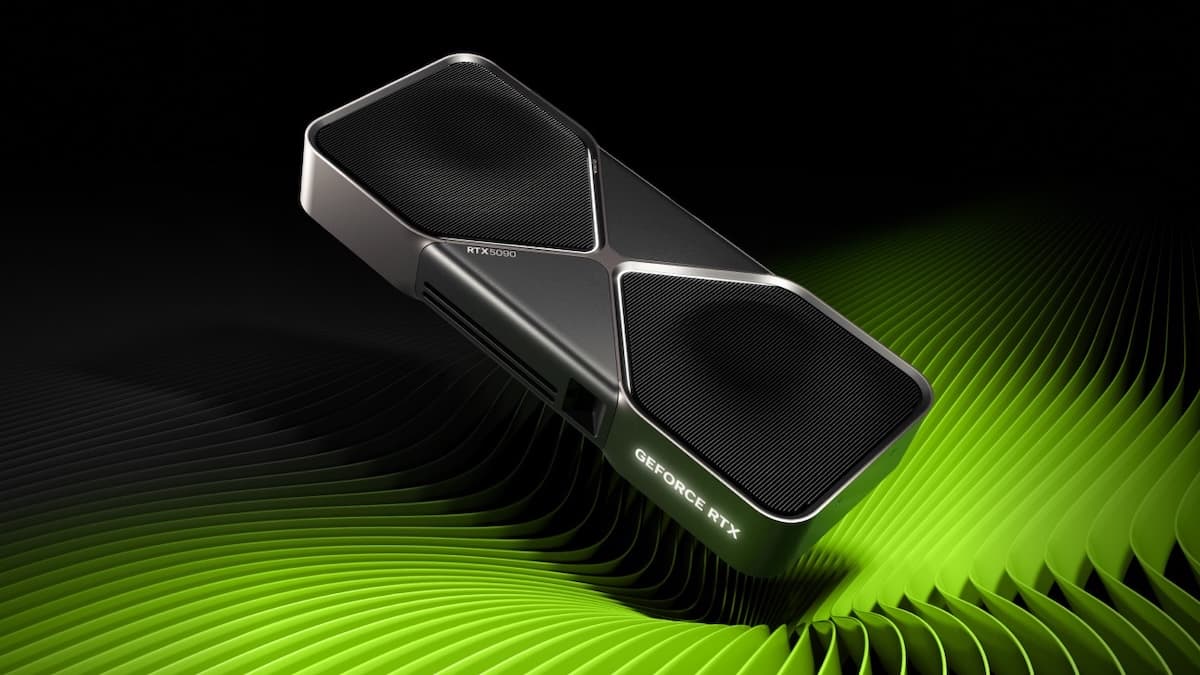
Beijing Bans Nvidia’s Top Graphics Card to Back Domestic Rivals
Companies Mentioned

Why It Matters
The prohibition curtails Chinese access to cutting‑edge GPU compute, hampering both consumer gaming experiences and grassroots AI development while bolstering domestic semiconductor ambitions.
Key Takeaways
- •Beijing bans Nvidia RTX 5090D V2, cutting off Blackwell GPU access.
- •Ban hits Chinese gamers and hobbyist AI developers using downgraded GPUs.
- •Nvidia's H200 AI chip could represent $14 billion annual revenue.
- •Local firms like Lisuan, Moore Threads gain market share opportunity.
- •Nvidia still sells RTX 5080 in China, but performance lags.
Pulse Analysis
The United States has tightened export controls on advanced semiconductor technology, forcing Nvidia to create a cascade of stripped‑down GPUs for the Chinese market. The latest iteration, the RTX 5090D V2, was built on the Blackwell architecture but omitted features that trigger U.S. restrictions. During the recent Trump‑Xi summit, Beijing added the card to its prohibited‑goods list, effectively sealing off a back‑channel that Chinese enthusiasts had used to tap into high‑end AI compute. This move underscores how geopolitical bargaining now directly shapes product availability.
For Chinese gamers, the ban removes a card that promised 30‑68 % performance gains over the still‑available RTX 5080. More critically, hobbyist AI developers—who rely on consumer‑grade GPUs to fine‑tune open‑source large language models such as Llama, Gemma or DeepSeek—lose a cost‑effective route to Blackwell‑class processing. Nvidia’s flagship H200 AI accelerator, projected to generate over $14 billion in annual sales, remains blocked, leaving a void that could slow grassroots AI experimentation and curb the talent pipeline that feeds China’s broader AI ambitions.
The vacuum created by the ban opens a window for domestic chipmakers. Companies like Lisuan Technology, Moore Threads and Biren Technology have already launched graphics solutions positioned against Nvidia’s older generations, and the Chinese government is urging firms to prioritize home‑grown silicon. While the RTX 5080 continues to be sold, its performance gap may accelerate adoption of these local alternatives, especially as the state tightens import rules. In the longer term, the episode signals a shift toward a more bifurcated global GPU market, with each side cultivating its own ecosystem.
Beijing bans Nvidia’s top graphics card to back domestic rivals
Comments
Want to join the conversation?
Loading comments...