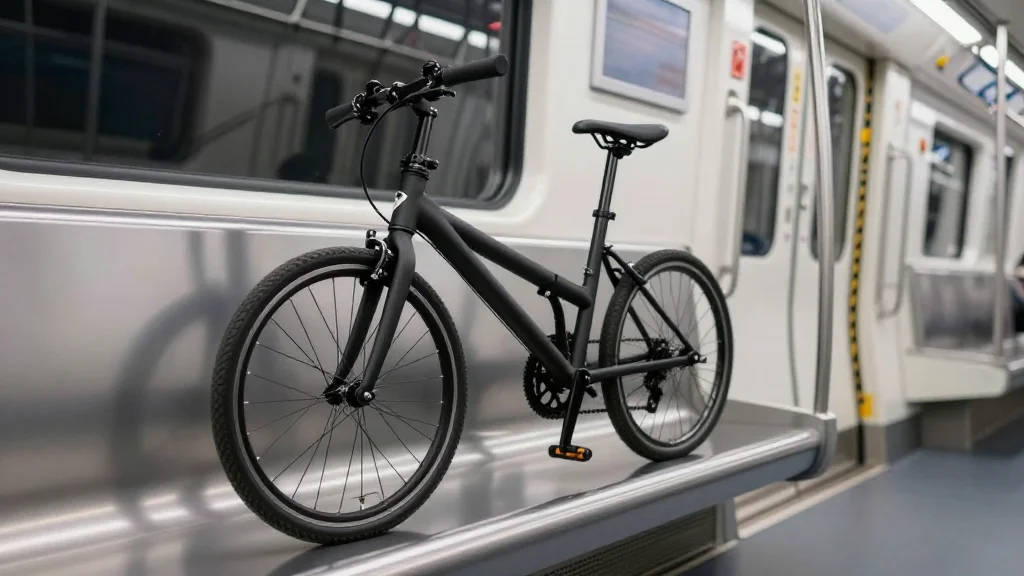
Beijing Tests Subway Bicycles Pilot, Charging $4.38 per Ride

Why It Matters
The pilot directly tests the feasibility of merging two distinct transport modes—cycling and subway—through hardware adaptations that could reshape station architecture and rolling stock design. Successful integration would demonstrate a scalable path for other dense urban areas to reduce car dependence, improve first‑ and last‑mile connectivity, and meet emissions targets. Beyond Beijing, the experiment offers a data‑rich case study for manufacturers of modular bike racks, platform door systems, and transit‑grade safety sensors. If the hardware proves reliable, it could accelerate global standards for bike‑friendly metros, prompting a new market for retrofit kits and smart‑ticketing platforms that handle multimodal fare structures.
Key Takeaways
- •Pilot allows bicycles on subway at 11 stations across four lines
- •Fare set at 30 yuan (~$4.38) per passenger‑bike pair
- •Only human‑powered bikes with wheels up to 28 inches permitted
- •Service runs weekends only; weekdays and holidays excluded
- •Hardware changes include widened doors, bike racks, and reinforced platform edges
Pulse Analysis
Beijing’s weekend bike‑on‑subway trial is more than a novelty; it signals a strategic pivot toward hardware that supports seamless multimodal travel. Historically, metros have treated bicycles as a nuisance, often banning them outright. By contrast, this pilot treats the bike as a first‑mile extension, requiring tangible engineering solutions—door clearances, secure storage, and real‑time passenger flow monitoring. The decision to exclude electric bikes simplifies the safety calculus but also limits the pilot’s relevance to markets where e‑bikes dominate urban cycling.
From a market perspective, the pilot could unlock a niche for companies that specialize in modular, retrofit‑ready bike‑holding systems. Existing subway manufacturers may need to redesign car interiors to accommodate bike racks without sacrificing seating capacity, a trade‑off that will influence procurement decisions in the next decade. Moreover, the integration with the Yitongxing app illustrates how digital fare platforms can handle complex pricing models, a capability that could be monetized through licensing to other transit agencies.
Looking ahead, the pilot’s success will hinge on measurable outcomes: ridership uptake, incident rates, and operational efficiency. If Beijing reports a significant increase in weekend subway usage without safety compromises, other megacities—particularly those with burgeoning cycling cultures like Shanghai, Mexico City, and Lagos—may adopt similar hardware upgrades. Conversely, if the trial reveals bottlenecks or safety hazards, it could reinforce the status quo of bike bans, delaying broader hardware innovation. The next three months will therefore be a litmus test for whether hardware‑centric multimodal solutions can move from experimental pilots to mainstream transit policy.
Beijing Tests Subway Bicycles Pilot, Charging $4.38 per Ride
Comments
Want to join the conversation?
Loading comments...