Best Rugged DC‑DC Converters for Industrial and Military Applications
Why It Matters
Rugged DC‑DC converters are a linchpin for reliable operation of modern defense, autonomous and industrial systems, directly affecting mission success and equipment longevity. Selecting the right supplier reduces risk, accelerates fielding, and secures long‑term support for high‑value platforms.
Key Takeaways
- •MIL‑STD compliance is non‑negotiable for mission‑critical power modules
- •ACT offers full life‑cycle support for 28 V vehicle architectures
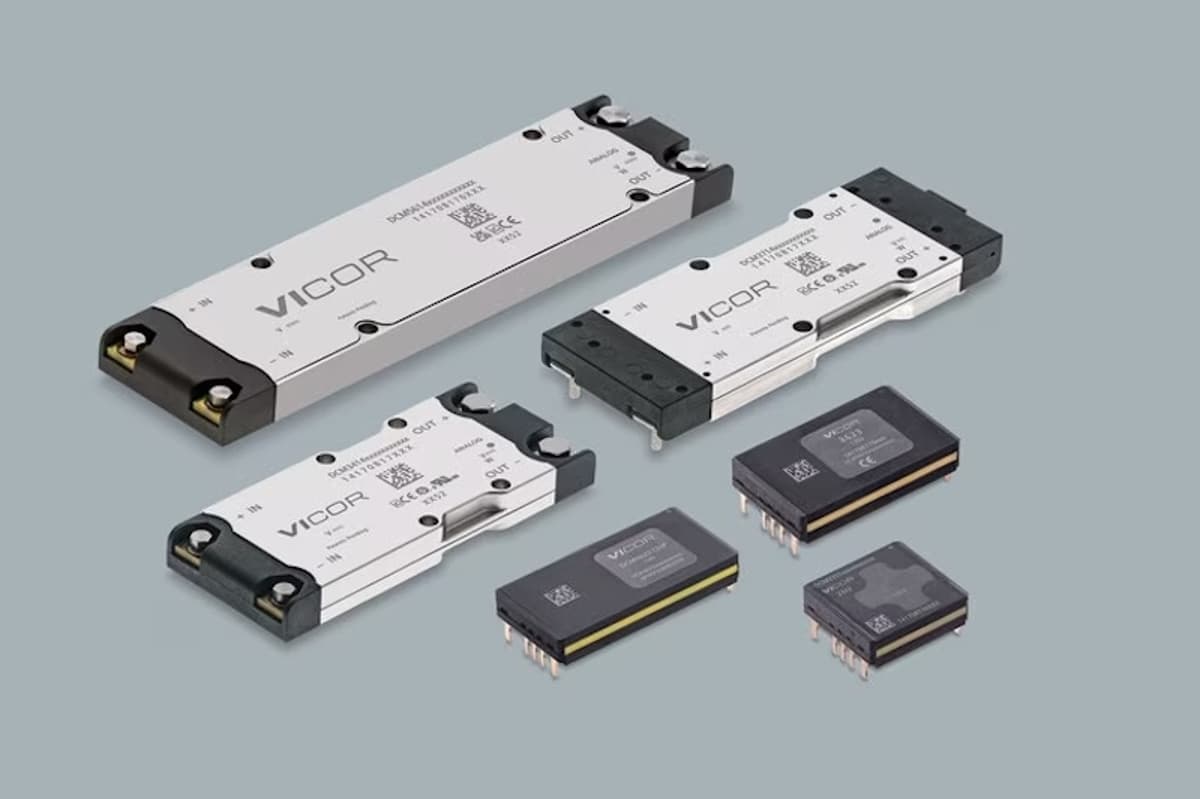
- •Vicor’s modular design enables high‑density power in autonomous robots
- •Modified COTS cuts development time while preserving rugged performance
- •Long‑term supply continuity drives preference for TDK‑Lambda in automation
Pulse Analysis
Power conversion is increasingly the bottleneck in defense and industrial electrification. As platforms shift toward electric propulsion, autonomous navigation, and high‑performance computing, the demand for DC‑DC converters that can endure vibration, shock, extreme temperatures, and electromagnetic interference has surged. Meeting standards such as MIL‑STD‑704, 461, 1275, 1399, and 810 is no longer optional; it is a prerequisite for certification and field deployment, ensuring that power delivery remains stable under combat or factory floor stresses.
The market’s leading suppliers differentiate themselves through distinct engineering philosophies. ACT leverages a full‑life‑cycle model tailored to 28 V vehicle architectures, while SynQor focuses on integrated EMI filtering for noisy tactical environments. Vicor’s high‑density modular architecture appeals to space‑constrained robotics, and TDK‑Lambda’s global manufacturing scale guarantees long‑term part availability for industrial automation. Crane Aerospace & Electronics and VPT bring aerospace heritage and radiation‑hardening capabilities, respectively, making them favorites for avionics and satellite platforms. Evaluators must weigh factors like power density, thermal management, and customization flexibility alongside compliance and support.
Strategically, the rise of modified commercial‑off‑the‑shelf (COTS) solutions reshapes procurement. By adapting proven commercial designs to meet MIL‑STD criteria, manufacturers reduce development cycles and costs while preserving ruggedness. This approach is especially valuable for legacy platform upgrades and programs with aggressive fielding schedules. As electrification spreads across military vehicles, unmanned aerial systems, and factory robotics, the ability to secure a reliable, standards‑compliant power partner will be a decisive competitive advantage for system integrators.
Best Rugged DC‑DC Converters for Industrial and Military Applications
Comments
Want to join the conversation?
Loading comments...