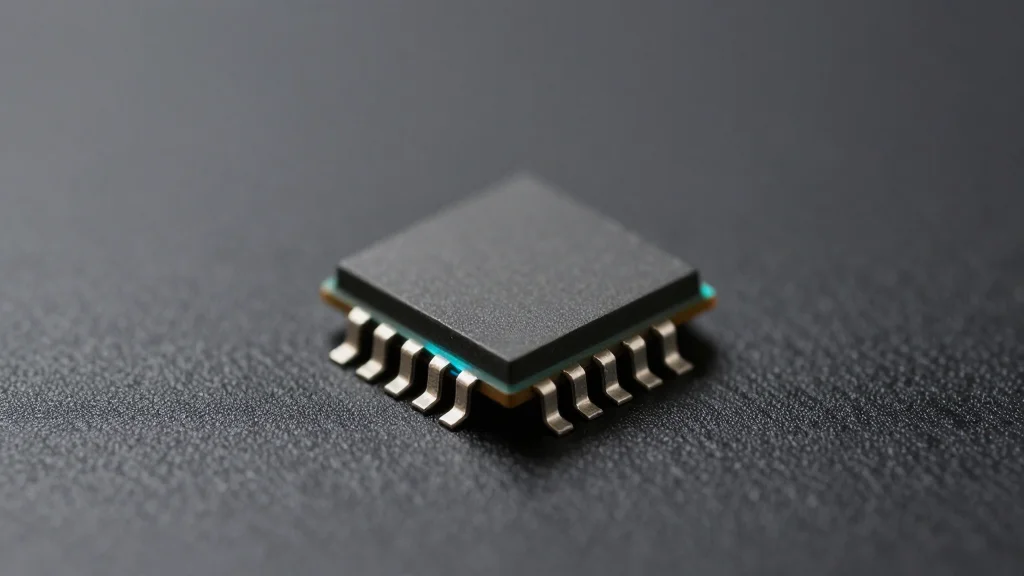
Brain-Inspired Chip Could Reduce AI Energy Use by 70%
Companies Mentioned
Why It Matters
A breakthrough in energy‑efficient neuromorphic hardware could dramatically reduce AI data‑center power costs and accelerate deployment of brain‑like computing architectures. Overcoming manufacturing hurdles would position the technology as a cornerstone for sustainable AI scaling.
Key Takeaways
- •Cambridge team created hafnium‑oxide memristor with interface switching.
- •Switching currents reach 10⁻¹¹ A, femtojoule‑picojoule energy per event.
- •Device shows hundreds of stable conductance levels for analog computing.
- •Demonstrated spike‑timing‑dependent plasticity, mimicking biological learning.
- •Manufacturing requires 700 °C process, a barrier to commercial scaling.
Pulse Analysis
Artificial intelligence’s rapid growth has exposed a glaring inefficiency: traditional GPUs and CPUs consume megawatts of power to train and run models, far exceeding the brain’s 20‑watt budget. Neuromorphic computing, which seeks to emulate the brain’s tightly coupled memory‑processing architecture, has emerged as a promising path to slash that energy gap. Central to this approach are memristors—components that combine storage and computation in a single nanoscale element—offering the potential to eliminate the costly data shuttling that plagues conventional chips.
The Cambridge team’s innovation lies in replacing stochastic filamentary switching with a deterministic interface‑based mechanism in a hafnium‑oxide matrix doped with strontium and titanium. By forming microscopic p‑n junctions, the memristor achieves switching currents of 10⁻¹¹ A and energy per event measured in femtojoules to picjoules, a million‑fold reduction compared with many existing oxide memristors. Moreover, the device exhibits analog behavior, delivering hundreds of distinct conductance states and maintaining stability over thousands of pulses. This granularity enables the hardware to implement spike‑timing‑dependent plasticity, a core learning rule observed in biological synapses, bringing true on‑chip learning closer to reality.
If the high‑temperature (≈700 °C) fabrication step can be reconciled with standard semiconductor lines, the technology could reshape AI infrastructure. Data‑center operators would see operating expenses shrink dramatically, while edge devices could run sophisticated models on battery power alone. Investors and chipmakers are already eyeing neuromorphic solutions as a strategic hedge against rising energy costs and sustainability mandates, positioning Cambridge’s memristor as a potential catalyst for the next generation of green AI hardware.
Brain-inspired chip could reduce AI energy use by 70%
Comments
Want to join the conversation?
Loading comments...