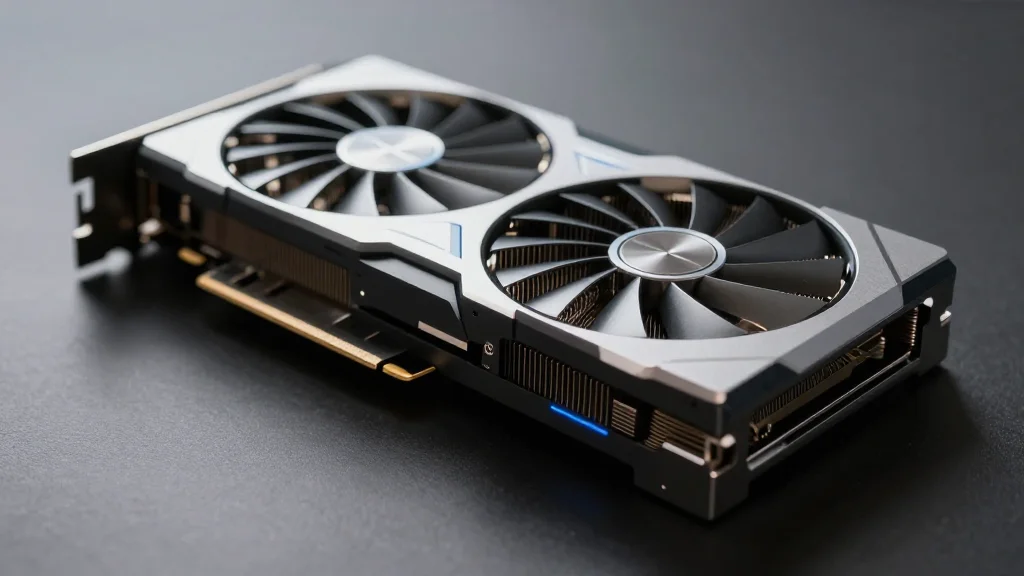
Capcom's Pragmata GPU Sells 1 Million Units in Two Days, Redefining Workload‑Specific Hardware

Companies Mentioned
Why It Matters
Capcom’s entry into custom silicon marks a rare case of a game publisher moving beyond software to create dedicated hardware for its own development pipelines. By offering a purpose‑built GPU at a consumer‑grade price, the company challenges the assumption that only large‑scale chipmakers can profitably serve high‑performance compute markets. If successful, Pragmata could inspire other content creators—such as Epic Games or Unity Technologies—to develop their own accelerators, potentially fragmenting the GPU ecosystem and prompting NVIDIA and AMD to reconsider pricing and specialization strategies. The launch also underscores a broader industry trend toward workload‑specific processors, echoing developments in AI‑focused ASICs and domain‑specific accelerators. Pragmata’s early sales momentum suggests that developers are willing to adopt niche hardware when it delivers clear performance gains without prohibitive cost or integration complexity. This could accelerate the shift from monolithic, one‑size‑fits‑all GPUs to a more modular hardware landscape where multiple specialized cards coexist within a single workstation.
Key Takeaways
- •Capcom sold over 1 million Pragmata GPUs within 48 hours of launch (April 20‑22, 2026).
- •Pragmata is priced at $1,299, roughly one‑third the cost of comparable NVIDIA H100 and AMD Instinct MI300X cards.
- •The GPU features a 1.8 GHz clock and 24 GB of HBM3 memory, optimized for AI training, scientific computing and offline rendering.
- •Capcom’s design omits real‑time gaming and mining support, focusing on vertical workloads.
- •Limited initial inventory and an unproven software ecosystem raise questions about long‑term adoption.
Pulse Analysis
Capcom’s decision to design and market its own GPU reflects a strategic pivot toward vertical integration that mirrors moves by other tech giants, such as Apple’s custom silicon for its devices. Historically, game publishers have relied on off‑the‑shelf GPUs, but the increasing computational demands of modern game development—real‑time ray tracing, physics simulation, and AI‑driven content generation—have exposed gaps in the general‑purpose GPU roadmap. Pragmata’s narrow focus allows Capcom to tailor silicon to its internal pipelines, potentially shortening iteration cycles and reducing licensing costs for proprietary tools.
From a market perspective, Pragmata could act as a catalyst for price competition. NVIDIA and AMD have long justified premium pricing with broad ecosystem support and massive R&D budgets. A successful, lower‑cost alternative that delivers comparable performance for specific tasks may force the incumbents to introduce more tiered offerings or to lower entry‑level prices. However, Capcom faces significant hurdles: scaling production without a proven foundry partnership, building a robust driver and SDK ecosystem, and convincing third‑party developers to adopt a non‑standard platform. Failure to address these could relegate Pragmata to a niche curiosity rather than a disruptive force.
Looking ahead, the key determinant will be Pragmata’s software traction. If Capcom can secure integration with popular engines like Unreal or Unity, and if AI frameworks such as PyTorch or TensorFlow add native support, the GPU could become a staple in hybrid studios that blend game development with AI research. Conversely, if the ecosystem remains closed, the card’s appeal will be limited to Capcom’s own projects, reducing its impact on the broader hardware market. The next quarter will be critical as restock decisions, partnership announcements, and real‑world performance benchmarks emerge, shaping whether Pragmata heralds a new era of workload‑specific accelerators or remains an isolated experiment.
Capcom's Pragmata GPU Sells 1 Million Units in Two Days, Redefining Workload‑Specific Hardware
Comments
Want to join the conversation?
Loading comments...