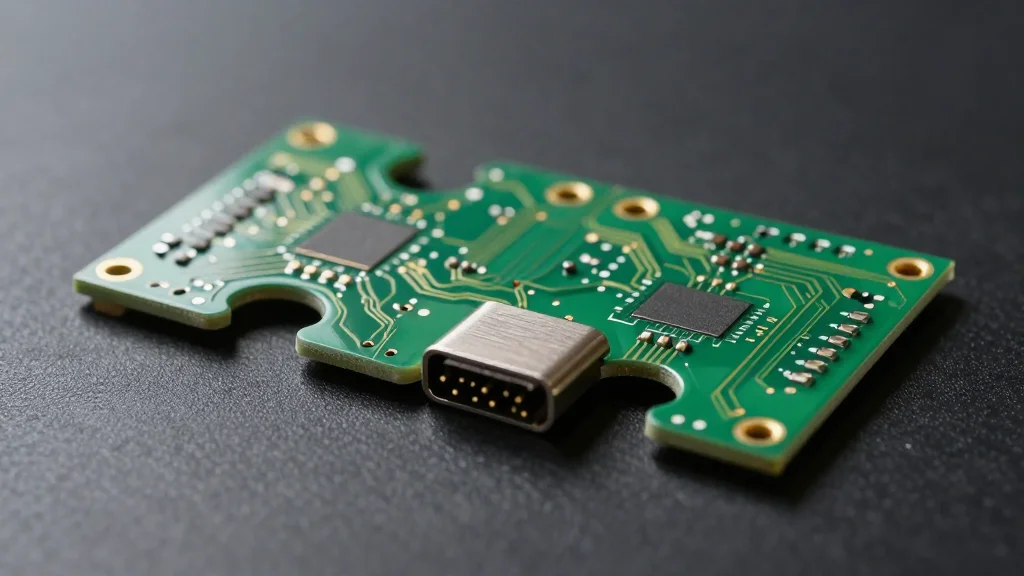
Capital Group Backs PCBSync to Forge Integrated EMS Platform for AI, Robotics and Medical Hardware

Companies Mentioned
Why It Matters
The PCBSync‑Capital Group alliance highlights a broader shift toward consolidation in the EMS industry, where OEMs are demanding tighter integration, higher reliability and faster time‑to‑market for increasingly complex hardware. By creating a unified platform, PCBSync could set a new benchmark for supply‑chain efficiency, forcing legacy providers to either specialize further or pursue their own mergers. The move also underscores the strategic importance of hardware manufacturing in the AI and medical device ecosystems, where component quality directly impacts product performance and regulatory compliance. If successful, the integrated platform could lower barriers for smaller innovators to bring advanced hardware to market, accelerating adoption of AI‑driven robotics and intelligent medical devices. Conversely, concentration of capabilities in a single entity raises questions about market power, pricing dynamics, and resilience against geopolitical disruptions that have historically affected global PCB supply chains.
Key Takeaways
- •Capital Group announced a strategic investment in PCBSync to fund a multi‑year EMS consolidation program.
- •The partnership targets premium PCB manufacturers with HDI and high‑layer‑count capabilities.
- •PCBSync will also acquire PCBA assembly specialists with strong quality and process engineering systems.
- •Goal is to create a one‑stop EMS platform for AI, robotics and intelligent‑medical hardware markets.
- •Exact monetary size of the capital commitment was not disclosed; further acquisition announcements are expected soon.
Pulse Analysis
The PCBSync deal reflects a growing recognition that the traditional EMS model—multiple point solutions stitched together by OEMs—is no longer viable for high‑performance, regulated hardware. As AI workloads demand ever‑faster interconnects and medical devices require ISO‑13485 traceability, the cost of managing a fragmented supplier base escalates. By aggregating design, manufacturing and testing under one roof, PCBSync can offer tighter tolerances, faster ramp‑up and a clearer liability chain, which are premium services OEMs are willing to pay for.
Historically, EMS consolidation has been driven by scale economies, but this partnership adds a strategic layer: the focus on next‑generation applications rather than pure volume. If PCBSync can secure a critical mass of HDI and high‑reliability assets, it could become the de‑facto partner for companies building the hardware backbone of generative AI and surgical robotics. This would force incumbents like Foxconn, Jabil and Flex to either double down on niche capabilities or pursue similar roll‑ups, potentially igniting a wave of M&A activity in the sector.
Looking ahead, the success of PCBSync will hinge on execution—identifying the right targets, integrating disparate quality systems, and maintaining the agility that OEMs crave. Investors will be watching the pace of acquisitions and the resulting impact on lead times and pricing. Should the platform deliver measurable improvements, it could set a new standard for EMS services, reshaping the hardware supply chain for the next decade.
Capital Group backs PCBSync to forge integrated EMS platform for AI, robotics and medical hardware
Comments
Want to join the conversation?
Loading comments...