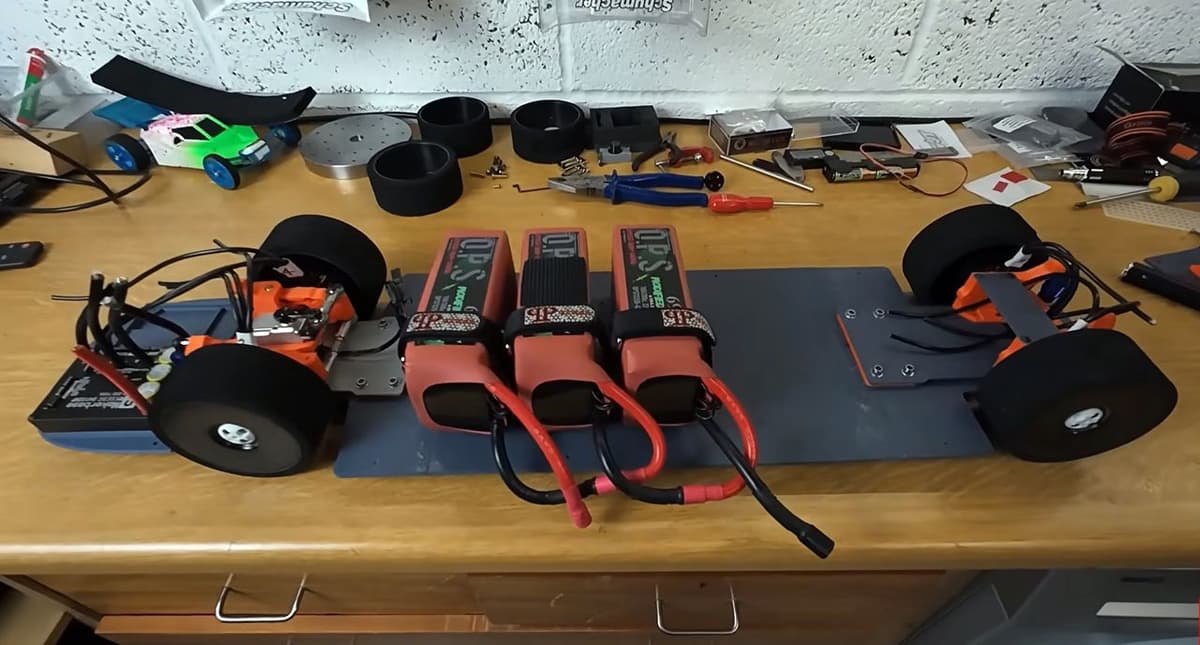
Chasing a 'Slightly Ridiculous' 250mph Goal: Engineer Behind the World’s Fastest 3D-Printed, Drone-Powered RC Car Pushes for a New Record

Why It Matters
Surpassing 250 mph would set a new benchmark for RC performance, showcasing the limits of rapid‑prototype engineering and high‑power drivetrain design. The effort highlights how hobbyist innovation can push advanced materials and motor technology into extreme applications.
Key Takeaways
- •The Beast set a 234.7 mph RC car Guinness record.
- •Wallis aims to exceed 250 mph with Project 250.
- •Redesigned narrower body reduces drag for higher speeds.
- •Upgraded to 5215 motors and 84 V, 20‑cell battery.
- •Aluminum and carbon‑fiber parts replace 3D‑printed components.
Pulse Analysis
The remote‑control car market has long been a proving ground for high‑speed engineering, but Stephen Wallis’s 234.7 mph achievement catapulted it into the realm of supercar performance. By directly attaching four drone‑grade motors to the wheels, The Beast eliminated traditional drivetrain losses, allowing a one‑meter‑long chassis to outpace a production McLaren F1. This milestone not only garners media attention but also demonstrates that hobbyist projects can rival professional automotive benchmarks, raising the profile of RC racing as a legitimate testbed for cutting‑edge technology.
Project 250 builds on that foundation with a suite of technical upgrades aimed at shaving drag and boosting power. A slimmer bodywork reduces aerodynamic resistance, while larger 5215 brushless motors deliver higher torque and improved thermal management. The powertrain now runs on a 20‑cell, 84‑volt battery pack, effectively increasing voltage and current capacity for sustained top‑speed runs. In parallel, Wallis is transitioning from 3D‑printed prototypes to production‑grade aluminum and carbon‑fiber components, enhancing rigidity and reducing weight. These changes illustrate a systematic approach to scaling rapid‑prototype designs into high‑performance machines.
Beyond the thrill of breaking a speed record, Wallis’s work underscores broader trends in additive manufacturing and electric propulsion. The ability to iterate designs quickly with 3D printing, then migrate to advanced composites, shortens development cycles for niche high‑speed applications. Such expertise can translate to sectors like drone delivery, autonomous racing, and lightweight electric vehicles, where efficiency and speed are paramount. As hobbyists continue to push engineering boundaries, their innovations increasingly inform commercial R&D, blurring the line between pastime and professional advancement.
Chasing a 'slightly ridiculous' 250mph goal: Engineer behind the world’s fastest 3D-printed, drone-powered RC car pushes for a new record
Comments
Want to join the conversation?
Loading comments...