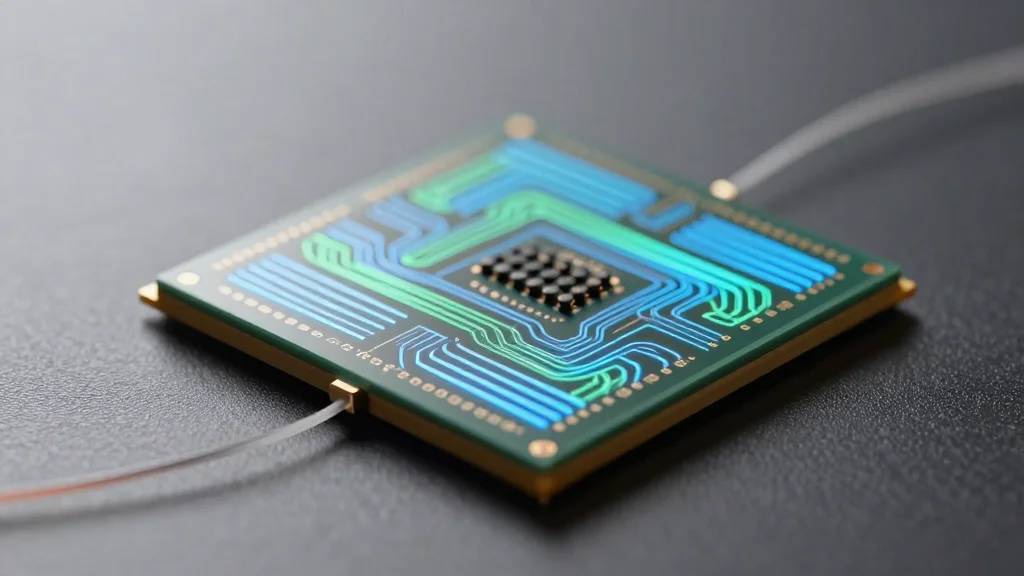
China Opens Its First Photonic Computing Lab as It Bets on Light to Outrun US Chip Curbs
Companies Mentioned
Why It Matters
Photonic computing could give China a high‑performance, low‑energy AI hardware path that sidesteps U.S. export restrictions, accelerating its drive for technological self‑reliance. Success would reshape global AI chip competition and supply‑chain dynamics.
Key Takeaways
- •Shanghai lab launched June 11, joint Jiao Tong University and Lightelligence.
- •Photonic chips aim to cut latency, power use versus silicon AI chips.
- •Lightelligence’s IPO surged ~380% on Hong Kong debut, highlighting market interest.
- •Photonics seen as workaround to US export restrictions on advanced semiconductors.
- •China’s $295 billion AI data‑center plan targets domestic chips by 2028.
Pulse Analysis
Photonic computing replaces electrons with photons, allowing data to travel at light speed while generating far less heat. This physical advantage translates into higher bandwidth, lower latency and dramatically reduced energy consumption—attributes that become critical as AI models grow larger and data‑center power limits tighten. While still in early research stages, hybrid optical‑electronic processors promise a new class of accelerators that could outperform traditional silicon GPUs in specific workloads, drawing interest from both academia and venture capital.
Beijing’s launch of the Shanghai Key Laboratory of Integrated Photonic Computing Chips and Systems reflects a broader policy shift toward self‑sufficiency in high‑tech. Since 2022, the United States has tightened export controls on advanced semiconductors, prompting Chinese firms to seek alternatives to foreign GPUs. By leveraging the country’s existing expertise in fiber optics and laser manufacturing, photonic chips offer a way to bypass lithography bottlenecks and reduce dependence on foreign equipment. The partnership with Lightelligence, a startup that saw its Hong Kong IPO surge 380%, signals strong governmental and private sector backing for this strategic pivot.
Despite the hype, photonic AI hardware faces substantial hurdles. The ecosystem lacks mature software stacks, compilers and algorithmic frameworks needed to fully exploit optical architectures. Scaling from laboratory prototypes to mass‑produced chips also demands breakthroughs in silicon‑photonics integration and cost‑effective manufacturing. Nevertheless, with a $295 billion national AI infrastructure plan aiming for domestically produced chips by 2028, China is willing to invest heavily in high‑risk, high‑reward technologies. If photonic processors achieve commercial viability, they could reshape the global AI chip market and alter the balance of technological power.
China opens its first photonic computing lab as it bets on light to outrun US chip curbs
Comments
Want to join the conversation?
Loading comments...