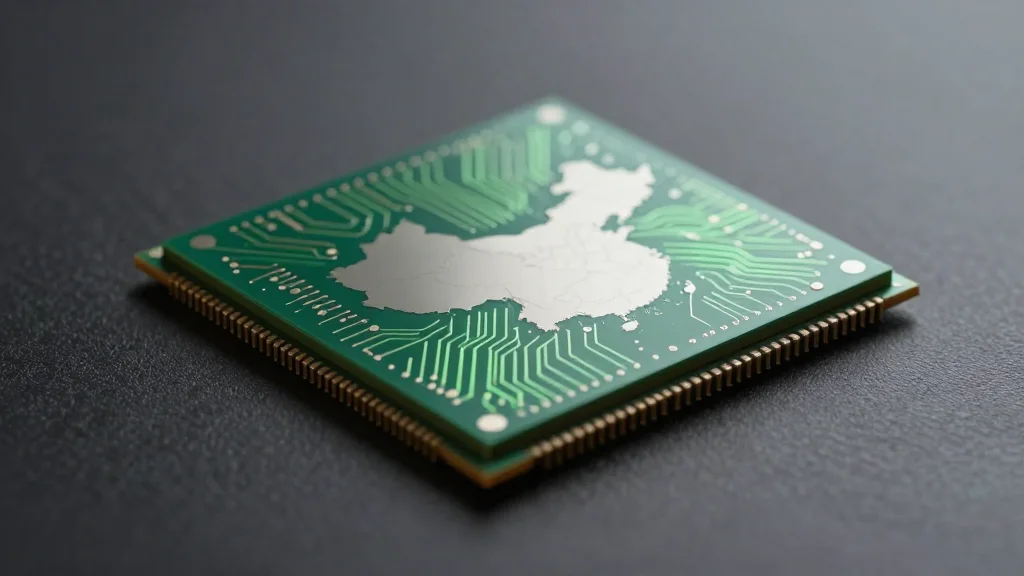
China's AI Chip Imports Surge 5% in 2026, Outpacing Export Growth

Companies Mentioned
Why It Matters
The projected 5% rise in AI chip imports signals that China’s AI ecosystem is moving from experimental pilots to large‑scale deployment, demanding hardware that only a handful of global fabs can produce. This demand not only reshapes global supply‑chain allocations but also intensifies the strategic competition over advanced semiconductor technology, a critical enabler for everything from autonomous vehicles to national security applications. For investors and policymakers, the trend highlights a dual risk: supply constraints could drive up chip prices worldwide, while export‑control tensions may force Chinese firms to seek alternative sources or accelerate domestic production. The outcome will influence pricing, innovation cycles, and the geopolitical balance of technological power.
Key Takeaways
- •China's AI chip imports projected to grow 5% in 2026, the highest in five years.
- •Import growth expected to outpace export growth for the first time since 2021.
- •Forecast doubles the March estimate, reflecting a sharp upgrade by economists.
- •Higher imports could keep the trade surplus from exceeding last year's record.
- •Global chip makers may re‑allocate capacity to meet rising Chinese demand.
Pulse Analysis
China’s pivot toward aggressive AI hardware procurement marks a watershed for the semiconductor industry. Historically, the country relied on a mix of domestic production for mature nodes and selective imports for cutting‑edge chips. The new 5% import growth forecast suggests a strategic decision to prioritize performance over self‑sufficiency in the short term, betting that rapid AI adoption will deliver economic returns that justify the trade‑off.
From a market perspective, the surge could tighten global supply at a time when the industry is already grappling with capacity constraints. Companies like NVIDIA and AMD may see higher order volumes from Chinese customers, but they also risk over‑committing inventory that could be redirected by export‑control policies. This tension could spur a pricing premium for AI‑grade GPUs and ASICs, benefitting suppliers but squeezing downstream users.
In the longer view, sustained import pressure may accelerate China’s domestic chip‑fabrication push, especially for advanced nodes currently dominated by TSMC and Samsung. If Beijing successfully bridges the technology gap, the competitive dynamics could shift, reducing reliance on foreign suppliers and reshaping the global semiconductor value chain. Stakeholders should monitor policy signals, capacity announcements from major fabs, and any changes in export‑control regimes, as these will dictate whether China’s import surge becomes a temporary boost or a catalyst for a more profound realignment in hardware markets.
China's AI Chip Imports Surge 5% in 2026, Outpacing Export Growth
Comments
Want to join the conversation?
Loading comments...