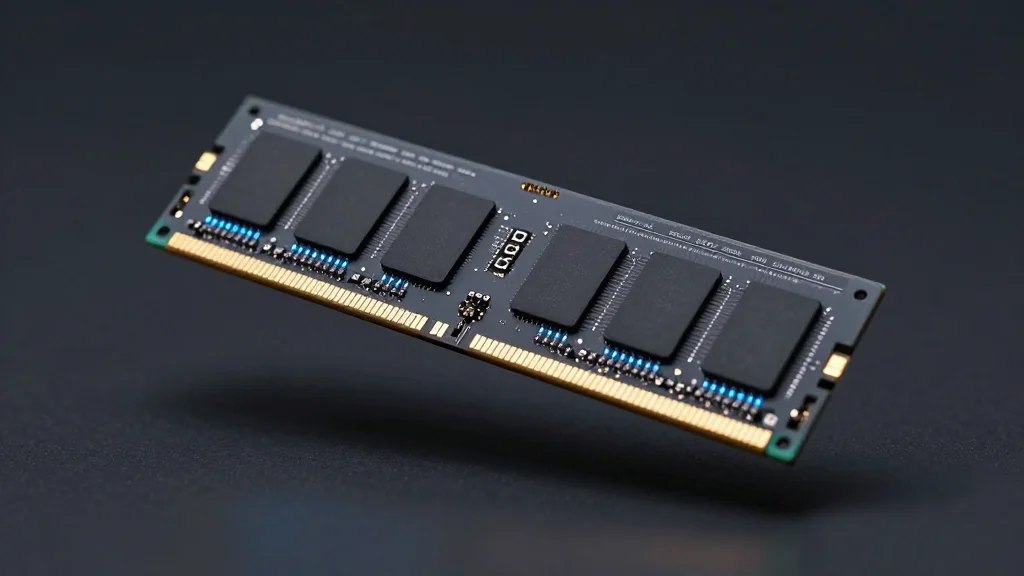
DDR6 Server Memory Enters Early Development to Power Next‑Gen AI Workloads

Why It Matters
DDR6’s early development marks a pivotal upgrade in the memory hierarchy that underpins modern AI workloads. By delivering higher bandwidth and better energy efficiency, it directly addresses the bottleneck that limits the scaling of large language models and real‑time inference services. The technology also forces server OEMs to redesign power and cooling subsystems, potentially accelerating broader innovations in data‑center hardware. Beyond performance, DDR6 could reshape the competitive dynamics among DRAM suppliers, as those who master the new process nodes and packaging techniques may capture a larger share of the lucrative AI‑focused market. The ripple effect may extend to cloud pricing, edge AI deployments, and even consumer devices that eventually inherit the higher‑speed memory architecture.
Key Takeaways
- •Memory makers begin early hardware validation of DDR6 server DRAM.
- •Prototype modules target >64 Gb/s per pin, ~30 % higher bandwidth per watt than DDR5.
- •JEDEC draft standard anticipated for early 2028, with first silicon samples later that year.
- •DDR6 aims to support up to 32 Gb per die, enabling larger AI model footprints in memory.
- •Potential server shipments with DDR6 expected in 2029, aligning with AI data‑center growth.
Pulse Analysis
The push toward DDR6 reflects a broader industry realization that memory bandwidth, not just compute power, is the limiting factor for next‑generation AI. Historically, each DRAM generation has delivered roughly a 20‑30 % performance uplift, but DDR6’s design emphasizes power efficiency as much as raw speed, a response to the soaring TCO of AI‑heavy data centers. Companies that can integrate DDR6 with advanced packaging—such as silicon interposers or 2.5D/3D stacking—will likely set new benchmarks for latency‑critical workloads.
From a market perspective, DDR6 could intensify the rivalry between established DRAM giants and emerging players backed by Asian foundries. Early adopters among cloud providers may negotiate exclusive supply agreements, mirroring past patterns seen with DDR4 and DDR5 rollouts. However, the higher cost curve may initially limit DDR6 to premium AI clusters, delaying mass‑market diffusion. Over the next three years, pricing pressure and economies of scale should bring DDR6 within reach of broader enterprise segments, potentially redefining the baseline memory specification for all server classes.
Strategically, the timing aligns with the anticipated peak of AI model scaling, where multi‑petabyte training datasets demand ever‑larger memory footprints. DDR6’s capacity and speed gains could reduce the need for costly memory hierarchies that rely on slower, higher‑latency storage tiers. If the technology lives up to its promises, it will not only accelerate AI research but also enable new services—such as real‑time language translation and autonomous decision‑making—that were previously constrained by memory bandwidth. The coming years will reveal whether DDR6 can deliver on this promise without inflating data‑center power budgets beyond sustainable limits.
DDR6 Server Memory Enters Early Development to Power Next‑Gen AI Workloads
Comments
Want to join the conversation?
Loading comments...