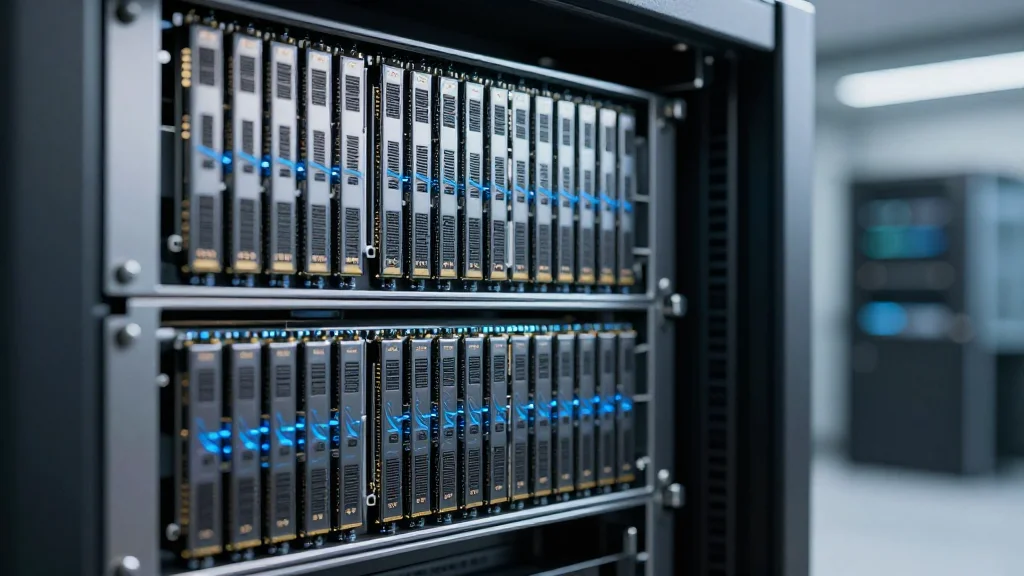
Dell, HPE Server Supply Upended by Memory Crunch
Why It Matters
The memory shortage forces AI adopters to confront higher infrastructure costs and highlights a structural shift in the semiconductor supply chain that could reshape server pricing and deployment timelines.
Key Takeaways
- •AI server demand drives global memory component shortage
- •Dell passes rising memory costs to large strategic customers
- •HPE locks in supply via long‑term memory partner agreements
- •Both firms report double‑digit revenue growth despite higher prices
- •Memory market shifting to high‑bandwidth chips reduces conventional supply
Pulse Analysis
The current memory crunch is less a cyclical dip and more a fundamental reallocation of semiconductor capacity. As AI workloads demand high‑bandwidth memory (HBM) for accelerated processing, leading fabs are diverting silicon wafers from traditional DRAM lines. This strategic pivot, documented in the Global Electronics Association’s 2026 market report, has throttled the supply of the commodity memory that underpins most enterprise servers, creating a bottleneck that reverberates across the data‑center ecosystem.
Dell’s response reflects a classic margin‑preserving playbook. By passing incremental memory cost increases onto its largest, contract‑bound customers, the company safeguards short‑term profitability while still capitalising on an 88% revenue surge. The firm’s emphasis on three‑ to five‑year supply agreements helps lock in demand, but the daily repricing cadence signals that customers are absorbing higher total cost of ownership. Dell’s ability to maintain a meaningful backlog suggests that strategic customers value continuity over price, yet the pressure on margins could intensify if wafer capacity remains constrained.
HPE, by contrast, is betting on supply‑side certainty. Long‑term agreements with memory manufacturers aim to smooth out volatility and give channel partners clearer lead‑time expectations. This approach, coupled with modest price hikes, has allowed HPE to post sequential growth in AI‑centric hardware despite tighter budgets. Both vendors’ earnings underscore a broader market reality: AI adoption is accelerating faster than the memory supply chain can adapt, prompting a re‑evaluation of procurement strategies and potentially spurring investment in alternative memory technologies.
Dell, HPE server supply upended by memory crunch
Comments
Want to join the conversation?
Loading comments...