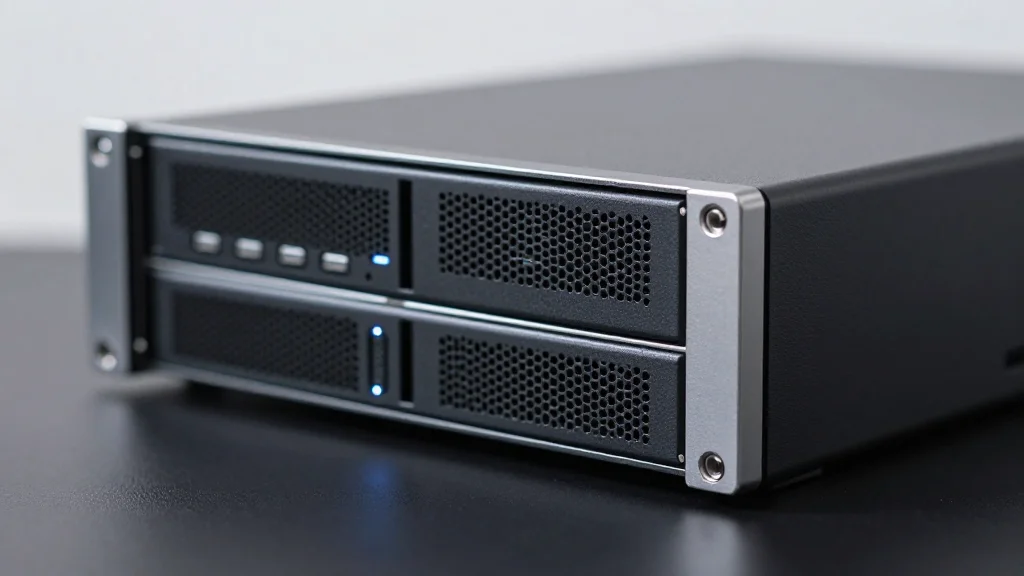
Dell Launches PowerStore Elite and 18th‑Gen PowerEdge, Triples Storage Performance for AI

Companies Mentioned
Why It Matters
The refresh directly addresses the bottleneck many enterprises face as AI workloads outpace legacy storage and compute. By delivering three‑fold performance gains and dramatically higher density, Dell enables organizations to scale AI models without expanding physical footprints, reducing capital expenditures and power consumption. The 6:1 data‑reduction guarantee also lowers the effective cost per terabyte, a critical factor as data growth accelerates. Competitors such as HPE, NetApp and IBM will need to match Dell’s combination of hardware speed, software intelligence and integrated cyber‑resilience to stay relevant in the AI‑centric data‑center market. Dell’s emphasis on modular upgrades and mixed‑generation clustering further differentiates its platform by minimizing disruption during modernization, a key concern for enterprises juggling legacy applications alongside AI initiatives.
Key Takeaways
- •PowerStore Elite delivers up to 3× performance and density versus prior generations
- •Storage capacity reaches 5.8 PB in a single 3U chassis with 40 drive slots
- •Data‑reduction guarantee raised to industry‑best 6:1
- •18th‑gen PowerEdge servers claim up to 70% higher compute performance and 13:1 consolidation
- •New cyber‑resilience tools (PowerProtect One, Dell Cyber Detect) target ransomware with 99.99% detection accuracy
Pulse Analysis
Dell’s announcement arrives at a moment when AI workloads are straining traditional data‑center architectures. By bundling storage, compute and security into a single, software‑defined stack, Dell is betting that enterprises will prioritize integrated solutions over point‑product purchases. The three‑fold performance uplift in PowerStore Elite is not merely a hardware win; it reflects Dell’s push to embed AI‑driven optimization (Autonomous Data Path, Metadata Acceleration) into the storage fabric, a trend that could become a baseline expectation for future arrays.
From a competitive standpoint, Dell’s focus on density—5.8 PB in 3U—and the use of standard E3 NVMe drives mitigate supply‑chain risks that have plagued the flash market. This pragmatic approach may force rivals to reconsider proprietary drive ecosystems that limit flexibility. Moreover, the 6:1 data‑reduction guarantee, while marketing‑heavy, signals confidence in deduplication and compression algorithms that can materially lower TCO for data‑intensive AI projects.
Looking ahead, the success of Dell’s refresh will hinge on adoption speed and real‑world validation of the promised performance gains. Early adopters in cloud service providers and large enterprises will likely serve as reference points. If Dell can demonstrate that its modular upgrade path truly eliminates downtime, it could set a new standard for data‑center evolution, compelling the broader hardware industry to adopt similar mixed‑generation clustering models. The next six months will reveal whether Dell’s integrated stack can translate its headline numbers into measurable productivity and cost‑savings for customers.
Dell Launches PowerStore Elite and 18th‑Gen PowerEdge, Triples Storage Performance for AI
Comments
Want to join the conversation?
Loading comments...