Companies Mentioned
Why It Matters
Consistent out‑of‑the‑box color fidelity reduces calibration time and risk for studios, while the extensive I/O and HDR capabilities make the U3226Q a versatile hub for high‑end content production pipelines.
Key Takeaways
- •Self‑calibrating colorimeter keeps ΔE <1 over time.
- •31.5‑in QD‑OLED panel offers 99% DCI‑P3 and 94% Adobe RGB coverage.
- •Thunderbolt 4 delivers 140 W power delivery and dual‑display daisy‑chain.
- •HDR peak brightness reaches ~1,030 cd/m², exceeding DisplayHDR True Black 500.
- •Priced around $3,200, targeting professionals needing reliable color fidelity.
Pulse Analysis
The shift toward QD‑OLED technology in professional displays reflects a broader industry demand for both color precision and high dynamic range performance. Dell’s UltraSharp U3226Q leverages Samsung’s fourth‑generation QD‑OLED panel, delivering near‑perfect uniformity and a tighter sub‑pixel layout that mitigates the text‑blurring issues common in earlier OLEDs. By integrating a factory‑calibrated colorimeter that can run express or comprehensive self‑calibration cycles, the monitor ensures ΔE values stay below one, a benchmark typically reserved for multi‑thousand‑dollar reference units. This automation not only saves studios countless hours of manual profiling but also guarantees visual consistency across long‑term projects.
Beyond color accuracy, the U3226Q’s connectivity suite positions it as a central workstation hub. The primary Thunderbolt 4 port supplies up to 140 W of power, enough to charge most laptops while driving a 4K 120 Hz signal, and a downstream Thunderbolt 4 port enables daisy‑chaining of a second 4K display—provided the GPU supports DSC. Complementary HDMI 2.1 and DisplayPort 1.4 inputs, a 2.5 GbE Ethernet link, and a built‑in KVM switch let users consolidate peripherals and reduce desk clutter. HDR performance is equally compelling; peak brightness of roughly 1,030 cd/m² on a 2% window surpasses the DisplayHDR True Black 500 ceiling, delivering vivid highlights for Dolby Vision and HDR10 content.
For enterprises and creative agencies, the monitor’s price point—about $3,200 versus $5,000‑plus for traditional reference monitors—offers a pragmatic balance between cost and capability. While the chassis feels lighter than premium competitors, the trade‑off is offset by the self‑calibrating workflow and robust I/O, which translate into lower operational overhead and faster project turnaround. As more studios adopt QD‑OLED panels for color‑critical work, Dell’s UltraSharp U3226Q could become a reference standard for mid‑range professional environments, driving broader acceptance of OLED technology beyond niche high‑budget productions.
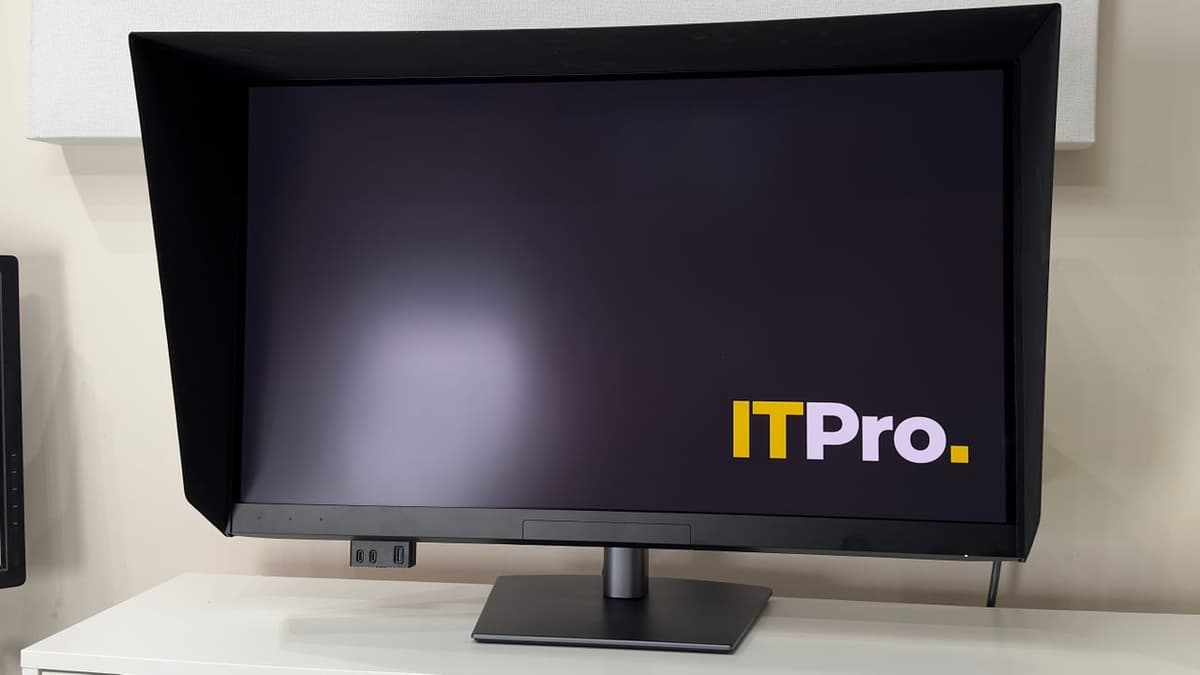
Dell UltraSharp U3226Q monitor review: QD-OLED goes pro
Comments
Want to join the conversation?
Loading comments...