Designing the Future: AI-Driven Multi-Die Innovation in the Era of Agentic Engineering
•February 25, 2026
0
Why It Matters
AI‑enabled multi‑die design reduces time‑to‑market and development costs, essential for meeting the exploding demand of AI workloads and advanced packaging trends.
Key Takeaways
- •AI automates multi-die partitioning and routing.
- •Agentic AI enables autonomous design decisions.
- •Chiplet market projected to grow through 2033.
- •AI reduces verification cycles, cutting compute costs.
- •Faster time‑to‑market for AI‑intensive workloads.
Pulse Analysis
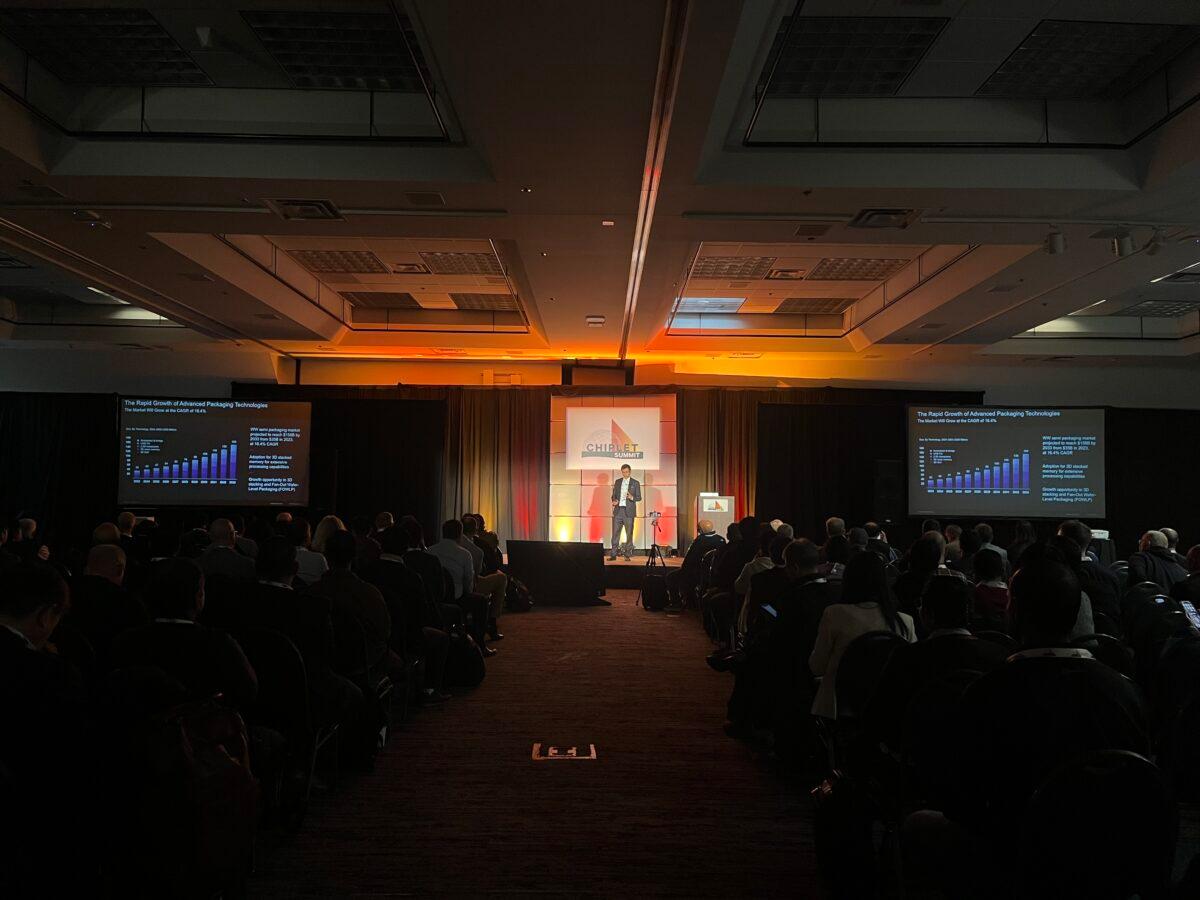
The semiconductor landscape is rapidly converging on heterogeneous integration as chiplet‑based architectures and 3‑D stacking replace traditional monolithic scaling. This shift is driven by exploding AI workloads—from early convolutional nets to transformer models like GPT‑4—that demand unprecedented bandwidth, low latency, and power efficiency. Consequently, the global packaging market is expected to expand sharply through 2033, with 2.5 D interposers, embedded silicon bridges, and fan‑out wafer‑level packaging becoming mainstream. Designers now face a multidimensional optimization problem that spans partitioning, interconnect, thermal management, and signal integrity.
Artificial intelligence is turning that complexity into an opportunity. Machine‑learning models learn correlations between tool settings and performance metrics, allowing rapid convergence on optimal die‑to‑die routing, power‑grid design, and timing closure. In verification, AI‑guided stimulus generation achieves comparable coverage with far fewer test seeds, slashing compute cycles and shortening development timelines. Multiphysics solvers powered by reduced‑order models accelerate electrical, thermal, and mechanical simulations, while generative AI assists with scripting and constraint creation. The net effect is a measurable boost in quality‑of‑results and a shift from manual iteration to data‑driven decision making.
The next frontier is agentic AI—systems that not only suggest improvements but autonomously execute design decisions within defined objectives. Synopsys showcased agents capable of partitioning multi‑die systems, resolving signal‑integrity violations, and even refining RTL for power savings without human prompting. Industry leaders such as Nvidia’s Jensen Huang predict that AI‑driven engineering agents will become commonplace, reshaping product development cycles. As AI workloads continue to grow and packaging technologies mature, organizations that embed autonomous agents into their design flow will gain a decisive competitive edge, delivering faster time‑to‑market and lower costs.
Designing the Future: AI-Driven Multi-Die Innovation in the Era of Agentic Engineering
0
Comments
Want to join the conversation?
Loading comments...