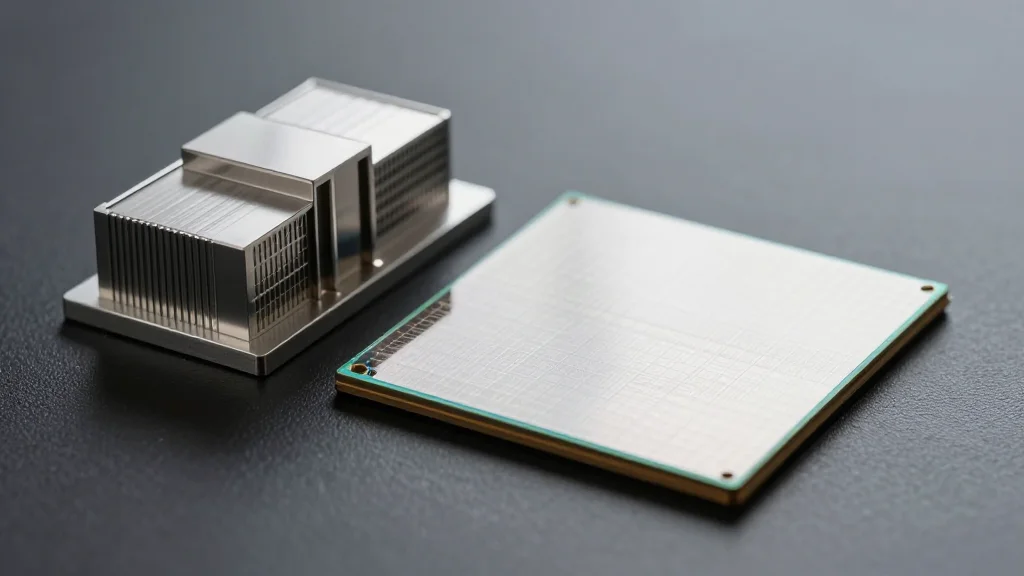
Doosan Group Nears $3.3 B Deal to Acquire 70% of SK Siltron, Expanding Into Wafer Production

Why It Matters
Doosan’s acquisition of SK Siltron marks a rare instance of a non‑chip‑maker conglomerate building a full‑stack semiconductor supply chain in South Korea. By controlling wafer fabrication, testing, packaging and materials, Doosan can offer tighter process control, lower logistics costs and faster time‑to‑market for customers developing AI and high‑performance computing chips. The move also signals a broader trend of diversified industrial groups seeking exposure to the high‑margin, high‑growth semiconductor ecosystem, potentially reshaping competitive dynamics in the global wafer market. For the Korean semiconductor industry, the deal could reduce reliance on foreign wafer suppliers and strengthen domestic supply chain resilience. As AI workloads drive demand for more advanced nodes, having a vertically integrated domestic player may help South Korean chipmakers secure critical inputs and accelerate innovation cycles.
Key Takeaways
- •Doosan Group to acquire 70.6% of SK Siltron for about $3.3 billion (5 trillion won).
- •Deal includes 51% SK Group stake and 19.6% tied to a total‑return swap; remaining 29.4% to be bought later.
- •Acquisition creates a full‑stack semiconductor operation covering wafers, testing, packaging and materials.
- •Doosan entered the semiconductor market in 2022 with Tesna and later merged with Engion.
- •The transaction aligns with rising demand for AI chips and high‑bandwidth memory, potentially reshaping the wafer market.
Pulse Analysis
Doosan’s push into wafer manufacturing reflects a strategic bet that the semiconductor supply chain will become increasingly consolidated around a few vertically integrated players. Historically, wafer production has been the domain of specialized firms in Japan, Taiwan and the United States, with South Korea relying on imports for high‑end silicon. By bringing wafer fabrication in‑house, Doosan not only secures a critical input for its own testing and packaging businesses but also creates a platform to offer end‑to‑end services to third‑party chip designers.
The timing is noteworthy. AI accelerators and high‑bandwidth memory are driving a shift toward larger wafer sizes and more complex process steps, which in turn demand tighter coordination across the supply chain. Doosan’s existing capabilities in robotics and automation could be leveraged to modernize SK Siltron’s fabs, improving yield and reducing cycle times. If Doosan can achieve these efficiencies, it may set a new benchmark for integrated semiconductor production in the region, forcing traditional wafer suppliers to either partner or compete on cost and technology.
However, integration risk remains a concern. Doosan’s heritage lies in heavy machinery and clean energy, sectors with different capital cycles and risk profiles than high‑speed semiconductor manufacturing. Successful alignment of corporate cultures, technology roadmaps and supply‑chain logistics will be essential. Moreover, regulatory scrutiny could delay the final closing, especially if antitrust authorities view the vertical integration as potentially limiting competition. The market will be watching how Doosan navigates these challenges and whether its model can be replicated by other industrial conglomerates seeking a foothold in the AI‑driven chip era.
Doosan Group Nears $3.3 B Deal to Acquire 70% of SK Siltron, Expanding Into Wafer Production
Comments
Want to join the conversation?
Loading comments...