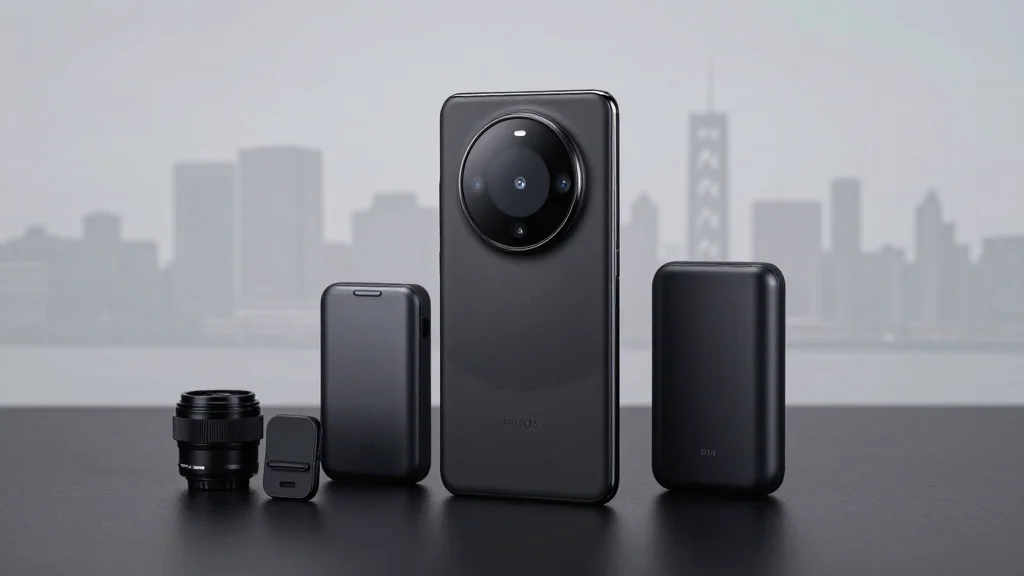
Dreame Unveils Aurora Nex and Lux Smartphones at Silicon Valley NEXT Event

Companies Mentioned
Why It Matters
Dreame’s entry into smartphones signals a convergence of smart‑home hardware and mobile computing, blurring the lines between appliance and personal device. By leveraging its AI platform across disparate product categories, the firm hopes to create a unified ecosystem that can lock users into its brand, a strategy reminiscent of Apple’s hardware‑software integration but applied to a broader set of household products. If Dreame can deliver on its promises of modular imaging and AI‑driven assistance, it could inspire other appliance makers to explore similar cross‑category ventures, intensifying competition in the premium smartphone market and accelerating the adoption of modular, AI‑centric designs.
Key Takeaways
- •Dreame unveiled Aurora Nex modular flagship and Aurora Lux luxury smartphones at the NEXT event in San Francisco, April 29‑30, 2026.
- •Both phones feature a 200‑megapixel, 1‑inch sensor and a 7,000 mAh battery, with the Nex supporting up to five magnetic modules.
- •The devices run Aurora AIOS, a proprietary Android skin focused on proactive AI services, slated for release in H2 2026.
- •Aurora Lux offers 29 distinct luxury designs using premium materials such as leather, gold plating and gemstones.
- •No pricing or launch dates were disclosed; analysts question scalability and competition with established smartphone brands.
Pulse Analysis
Dreame’s smartphone debut is less about immediate market share and more about signaling strategic intent. The company has built a reputation for integrating AI into household appliances—robot vacuums, air purifiers and even a laundry‑robot hybrid. By extending that AI stack to mobile devices, Dreame is attempting to create a cross‑product data loop that could give it a competitive edge in personalization and predictive services. In practice, however, the mobile market remains dominated by ecosystems that reward deep developer engagement and carrier partnerships, areas where Dreame has little history.
The modular hardware concept is intriguing but fraught with execution risk. Past attempts, from Motorola’s Moto Z to LG’s modular phones, faltered because accessory ecosystems never achieved critical mass. Dreame’s approach of bundling high‑end camera modules and a satellite link may appeal to niche power users, yet the cost of producing and supporting dozens of variants could erode margins. Moreover, the luxury Aurora Lux line, while visually striking, may be perceived as gimmickry unless it delivers tangible performance benefits over flagship devices from Apple and Samsung.
Ultimately, Dreame’s foray could act as a catalyst, forcing incumbent smartphone makers to reconsider the value of modularity and AI integration. If the company can demonstrate a seamless, AI‑driven user experience that ties its home‑automation products to the phone, it may carve out a defensible niche. Failure, however, would reinforce the notion that hardware diversification without a robust software ecosystem is a high‑risk gamble in the saturated premium smartphone arena.
Dreame Unveils Aurora Nex and Lux Smartphones at Silicon Valley NEXT Event
Comments
Want to join the conversation?
Loading comments...