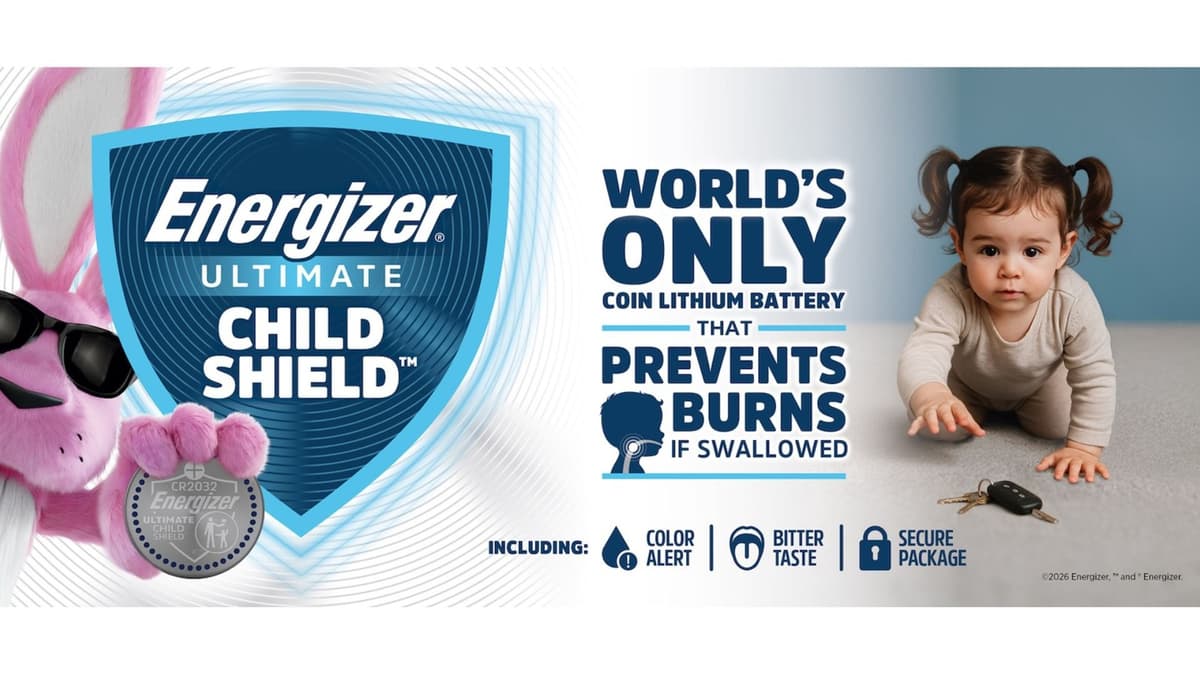
Energizer Releases Coin Lithium Batteries that Won't Cause Burning if Accidentally Swallowed
Why It Matters
By eliminating burn risk and providing instant visual detection, the batteries lower medical liability and boost consumer confidence, potentially reshaping safety standards across the consumer‑electronics supply chain.
Key Takeaways
- •3,500+ U.S. coin battery ingestions reported annually.
- •New batteries prevent esophageal burning if swallowed.
- •Blue dye alerts caregivers within seconds of ingestion.
- •Available in 2032, 2025, 2016 sizes for common devices.
- •Could drive industry shift toward child‑safe battery designs.
Pulse Analysis
Coin‑cell lithium batteries power everything from watches to Bluetooth trackers, but their small, disc‑shaped form makes them a frequent choking and ingestion hazard for toddlers. In the United States alone, more than 3,500 incidents are logged each year, often resulting in severe esophageal burns within minutes of swallowing. Medical professionals warn that delayed detection can lead to permanent tissue damage, prompting consumer‑advocacy groups to call for safer designs. The growing awareness has put pressure on manufacturers and regulators to address the risk without compromising the batteries’ performance or cost.
Energizer’s new Ultimate Child Shield line tackles the problem at its source by eliminating the chemical reaction that causes tissue burning when a battery contacts saliva. The cells are engineered with a non‑reactive electrolyte, so even if lodged in the esophagus they remain inert. A food‑grade blue dye is incorporated into the outer coating, turning a child’s mouth blue within seconds and providing an immediate visual cue for caregivers. The technology is currently offered in the popular 20 mm formats—2032, 2025 and 2016—making it compatible with watches, key‑fobs, AirTags and other IoT gadgets.
The introduction of a child‑safe battery could reshape industry standards, encouraging rivals such as Duracell and Panasonic to develop similar safeguards. Retailers may prioritize these safer cells, especially as parents become more aware of ingestion risks through pediatric campaigns. In the longer term, the move aligns with emerging regulatory trends in the EU and U.S., where safety labeling and design requirements are tightening. If adoption scales, the technology could become a new baseline for consumer electronics, reducing emergency room visits and liability costs.
Energizer releases coin lithium batteries that won't cause burning if accidentally swallowed
Comments
Want to join the conversation?
Loading comments...