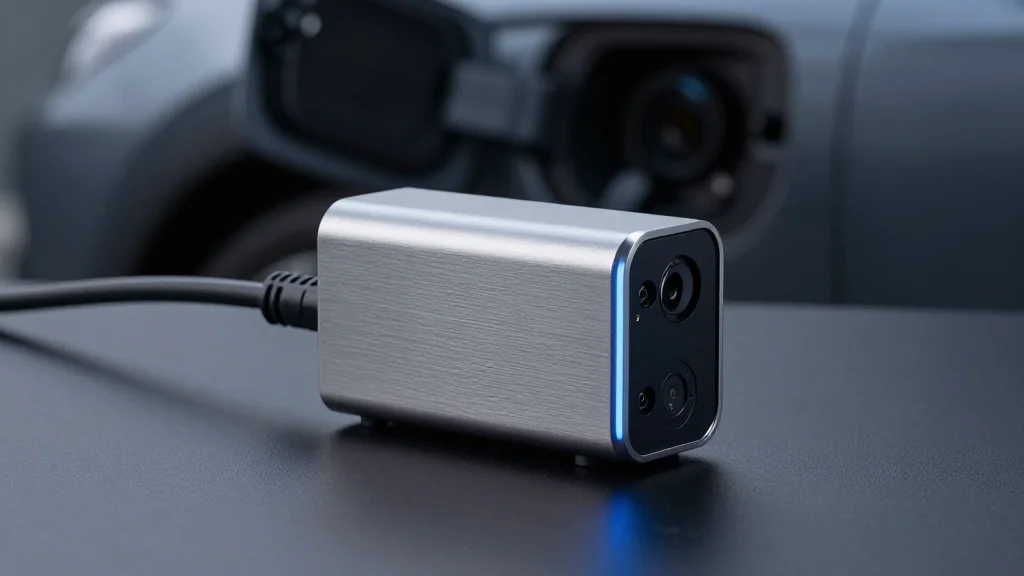
EU-Funded HiPower 5.0 Project Developing GaN-Based EV On-Board Chargers
Why It Matters
The size and efficiency gains could lower EV charging system cost and weight, speeding mass adoption and reinforcing Europe’s green‑mobility agenda. It also builds a fully European supply chain for wide‑bandgap semiconductors.
Key Takeaways
- •22 kW GaN OBC fits in 4 L, vs typical 12 L size.
- •Monolithic bi‑directional GaN switches replace two separate semiconductors.
- •Project funded with $36.7 m EU grant, plus $6.3 m German support.
- •Consortium spans 10 nations, 21 tier‑1/2 suppliers, two OEMs.
- •Target markets include EVs and marine shipping, aiming for 2028 rollout.
Pulse Analysis
On‑board chargers have become a bottleneck for electric‑vehicle scaling, as traditional silicon‑based designs struggle with heat, bulk and diminishing efficiency at higher power levels. Gallium‑nitride, a wide‑bandgap semiconductor, offers faster switching, lower losses and the ability to operate at higher temperatures, making it ideal for compact, high‑power converters. The European Union’s strategic push for greener transport has earmarked significant R&D dollars to accelerate GaN adoption, positioning the continent to compete with Asian manufacturers that dominate the semiconductor market.
HiPower 5.0 leverages Infineon’s monolithic bi‑directional GaN switches, which combine the functions of two conventional devices into a single component. This integration shortens electrical paths, reduces parasitic losses and frees up board space. Fraunhofer IZM’s system‑level packaging embeds multiple power elements directly onto circuit boards, further shrinking the charger’s footprint to 4 L while delivering 22 kW of continuous power. The prototype demonstrated at PCIM Europe 2024 already showcases the performance leap, even before the final GaN switches are installed, underscoring the robustness of the underlying architecture.
Beyond the technical breakthrough, the project’s multi‑partner structure creates a resilient European value chain. With $36.7 million in EU grants and $6.3 million from German sources, the consortium can de‑risk the transition from lab to production across ten countries, involving OEMs like Mercedes‑Benz and tier‑1 suppliers such as Vitesco and Valeo. By targeting both automotive and marine sectors, HiPower 5.0 aims to standardize GaN‑based power electronics, potentially lowering component costs, reducing vehicle weight and extending range. If the 2028 market‑ready goal is met, the technology could become a cornerstone of Europe’s strategy to meet its 2030 emissions targets while fostering domestic semiconductor expertise.
EU-funded HiPower 5.0 project developing GaN-based EV on-board chargers
Comments
Want to join the conversation?
Loading comments...